It should be hard to believe. The fact that conspiracy theorists have wheeled out a range of absurd claims purporting to reveal, or guess at, the cause of Dolly Parton’s death. But it’s not hard to believe. In fact it’s exactly what anybody who keeps an eye on cooked conspiracy theorists across the globe expected. It happens regularly when vaccine status can be confirmed, and rapidly and loudly when the individual is a celebrity.
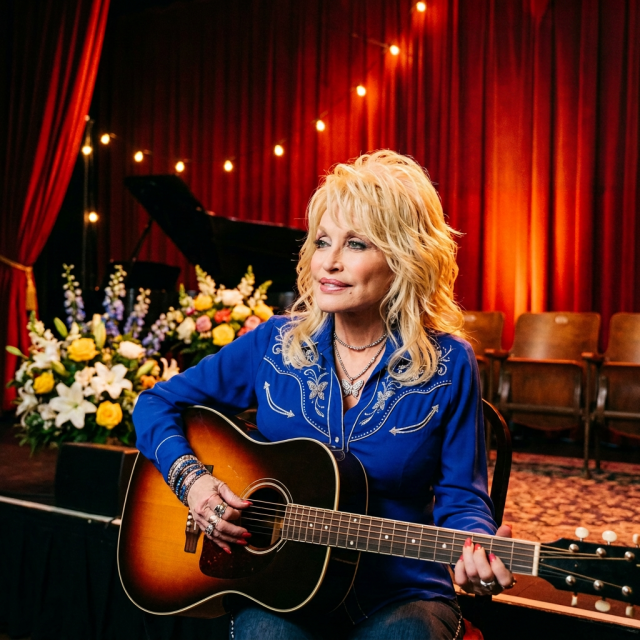
In Dolly’s case she had donated $1 million to Vanderbilt University Medical Center to assist with early research into Moderna’s mRNA COVID-19 vaccine. She also publicly had her shot in March 2021, and to the tune of “Jolene” sang “Vaccine, vaccine, vaccine, vaccine, I’m begging of you please don’t hesitate“. Clearly Dolly knew the stakes and the impact anti-vaxxers were having. At 75 she herself was in the age cohort for which being vaccinated against COVID can save lives and reduce hospitalisations. No doubt her focus that day, led to jabs and saved lives.
Yet far-right radio host Wayne Allyn Root argued on X:
She took the vax on TV. She changed the name of her hit song “Jolene, Jolene” to “Vaccine, Vaccine”. She encouraged fans to get it. Now she’s dead of cancer. This sounds like another case of turbo cancer. RIP Dolly.
There is no such thing as “turbo cancer”. On that, oncologists are unanimous. It’s a bogus term made up to evoke emotional responses, and fool individuals to make choices not related to science-based medicine. It was covered here in March last year. The Brownstone Institute was founded last year by close friend and ally of RFK Jr., Jeffrey Tucker. Toby Rogers who works with the Trump allied Institute, observed that Dolly thought she was doing the right thing backing the vaccine, “But it very well may have killed her”.
Let’s not forget Dolly the Sheep and the convoluted thinking that leads us to ponder if Dolly Parton may have actually been a clone. Originally shared with our poor planet in 2013 by UFO aficionado and conspiracy obsessive Max Spiers (now deceased). One learns that the sheep was named “Dolly” as a symbolic nod to Parton who was part of the “early mass-consumption cloning experiments”. Conspiracy theorist “Danielle knows a lot” has resurrected this particular nonsense.
Anti-science diva, Valerie Anne Smith is a raging anti-vaxxer with particular focus on COVID and HPV vaccines. In the absence of a public record, Smith could in no way know what vaccines Dolly Parton has recently had. Yet she manages seemingly straight-faced to post on X:
Dolly Parton Funded Moderna COVID Vaccine…
Soon after being injected she developed severe autoimmune, liver and kidney issues. Cause of death… CANCER.
Synthetic lipid nanoparticles and mRNA invaded her cells and produced toxic proteins… the intended design of mRNA shots. pic.twitter.com/vv9vOIUG9e
Apart from X there is plenty of the same on Facebook which happens to include the bizarre claim of Satanic ritual involving a section of video, and based on what Dolly is doing with her hands. In the video Dolly thanks Taylor Swift and her hubby Travis Kelce for their $2 million donation to her literacy charity, Imagination Library. Parton expresses her thanks and adds, “Now, it’s evident you two have made giving back a key part of your lives, so hey when you have your firstborn can I have it, because that is gonna be one special baby”. She is of course, joking.
Conspiracy fans contend that Parton made the “devil horns” symbol with satanic intent. In reality as she moves her hands her index and small finger do extend for around a second. It’s a non-event, and worth checking the short video to assess for yourself. In reality, the gesture is linked to warding off evil, heavy metal, insults and various cultural and regional meanings, depending on the part of the world. Not unexpectedly, this tale was retold by Red Pill USA whilst being linked to Dolly’s involvement with Moderna.
Nothing to see here, folks, just Dolly Parton – the same woman who dropped $1 million to help fund the Moderna COVID vaccine – flashing devil horns while casually demanding Taylor Swift’s and Trevor Kelce’s firstborn child. It’s a big Satanic club… and you ain’t in it.
Speak for yourself Red. Nonetheless, the sheer scale of claims on X that “turbo cancer” is the cause of Dolly Parton’s death as a direct result of a COVID vaccine she had 5 1/2 years ago, speaks volumes as to just how distorted Musk’s platform has become. In addition the fact that such claims have spread across social media remind us that conspiracy theories remain alarmingly persistent. No evidence is ever presented, no reputable sources are cited, yet these ridiculous fantasies continue to be furiously defended.
Dolly Parton died from cancer. She did not die from “turbo cancer”. There is no such thing.
The so-called compelling health differences between vaccinated and unvaccinated children is a favourite of the anti-vaccine movement. We can guess which group they insist is the most beset with illness and also make a sound judgement about the methodology used to form conclusions.
Simply put, using biased methodology will find that vaccines make children sick, say the anti-vaccine lobby, (just ignore its bias). Or to sound more convincing we may be told vaccinated children appear to be significantly less healthy than the unvaccinated. Such was the conclusion when a US supporter and promoter of Judy Wilyman (she “has done a great service to humanity”) ran flawed methodology over the two groups in 2020.
Judy’s mate, James Lyons-Weiler, head of the Institute of Pure and Applied Knowledge (IPAK) and paediatrician Paul Thomas, had their paper published in the anti-vaccine themed predatory journal, the International Journal of Vaccine Theory, Practice and Research. It was also published, then later withdrawn, from the International Journal of Environmental Research and Public Health. According to Retraction Watch the authors blamed “ghouls” when it was decided their data didn’t support conclusions.
According to Lyons-Weiler a “ghoul” is one working to have studies with results they dislike, ultimately retracted. Also, it was with a certain amusement I discovered when the paper appeared, that The Australian Vaccination-risks Network had donated $5,000 USD to the project. From whence did this generous donation originate dear reader? Well, back in 2016 the AVN pulled a stunt seeking donations for a High Court challenge against No Jab No Pay legislation, claiming to have raised either $160,000 or around $152,000. Inexplicably bypassing solicitors, they seemed to have barrister fees which left them holding close to $80,000. With no evidence they spent any money on anything, the AVN promised members they’d keep what they had for future trips to the USA vaccine battles.
When James Lyons-Weiler and Paul Thomas had their anti-vaccine paper withdrawn, they blamed “ghouls”.
IPAK were known for publishing misleading VAERS-data “vaccine death” hit-jobs, on mRNA vaccines, such as this during the pandemic. You know the drill: it’s not a real vaccine, believe all VAERS reports as true and conclude that the vaccine, not the virus, is responsible for deaths. Even more interesting is that the predatory International Journal of Vaccine Theory, Practice and Research, is where Julian Gillespie published his The Canaries in the Human DNA Mine. I have touched on that effort many times. Gillespie had resigned from the legal profession but was promoted as AVN’s barrister during their pandemic legal battles. He was the brains behind many of their legal failures which were followed by his own complaints against senior Federal Court identities.
To appreciate a thorough debunking of the caper Lyons-Weiler and Thomas hoped to get away with, I recommend reading this piece at Health Feedback about the “dubious metric” used to feign the existence of a vaccine-related problem impacting children’s health. Notably, the third author attribution is Children’s Health Defense, well known at the time as RFK Jr.’s reason-for-being and nifty source of income. He stepped down as chairperson in 2023 to focus on his independent run for USA President.
Finally, there is no better deconstruction of the vaccinated vs unvaccinated myth than the video put together by biologist, Dr. Dan Wilson. Wilson’s YouTube channel Debunk the Funk has contributed enormously to evidence-based refutation of the anti-vaccine movement. He focuses on trends, conspiracy theories, individuals, organisations, frauds and liars and has teamed up with others such as Professor Dave Farina to tackle antivax fiction head on.
The Inconvenient Study is the most recent scheme of ICAN’s main attraction, Del Bigtree. Del appears to play a spy in the “documentary”, wearing hidden cameras to dinner to reveal that his interlocutors agree “it’s a good study”. Nonetheless, not once did he run across crocodiles or fight science on the roof of a speeding train. Bigtree… Del Bigtree, wrote and produced Vaxxed – a film made of lies – continued with Vaxxed II and is often by Andrew Wakefield’s film-making side. Bigtree also hosts the mysterious hedge-fund manager-funded, anti-vaccine drum beat, The Highwire.
Del’s aim is to bring his misleading “experience” to coax his viewers to believe that unfair forces are preventing publication of a study. This study was done at Henry Ford Health. The researchers who completed the data did not publish the study for a very simple reason; the study did not meet rigorous scientific standards. One can conclude dear reader, that a study or research approach may be very good. Yet if ultimately it does not meet the standards expected in its methodology, it cannot be published. That is not a conspiracy.
In this case it’s pretty basic. Children who are unvaccinated don’t tend to visit conventional doctors. Alternatively, vaccinated ones do. The latter group tend to be examined by a professional and an illness may be found, even without notable symptoms. The former group might have a neck cracked, chant with crystals, drink herbs or simply pray. No illness will be found without significant symptoms or complaints from the patient. In fact 15 years ago Australian GPs warned of chiropractors peddling anti-vaccine messages. Clients of chiropractors are notably vaccine-hesitant. We need to remain vigilant.
You’re going to need 90 minutes all up but I can assure you Dan offers a serious evidence-packed debunking of what is a nasty, indeed reprehensible attempt by Bigtree’s team, to mislead those who don’t have the time, background or critical thinking skills to find their way to the truth. I hope they find their way to Dan.
Whilst we can blame the impact of the global anti-vaccination movement, an increase in vaccine hesitancy that arose and has persisted during and since the COVID-19 pandemic, and even some RFK Jr. flotsam misleading the gullible, when it comes to measles, Australia and Australians must be especially vigilant in managing the risk of infection overseas.
I’m not a doctor nor hold any position allowing me to claim I can advise you, beyond what I read, on any infectious disease. Indeed I would recommend speaking first with a qualified doctor about the topic. Measles is highly contagious and spread via respiratory droplets (aerosols). Non-specific symptoms such as fever, rash, nasal discharge and cough are common. Nonetheless measles has a reasonably high rate of complication leading to hospitalisation or death.
The role of measles infection in causing immune amnesia | 2 | is remarkably disconcerting. I’d urge any reader to invest even modest time to understand this phenomena, and ensure oneself and loved ones are immunised against this virus. Remember, there is no cure. Quaint stories from anti-vaxxers of them all having it as a child and growing up with no ill effects are possible only because they refer to pre-vaccine years and choose to forget the friends who never returned to school, became blind or sustained brain damage.
Today (31st March 2026) saw the Australian Centre for Disease Control (ACDC) publish a firm reminder that if you’re travelling OS, adding a measles jab to your pre-travel preparations is more than wise. Even if you’re sure you have been vaccinated in the past, if you can’t confirm this with records, consider yourself un- or under- vaccinated. Adolescents or adults born during or after 1966 are recommended to receive two measles containing vaccines at least 4 weeks apart [Source]. It’s also quite safe and more than sensible to top up your MMR, particularly if you’re an adult, and decades have elapsed since your initial MMR. First let’s consider this sub-heading from ACDC News.
A new report confirms that almost all cases of measles in Australia are either acquired overseas or related to an overseas acquired case – especially around school holidays. Don’t bring measles home from holidays – add vaccination to your travel plan.
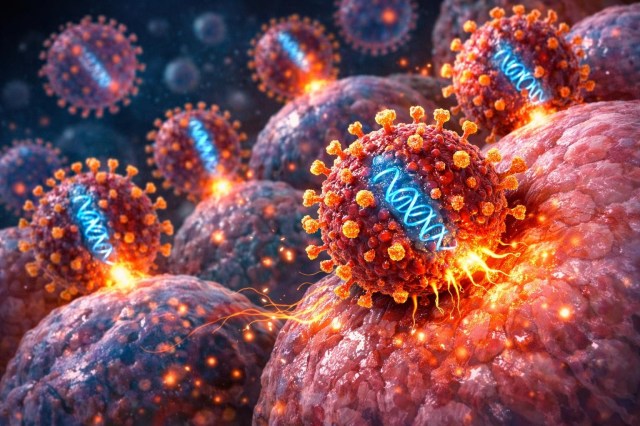
3D illustration showing virus particles interacting with cells
In fact the report | PDF | scrutinising the decade to 2024, reveals the years of highest infection were 2014 (339) and 2019 (284). There were 1,095 cases of infection reported during that decade. Almost all cases had either been acquired overseas or from someone who had brought measles back to Australia from overseas, states the ACDC news piece.
Further breakdown of figures tell us that when it comes to vaccination status, that 47% were unvaccinated, 30% had an unknown vaccination status, whilst 14% were under-vaccinated (being one dose). This final figure reinforces the importance of completing a vaccine schedule as well as confirming the impact of even insufficient antigen stimulus delivered via vaccine. The smallest number of infections were seen in subjects who had received only one of the two required measles shots. Measles infection was most common in those who had travelled OS – particularly to countries where measles was common. 57% of total notifications were in people aged 20 to 49 years.
2025 and 2026 data confirm a striking increase in measles infection. The total for 2025 was 181 cases. Currently we’re 25% of the way through 2026 with data showing 85 cases. This puts us on track for a 2026 total of 340 measles cases. The report also noted the drop in childhood measles vaccination from 94% in 2020 to 91% in 2024. Rather than look at this as a drop of only 3%, we must remain aware that measles herd immunity is impacted negatively when immunisation drops below 95%. So in reality, the reduction in immunisation has been steadily placing us all at greater risk since 2020.
Indeed certain groups are at higher risk of harm from insufficient herd immunity, including:
The immunocompromised
Those unable to be vaccinated for short or long term
Children too young to be vaccinated
The pregnant
Clearly, it’s important to plan some weeks ahead of travel as the two MMR (or measles) shots need to be given at least four weeks apart. Even if urgency applies, a gap of two weeks is insufficient to promote an adequate immune response. If an infant under 12 months needs to be considered for OS travel and/or an MMR course please see a paediatrician or your General Practitioner. On that topic, this NCIRS FAQ page is an excellent resource. It includes:
Infants travelling overseas can receive an early dose of measles-containing vaccine from 6 months of age, following an individual risk assessment, in addition to the routine doses given from 12 months of age.
Global outbreaks have been on the rise for some time. Australia has been keeping pace as best it can. Each state and of course the country as a whole is seeking to promote vaccine uptake and keep a close eye on the impact of outbreaks. There is only one solution and that is an increase in immunisation across the nation.
References below are from different states, news items and excellent US herd immunity/outbreak simulators.
Back on 7 December, The Skeptic Zone and Why Smart Women podcasts blended to present a unique live episode at The Occidental Hotel in Sydney. Billed as the Why Smart Women Zone Podcast the show featured Why Smart Women host Annie McCubbin with Sue Ieraci, Kate Thomas, Jessica Singer and Richard Saunders. Lara Benham was the MC. Video of the event is available here.
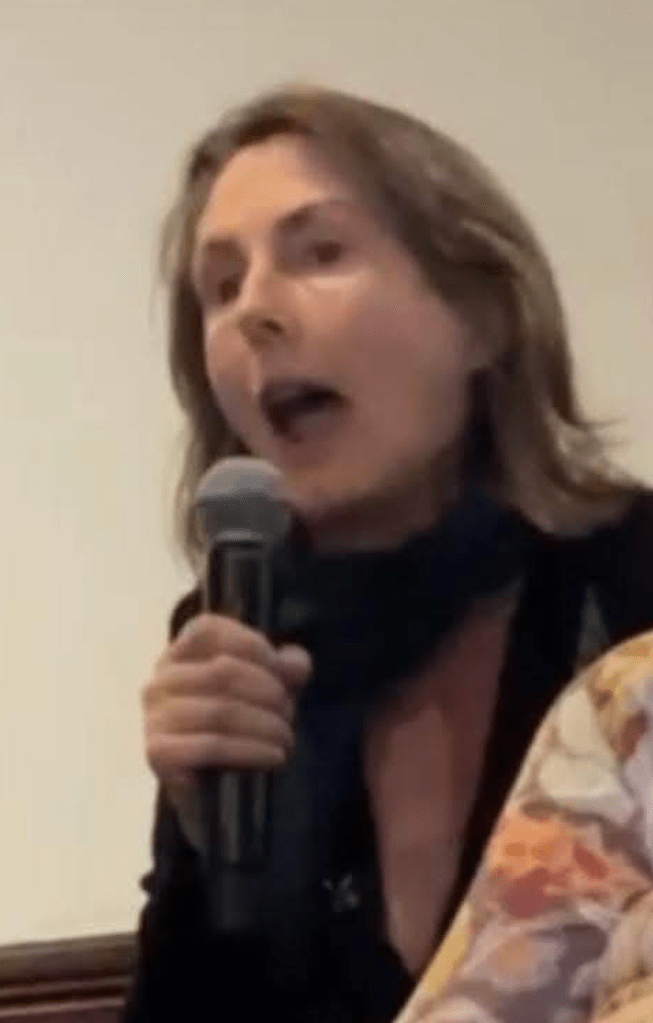
Question-time revealed irony, as the first questioner could benefit from subscribing to Annie’s Why Smart Women podcast. An anti-vaxxer, she seemed to have a plan to accuse, mock, embarrass or verbally pummel skeptics (those who pursue evidence and the scientific method in reaching conclusions), for not actually being “sceptical” (those choosing doubt, cynicism or evidence denial for the sake of it). Where one genuinely believes medical research is flawed, harm has been ignored or “they” stand to benefit, the latter is not uncommon. You can catch that “question” at the end of the video here (although the person is off camera) or listen to the audio embedded below:
In fact thirteen years ago I wrote Skepgoating: why anti vaxxers need to devalue skepticism. The notion of belittling skeptics this way, peaked for a time with all the lethality of wet cabbage. Ordered to change their misleading name, in February 2014 the Australian Vaccination Network initially chose the Australian Vaccination-Skeptics Network, before swapping “skeptics” for “risks”. Occasional tirades of what “real sceptics” should be were rare until COVID-19 had its inevitable effect on the spread of misinformation. Failure to grasp the history of mRNA technology and research, blended with the failure to appreciate the volume of money and talent devoted to combat a dangerous global pandemic.
In 2021 Vaxxed producer and CEO of the Informed Consent Action Network, US anti-vax profiteer Del Bigtree boasted that for the vaccine disinformation machine, the pandemic was “a dream come true”. He was right. That lingering confusion was massaged and still remains. I’m not just assuming the antivax attendee at the Occidental believes unverified doubt, cynicism or evidence denial is the correct mindset. When pushed for her question, she loudly confessed:
Why are you so self-satisfied?
Why do you call other people “cookers”?
Why do you de-platform people? This is not science.
You are a shame on skepticism.
You’re not real skeptics!
I won’t be called a “cooker” by people like you.
You’re a bloody disgrace to skepticism.
Did you ever read RFK’s book?
She actually opened her tirade, seeming to be outraged that skeptics supported the evolving critical approach in mainstream media. When pressed, her question was basically, “In future are you going to continue to crush out the other side and never examine your assumptions? Did you ever examine your assumptions? Did you ever read RFK’s book?”. (Citing RFK evoked laughter and applause). Nonetheless, this was more accusation than question and her queries demonstrated absolutely no understanding of skepticism. She also accused the panel of being “self satisfied” that media outlets had suppressed disinformation, and alleged people had been injured and died because of such “silencing”, by the media.
Of course, here again I must stress of the 14 deaths causally linked to COVID-19 vaccines in Australia only one is linked to the mRNA vaccine. The rest are related to Astra Zeneca. The evidence is not on her side. Period. Perhaps nothing confirmed this greater than her demand, “Did you ever read RFK’s book?”. Titled The Real Anthony Fauci the book champions conspiracy theories about the COVID-19 pandemic, promotes HIV/AIDS denialism and contends Fauci abused power for 30 years. Science Based Medicine labelled it a “conspiracy theory extravaganza”. Little wonder then, that our questioner seemed to argue that real science involved, not facts, experiments or scientific consensus, but questioning of assumptions, and basing evidence on opinions.
There are a number of specific claims in the tirade one needs to address and I’d like to do so, away from the noise of her Gish gallop. This woman claimed to once work for the Daily Mail and wrongly claimed an editor had urged reporters to make anti-vaxxers “sound crazy”, and that this was caught on video. A leaked video has been uncovered on the data-mining disinformation site, Natural News, which is really all one need know about whether the editor did the right thing. This was July 2021 when the vaccines were indeed saving lives and badly needed. Antivax rhetoric was then dangerous conspiratorial nonsense, pushed by trolls filling comment sections of news publications.
The woman said she herself also once thought anti-vaxxers were “crazy”. In fact, in the video the editor described them as “intelligent, otherwise well-educated people”. He added, “If we’re doing something that’s airing anti-vax views make sure that we’re also dismissing them… (‘is that the right way to put it?’ he asks someone off camera)… make sure we’re rubbishing their ridiculous claims”. I completely condone his advice. He criticises the anti-vax claims but not the person making those claims. He never suggested a journalist should make anyone “sound crazy”.
More so as an aside, on 19 December 2011, myself and reasonablehank had seperate complaints upheld against the ABC by ABC Audience & Consumer Affairs, for allowing Meryl Dorey to twice mislead radio audiences about the pertussis vaccine. Suffice it to say there are consequences for not educating your journalists about anti-vaccine disinformation. This editor clearly did the right thing.
She then challenges the panel about not questioning their “own assumptions”. This is absurd, as to a person, the panelists base their conclusions on research and evidence. Assumptions are not entered into. In the same breath she claims such assumptions led to injuries and deaths due to “mRNA and DNA genetic-based vaccines”. This last bit is a word salad that suggests she’s recently been reading up on the false claims that mRNA vaccines are polluted with residual DNA. On the other hand actual gene-based vaccines deliver instructions into the cell to promote synthesis of antigens. I looked at related myths such as “turbo cancer” caused by mRNA vaccines polluted with DNA residue in this post, last March.
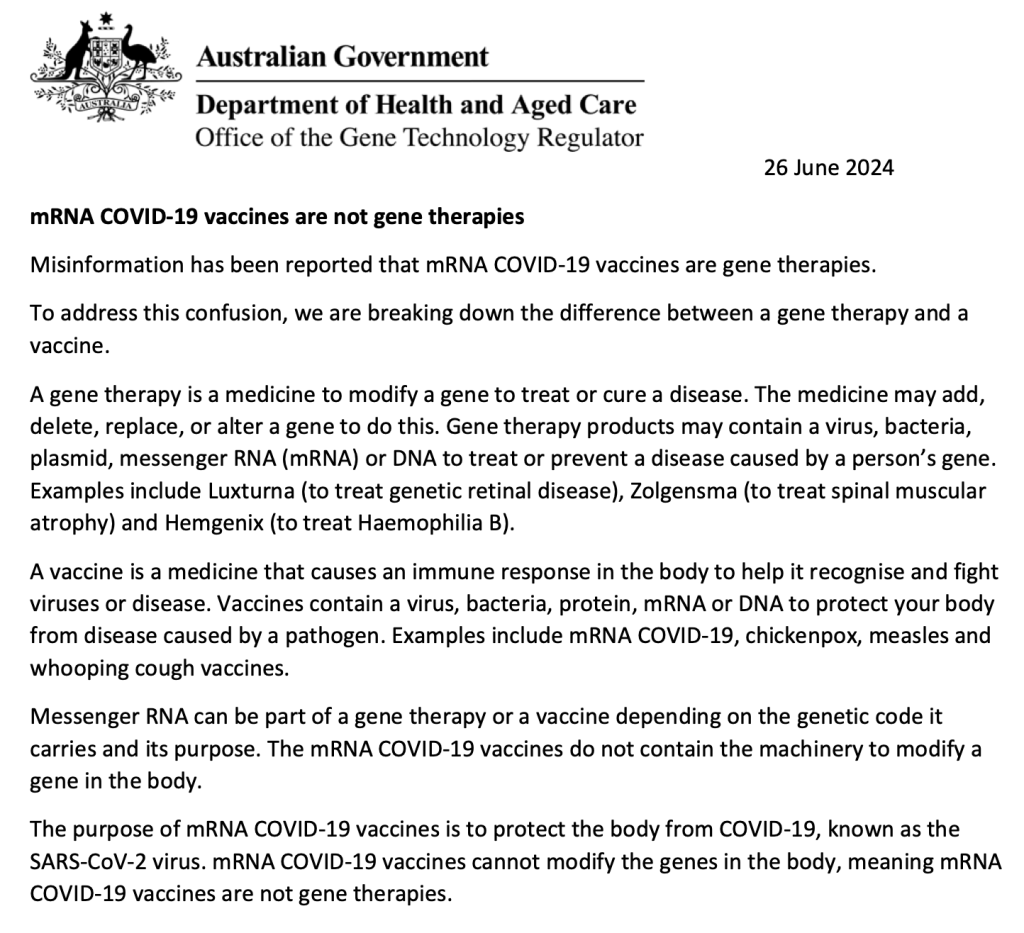
Shortly after, she calls mRNA COVID-19 vaccines “repurposed genetic therapies”. Such therapies do target disease conditions caused by problems in human DNA. Think cystic fibrosis, haemophilia. Distorting this therapy is popular in anti-vax circles and is a refinement of the initial myth that mRNA vaccines enter the cell nucleus and damage DNA: itself an example of outright evidence denial. A comprehensive statement from the Australian Government’s Office of the Gene Technology Regulator (OGTR) published on 26 June 2024. Former Senator Gerard Rennick led many disinformation campaigns on the topic, leading to the OGTR publishing the unambiguously titled, mRNA COVID-19 vaccines are not gene therapies below:
Of course we also heard that the mRNA COVID-19 vaccine “was tested for 2.5 months and is a medical product like any other”. Just as mRNA vaccines are not “repurposed” in the derogatory sense this woman intended, mRNA technology for vaccines actually began in the 1970s. Mice were jabbed with mRNA influenza vaccines in the 1990s and humans took part in mRNA rabies studies in 2013. As nanotechnology developed, the idea of using lipid nanoparticles to carry mRNA and its vital information into cells, was researched, developed and eventually used with an Ebola vaccine on guinea pigs in 2017. Here, Return on Investment had an impact on development, as Ebola affects only a few African countries and yields minimal cases in the USA. Then COVID hit and changed the commercial reality for mRNA vaccines. I recommend this page from John Hopkins to learn more about mRNA vaccine development.
Whilst it may sound catchy to refer to “2.5 months” as an insufficient timeframe to develop a vaccine, this ignores that vaccine development takes time, money and research. When the COVID pandemic hit, global investment was enormous and nations worked in partnership, pulling knowledge and experts together as never before. The genetic sequence of COVID-19 was discovered and within two months human testing began under extremely strict regulation, increasing the time for approval. Emergency authorisation required a minimum of 2 months follow up data. Development further demanded that subjects were monitored for 2.5 months after the second dose. Then came Phase III trials, involving “tens of thousands” of subjects and it is these trials that focus on safety and efficacy. In Australia, the TGA were doubly pedantic when it came to checking the trial data it was presented with. So no. The mRNA COVID-19 vaccine did not take 2.5 months to develop, but rather decades of research topped off with a global effort. Safety monitoring continues today.
Moving on, let me assure you medical products are all vastly different, and not as the woman alleged at one point “like a car or a bus”. Indeed Australia’s Therapeutic Goods Administration (TGA) have a rigid risk-based assessment and rating system for regulated medical products (therapeutic goods), focusing on potential for harm. More so, is a vaccine like a pain killer or is a pain killer like a pace maker (a medical device), or the pace maker like a bilary shunt and is that shunt a product like a titanium hip and the hip like a chemotherapy drug, a vasodilator or an external fixateur? The terms “product” and “medical product” are poles apart.
In that the vaccine did what it was supposed to do within the predicted risk-benefit ratio, even including unforeseen side effects, it is an effective medical product, still saving lives. Clearly, her use of “product” (and “car” and “bus”) was attempting to disparage mRNA vaccines, but in my mind this didn’t advance her argument. Rather it underscored her ignorance and reflects the pitfalls of “doing your own research”. More ignorance was highlighted by her bias in accusing skeptics of being “the magical thinkers”, suggesting skeptics think “nothing can be wrong with [the mRNA vaccine] because it’s got the magical word vaccine.”
At one point the woman promoted emeritus professor Robert Clancy, referring to his book on the subject. In fact he was the primary editor and contributor. Other contributors are anti-vaxxers Maryanne Demasai and John Campbell. Demasai’s work has long attracted criticism, including her 2016 suspension following an internal review into Catalyst at ABC. More recently she targets mRNA vaccines linking them to the myth of “turbo cancer”. Clancy earned himself ample criticism during the pandemic for promoting hydroxychloroquine and ivermectin. He was championed by Craig Kelly and targeted mRNA vaccines as “genetic treatment”. Newcastle University distanced itself from Clancy, and the vice-chancellor stressed Clancy was not “a subject matter expert on COVID-19”.
The woman’s appeal to authority was embellished when she boasted she had walked up Machu Picchu with Richard Dawkins. Yet there’s no evidence Dawkins ever made such a trek. I can’t reject her claim that she “corresponded with Rob T. Carroll of The Skeptics Dictionary in the 90s”. Rather, these events don’t constitute evidence for her argument. Or even, as she contended, protect her from being labelled a “cooker”.
Finally, and most offensively, was the accusation “[Skeptics] are the reason my neighbour’s kid can’t play sport because he’s got a damaged heart. Your attitude got into the newsrooms and we dismissed everything…”. As Richard Saunders later notes on the podcast, skeptics have no such influence over mainstream media. Yet the assumption by the anti-vaccine pressure groups that conspiracies are being suppressed by those who seek evidence, is their go-to blame tactic. This warped thinking is what maintains conspiracy theories. The reality is that myocarditis from COVID-19 infection is consistently rated as far more likely and severe than from the vaccine.
So finally, finally, we may conclude with an answer as to why this woman felt she was being referred to as a cooker. They have worked very hard to become such, and cooker conduct was on loud display during the above tirade.
Those of you lucky enough to attend Skepticon in Melbourne early last month will remember Dave Farina presenting his talk The Birth of the Science Communicator, from the USA.
He recently joined up with Dr. Dan Wilson of Debunk The Funk to take on two full time anti-vaccine grifters, Steve Kirsch and Pierre Kory. You can check out Dave’s take on how things went by dropping in on his video explanation here. Regrettably the debate turned out a predictable mess as the audience was loaded with anti-vax trolls and the conduct of the notably loathsome Kory and Kirby, meant the full schedule of discussion points wasn’t even met.
This would be because Kory, who in August last year, lost his medical licence for promoting, and wildly profiting from pushing ivermectin during COVID, spat the dummy and walked out. Aw Gosh. Anyway, there’s Gish-galloping from the anti-vax chaps and heckling from their supporters. Dave and Dan do an excellent job handling the horrific misinformation that we’re now seeing in our post COVID-19 pandemic world. I’m not surprised things went astray, as I learnt in Australia that anti-vaxxers deserve not a molecule of oxygen.
Still, perhaps given the state of anti-science rhetoric and the steady rumble of runaway grift trains, then documenting their demonstrably deceptive tactics is a pursuit with rewards we’re yet to fully appreciate. This is an almost two hour gig which is perfect for either bingeing or letting play whilst you do the housework or head out for a walk.
You can watch the same event without Dave’s commentary, at The greatest vaccine debate in historyhere at Pangburn. Apologies that neither video appears to permit embedding.