Cases of OS measles-derived infection increasing in Australia

Whilst we can blame the impact of the global anti-vaccination movement, an increase in vaccine hesitancy that arose and has persisted during and since the COVID-19 pandemic, and even some RFK Jr. flotsam misleading the gullible, when it comes to measles, Australia and Australians must be especially vigilant in managing the risk of infection overseas.

I’m not a doctor nor hold any position allowing me to claim I can advise you, beyond what I read, on any infectious disease. Indeed I would recommend speaking first with a qualified doctor about the topic. Measles is highly contagious and spread via respiratory droplets (aerosols). Non-specific symptoms such as fever, rash, nasal discharge and cough are common. Nonetheless measles has a reasonably high rate of complication leading to hospitalisation or death.

The role of measles infection in causing immune amnesia | 2 | is remarkably disconcerting. I’d urge any reader to invest even modest time to understand this phenomena, and ensure oneself and loved ones are immunised against this virus. Remember, there is no cure. Quaint stories from anti-vaxxers of them all having it as a child and growing up with no ill effects are possible only because they refer to pre-vaccine years and choose to forget the friends who never returned to school, became blind or sustained brain damage.

Today (31st March 2026) saw the Australian Centre for Disease Control (ACDC) publish a firm reminder that if you’re travelling OS, adding a measles jab to your pre-travel preparations is more than wise. Even if you’re sure you have been vaccinated in the past, if you can’t confirm this with records, consider yourself un- or under- vaccinated. Adolescents or adults born during or after 1966 are recommended to receive two measles containing vaccines at least 4 weeks apart [Source]. It’s also quite safe and more than sensible to top up your MMR, particularly if you’re an adult, and decades have elapsed since your initial MMR. First let’s consider this sub-heading from ACDC News.

A new report confirms that almost all cases of measles in Australia are either acquired overseas or related to an overseas acquired case – especially around school holidays. Don’t bring measles home from holidays – add vaccination to your travel plan.

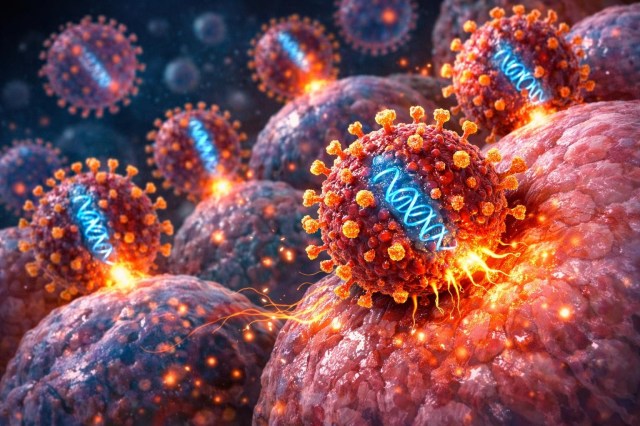
Virus particles with orange spikes attaching to human cells with glowing RNA inside
3D illustration showing virus particles interacting with cells

In fact the report | PDF | scrutinising the decade to 2024, reveals the years of highest infection were 2014 (339) and 2019 (284). There were 1,095 cases of infection reported during that decade. Almost all cases had either been acquired overseas or from someone who had brought measles back to Australia from overseas, states the ACDC news piece.

Further breakdown of figures tell us that when it comes to vaccination status, that 47% were unvaccinated, 30% had an unknown vaccination status, whilst 14% were under-vaccinated (being one dose). This final figure reinforces the importance of completing a vaccine schedule as well as confirming the impact of even insufficient antigen stimulus delivered via vaccine. The smallest number of infections were seen in subjects who had received only one of the two required measles shots. Measles infection was most common in those who had travelled OS – particularly to countries where measles was common. 57% of total notifications were in people aged 20 to 49 years.

2025 and 2026 data confirm a striking increase in measles infection. The total for 2025 was 181 cases. Currently we’re 25% of the way through 2026 with data showing 85 cases. This puts us on track for a 2026 total of 340 measles cases. The report also noted the drop in childhood measles vaccination from 94% in 2020 to 91% in 2024. Rather than look at this as a drop of only 3%, we must remain aware that measles herd immunity is impacted negatively when immunisation drops below 95%. So in reality, the reduction in immunisation has been steadily placing us all at greater risk since 2020.

Indeed certain groups are at higher risk of harm from insufficient herd immunity, including:

  • The immunocompromised
  • Those unable to be vaccinated for short or long term
  • Children too young to be vaccinated
  • The pregnant

Clearly, it’s important to plan some weeks ahead of travel as the two MMR (or measles) shots need to be given at least four weeks apart. Even if urgency applies, a gap of two weeks is insufficient to promote an adequate immune response. If an infant under 12 months needs to be considered for OS travel and/or an MMR course please see a paediatrician or your General Practitioner. On that topic, this NCIRS FAQ page is an excellent resource. It includes:

Infants travelling overseas can receive an early dose of measles-containing vaccine from 6 months of age, following an individual risk assessment, in addition to the routine doses given from 12 months of age.

Global outbreaks have been on the rise for some time. Australia has been keeping pace as best it can. Each state and of course the country as a whole is seeking to promote vaccine uptake and keep a close eye on the impact of outbreaks. There is only one solution and that is an increase in immunisation across the nation.

References below are from different states, news items and excellent US herd immunity/outbreak simulators.

  1. Measles cases almost triple in Australia as global outbreaks continue – ABC, 22/12/2025
  2. Increased risk of measles in Victoria – Vic Dept Health: 22/02/2026
  3. Free Measles Vaccine for Victorians – 4/03/2026
  4. Measles Alert in NSW
  5. Measles Alert for Brisbane Airport – 25/03/2026
  6. QLD: 10 cases acquired OS and 5 cases acquired locally – 30 March 2026
  7. Measles Alert – W.A. Government: 16/03/2026
  8. Measles Epidemiology in Australia – Full Report
  9. CDC Measles Outbreak Simulator
  10. FRED US Measles Simulator
  11. Herd Immunity Simulation: 2015 – Guardian

“Demolishing anti-vaccine frauds in live debate”

Those of you lucky enough to attend Skepticon in Melbourne early last month will remember Dave Farina presenting his talk The Birth of the Science Communicator, from the USA.

He recently joined up with Dr. Dan Wilson of Debunk The Funk to take on two full time anti-vaccine grifters, Steve Kirsch and Pierre Kory. You can check out Dave’s take on how things went by dropping in on his video explanation here. Regrettably the debate turned out a predictable mess as the audience was loaded with anti-vax trolls and the conduct of the notably loathsome Kory and Kirby, meant the full schedule of discussion points wasn’t even met.

This would be because Kory, who in August last year, lost his medical licence for promoting, and wildly profiting from pushing ivermectin during COVID, spat the dummy and walked out. Aw Gosh. Anyway, there’s Gish-galloping from the anti-vax chaps and heckling from their supporters. Dave and Dan do an excellent job handling the horrific misinformation that we’re now seeing in our post COVID-19 pandemic world. I’m not surprised things went astray, as I learnt in Australia that anti-vaxxers deserve not a molecule of oxygen.

Still, perhaps given the state of anti-science rhetoric and the steady rumble of runaway grift trains, then documenting their demonstrably deceptive tactics is a pursuit with rewards we’re yet to fully appreciate. This is an almost two hour gig which is perfect for either bingeing or letting play whilst you do the housework or head out for a walk.

You can watch the same event without Dave’s commentary, at The greatest vaccine debate in history here at Pangburn. Apologies that neither video appears to permit embedding.

Paracetamol use in pregnancy | Therapeutic Goods Administration

Warnings from Donald Trump that acetaminophen (popular brand name Tylenol), also known as paracetamol (popular brand name Panadol) has a causative link to autism when taken by pregnant women are unsupported and rejected by health authorities world wide.

Absurdly, his ramblings were a unilateral seizure of what was apparently a planned nuanced announcement, prepared by his own so-called health administration. They intended a caution on Tylenol, a supposed treatment for autism and to reveal $50 million for autism research.

Using his feelings and purported anecdotes, Trump urged pregnant women to “fight like hell” against paracetamol. He reasoned with a bizarre risk-benefit myth that not taking the drug meant only good things would happen, opposed to the risk of bad things, if women took the drug. Yet the reality is that paracetamol/acetaminophen is necessary to combat fevers women may experience during pregnancy and that failure to treat fever can cause neurodevelopmental disorders for the unborn child. These include autism, ADHD or developmental delay. Another identified risk is miscarriage.

Trump also used vague anecdotes to link the vaccine schedule to childhood death and harm. There is no evidence for either Trump’s tale of vaccines killing the child of an employee, and no scientific evidence to justify the changing of vaccination schedules. Trump argued the Hepatitis B vaccine should be held off until 12 years. Yet the primary source of exposure for infants and children is maternal, not sexual activity as claimed by Trump. He further suggested spacing out Measles, Mumps and Rubella vaccines as well as other combined vaccines. The apparent logic is that children are given too many antigens at once.

In fact, children receive fewer antigens today to combat a greater range of disease. Thirty years ago 30,000 antigens were required to encourage immunity against 8 diseases. Today’s US vaccine schedule uses 305 antigens to tackle 14 diseases. And active children take on 2,000 – 6,000 antigens daily through eating, playing and even breathing.

Pregnant women should fight like hell to ignore Donald Trump’s monumental woo.

Therapeutic Goods Administration Statement – 23 September 2025

  • Australia’s Chief Medical Officer and the TGA join with other global medicines regulators, leading clinicians and scientists worldwide in rejecting claims regarding the use of paracetamol in pregnancy, and the subsequent risk of development of ADHD or autism in children.
  • Robust scientific evidence shows no causal link between the use of paracetamol in pregnancy and autism or ADHD, with several large and reliable studies directly contradicting these claims.
  • Paracetamol remains the recommended treatment option for pain or fever in pregnant women when used as directed. Importantly, untreated fever and pain can pose risks to the unborn baby, highlighting the importance of managing these symptoms with recommended treatment. Pregnant women should speak to their healthcare professionals if they have questions about any medication during pregnancy.
  • Paracetamol remains pregnancy category A in Australia, meaning that it is considered safe for use in pregnancy when used according to directions in TGA-approved Product Information (PI) and Consumer Medicines Information (CMI) documents.
  • This means that a medicine has been taken by a large number of pregnant women and women of childbearing age without any proven increase in the frequency of malformations or other harmful effects on the fetus having been observed. As with the use of any medicine during pregnancy, people who are pregnant should seek medical advice tailored to their specific circumstances before taking paracetamol.
  • The TGA is responsible for ensuring the safety, quality and efficacy of medicines on the Australian Register of Therapeutic Goods (ARTG), with safety in pregnancy a key consideration for all products on the ARTG.
    The TGA undertakes evaluation of clinical, scientific and toxicological data prior to registration of a medicine, and this information is summarised in TGA-approved PI and CMI documents, targeted at healthcare professionals and consumers respectively, to help support safe use of a medicine in the community. These documents include information relating to use of a medicine in pregnancy.
  • The TGA is aware of announcements by the US Administration that use of paracetamol in pregnancy may be associated with an increased risk of autism and ADHD in children, though a causal association has not been established.
  • TGA advice on medicines in pregnancy is based on rigorous assessment of the best available scientific evidence. Any new evidence that could affect our recommendations would be carefully evaluated by our independent scientific experts.
  • Whilst there are published articles suggesting an association between maternal paracetamol use and childhood autism, they had methodological limitations. More recent and robust studies have refuted these claims, supporting the weight of other scientific evidence that does not support a causal link between paracetamol and autism or ADHD.
  • The TGA maintains robust post-market safety surveillance and pharmacovigilance processes for all medicines registered in Australia, including paracetamol. This includes detailed analysis of adverse event reports made by medicine consumers, clinicians and pharmaceutical companies, review of published medical literature, and close liaison with international medicines regulators. If a safety issue is confirmed prompt regulatory action is taken to mitigate risks.
  • International peer regulators including the Medicine and Healthcare products Regulatory Agency (MHRA) in the United Kingdom have reiterated that paracetamol should continue to be used in line with product information documents. Following evaluation in 2019 the European Medicines Agency (EMA) found that scientific evidence regarding effects of paracetamol on childhood neurodevelopment was inconclusive.
  • People who have concerns and are pregnant, or considering pregnancy, are advised to consult their healthcare professionals in the first instance to discuss this issue. [Source ©️ TGA]

GLOBAL NEWS COVERAGE

Conspiracy Theory Attribution: An attempt to defend the Wilyman thesis

In 2015 a long standing Australian anti-vaccination activist and lobbyist, Judith Wilyman, was awarded a PhD by the University of Wollongong. Titled A Critical Analysis of The Australian Government’s Rationale for its Vaccination Policy, the work attracted exceptional criticism. I’d like to consider the veracity of certain arguments raised in defence of Wilyman’s work, noting they have arisen from one source and are themselves extensive. [Jump to Conspiracy Theory Attribution].

Antithesis

From across the globe and from multiple sources, criticism flowed readily for Wilyman’s publication. For this author, there was one thing other than the content that also rankled. The fact that it was a collection of biased references arranged to attack the integrity of one of Australia’s most effective public health initiatives. Quite striking, for a work that emerged from an academic institution, is the absence of any original research conducted by the author. As the author uses the term “thesis” we had best examine this. The Oxford dictionary offers two distinctions, with the following describing “a doctoral thesis”:

a long essay or dissertation involving personal research, written by a candidate for a university degree

This may of course seem petty unless you’ve taken time to examine this work. Nonetheless for the sake of clarity I too shall yield and refer to this diversion from genuine analysis of Australian vaccination policy, as a thesis. It is clear however, that there is no research, methodology, study, data collection or justified hypothesis. There is only a literature review and a biased one at that. Australian emergency physician Kristin Boyle describes the work as, “the inevitable product of someone with an ideology based agenda”. Genuine literature reviews that seek to examine varying or different arguments, are valuable items of research. They collate and examine related works, and in judging the strengths or weaknesses of each, offer a contention, or indeed a novel conclusion. This didn’t happen in the Wilyman literature review. Still, Judith Wilyman falsely poses herself as “an expert witness” in a family court case, a “specialist in government vaccination policies” (federal politics), and has significantly elevated her importance to the fields of vaccinology and public health.

The reality is Wilyman barely scraped in. One of her two examiners suggested the thesis was unworthy of PhD status and better suited to a Master’s degree. They observed concerns about a lack of engagement with existing literature and “the lack of an appropriate theoretical framework”. Wilyman they argued, had conducted no original research nor contributed to the knowledge of the subject. This conflict was resolved by the rare event of appointing a third examiner. Australian Skeptics Inc. report (archived):

That third examiner, also unnamed, judged that, while the thesis as assessed showed Wilyman conducted original research, it did not make a significant contribution to knowledge of the subject, had no indication of a broad understanding of the discipline within which the work was conducted, and that it was not suitable for publication. 

They recommended that the thesis be resubmitted, and gave “extensive and detailed comments on areas that need to be improved”, sharing the same concerns as the earlier critical examiner.

This revised version was consulted by only one examiner; the third individual who had requested the significant changes. The original “earlier critical examiner” was not asked for an opinion. The examiner who had accepted the original, doubly-rejected thesis, was considered a certainty for the improved version. Thus, a year later than she planned, Wilyman had her PhD.

In the excellent article, PhD thesis opposing immunisation: Failure of academic rigour with real-world consequences (Vaccine 37; p. 1542), Wiley et al postulate as to how this oversight possibly came to be:

The quality of the writing and presentation of the thesis is such that many of its arguments could seem plausible to an examiner without specific content knowledge, despite sound academic credentials. Our combined expertise (vaccinology, epidemiology, the history and practise of immunisation policy development globally and in Australia, social science) and as PhD examiners, both gives us detailed knowledge of the sources cited by the thesis, and allows us to identify key deficiencies […] A critical analysis should consider the merits and faults of an issue and be conducted in a way that is not designed to find only evidence for the writer’s pre-determined conclusions. […] This thesis does not include methods for assessing the literature, does not discuss aspects of identified studies which may contradict one another, or attempt to establish the quality of relevant studies. Rather, the references used are highly selective, only citing a small number of the available epidemiological studies and clinical trial reports, all of which are interpreted to support conclusions which appear pre-determined.

The Supervisor

A News GP summary of the above paper in Vaccine is available here. Let’s examine the first sentence in the above quote. Firstly, does it help us understand how such a deliberate failure to include material supporting Australia’s vaccination policy was not addressed by Wilyman’s supervisor? Secondly, is it likely such a biased collection of arguments was missed because examiners, and particularly the supervisor, lacked “specific content knowledge”? Sure, Wilyman studied within the School of Humanities and Social Inquiry. Her supervisor, Professor Brian Martin completed his PhD in Theoretical Physics and later became a Professor of Social Sciences, at the University of Wollongong. But not being qualified in vaccinology, related fields or policy development does not render senior academics incapable of accessing evidence or seeking consultation. More so, Wilyman’s published acknowledgement of her supervisor is unambiguous;

I would also like to thank Professor Brian Martin, my primary supervisor at the University of Wollongong, for his unwavering support and encouragement. His weekly phone calls kept me focused and there were many robust discussions that helped me to overcome the significant opposition to this project. I thank him for his patience and dedication to my research.

It’s important to acknowledge that the role of Professor Brian Martin (left) in Wilyman’s thesis was not just one of “unwavering support” for her many unsupported claims, but one in which his own later accounts afford academic freedom more importance than academic integrity. I shall endeavour to be as fair as possible in referencing claims Brian Martin has made in defence of the Wilyman thesis. I will seriously consider the notion of Conspiracy Theory Attribution (CTA) and the suggested failure of critics to analyse the thesis and citations presented.

Continue reading

“I didn’t know that”: RFK Jr. offers genuine insight

As US Secretary of Health and Human Services, Robert F. Kennedy Jr. has overseen financial and staffing cuts to infectious disease, mental health and addiction services. However, he appears to be unaware of this and the extent of the harm he has caused.

In trying to ascertain exactly where his head is at, consider his visit to the unvaccinated Mennonite community in Seminole, Texas, where a measles epidemic rages, killing children and nearly killing others. Kennedy posted on X about his visit with a couple whose 2 year old daughter was discharged after 3 weeks in Intensive Care. He also offered:

I also visited with these two extraordinary healers, Dr. Richard Bartlett and Dr. Ben Edwards who have treated and healed some 300 measles-stricken Mennonite children using aerosolised budesonide and clarithromycin.

Healed? Really?

Well, no. Nothing “heals” measles. There is no cure. Richard Bartlett has previously claimed budesonide was a miracle cure for COVID-19. His extensive research involved being asleep during which time “an answer to a prayer” came to him. With patent laws on divine intervention being sketchy at best, it’s no surprise that this is now a cure for measles. So, what is aerosolized budesonide when it’s at home? A bronchodilator, often simply called an asthma inhaler, after its most common use. As noted in the video below, Dr. Paul Offit warns of the immune inhibiting qualities of steroids like budesonide and the obvious danger this poses during measles infection.

The other “extraordinary healer”, Ben Edwards, has recently volunteered that mass infection is “God’s version of measles immunisation”. This guy is peddling prayer and unproven treatments whilst wandering about his so-called clinic, himself infected with measles. When devotees from the Kennedy-founded anti-vaccine lobbyist group, Children’s Health Defense praise him for his negligence he offers, “I’m only doing what any good doctor should be doing”.

So here we are, now getting an idea of how US public health initiatives unfold under Kennedy. I wonder if this is what Trump had in mind when he said “Go wild Bobby”. To make the whole thing even more bizarre is the fact other anti-vaccine identities are criticising Kennedy for observing, tucked at the bottom of another post on X, that the MMR vaccine is “the most effective way to prevent the spread of measles”. They may be happier with the falsehoods he has since announced about “treating” measles (you can’t) that cases are inevitable because the vaccine “wanes very quickly” (it doesn’t), and 14 studies not linking autism to vaccines are “invalid” (no evidence provided) .

With her apt tone, Rachel Maddow runs through a few of Kennedy’s recent failures, in the MSNBC video below…