
If having the odd drink too many, and arguing with that strange relative who has a tall tale defending pseudoscience, is your version of strange Christmas traditions, you’re just not trying.
Imagine drawing a face on, and feeding a log you also keep warm with a blanket or hat, then letting the kids beat the shit out of it with sticks on Christmas Day. The uniquely Catalonian idea of “defecating log” is to fatten the woe begotten wood in the lead up to Christ’s birthday, so that it defecates treats of almonds, hazelnuts and nougats as presents for the albeit suddenly violent kids. They also have a chant for what they want, which includes warning against shitting out any herring, which is just way too salty. Aye! Some clever parenting in the wee hours and sleight of hand, ensures the right treats, and definitely no herring, plops onto the floor.
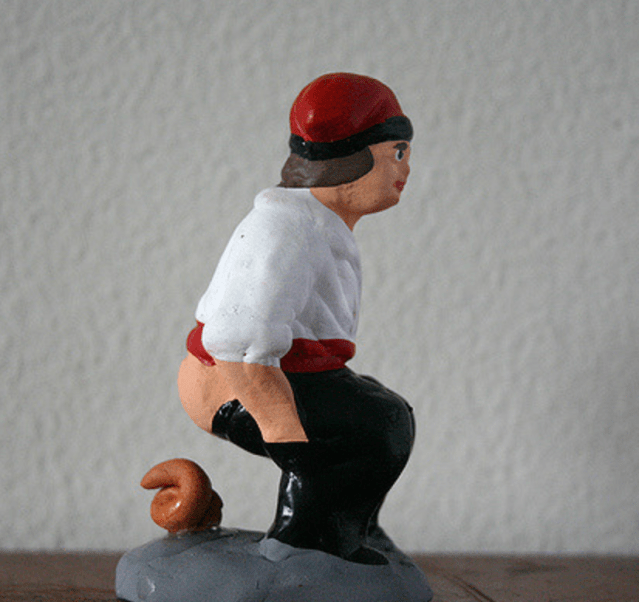
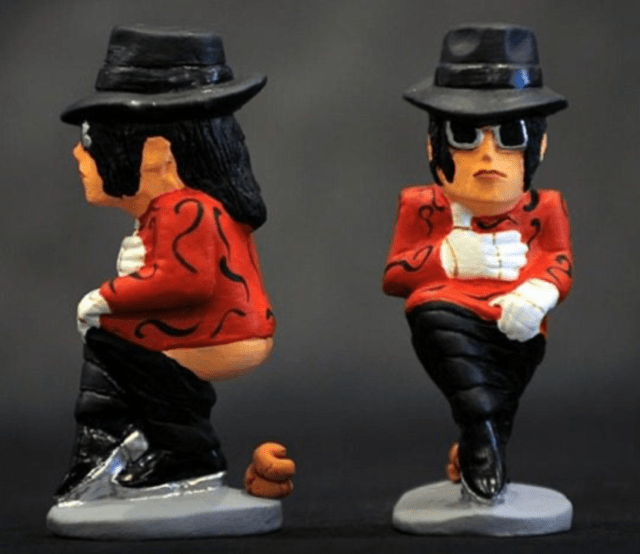
Better yet, is El Caganer or Kagen, which is a nativity scene character answering the call of nature and defecating his or her own, er… yuletide log. It’s thought variously that these fibre-fed figures originally made their way into larger nativity scenes, perhaps representing small villages, and have even been positioned in a quiet corner to offer a “Where’s Wally?” type challenge. Some claim it symbolises birth in a stable (no thanks) or fertilising the Earth (better). Others reckon it’s about good luck in the New Year. The usual job went to a peasant with a Catalan red cap. Clever marketing has now stepped in, leaving no-one safe. Today Kagen characters that represent certain news-worthy folk of the year, can be purchased for the Holy scene. I’m looking at you Hilary… and Donald… and “ooo, ooo, ahhh”, Michael Jackson.





In Norway it’s wise to lock up your brooms because witches and various evil spirits are out and about roaming the countryside. They obviously have some travelling to do, because they spend a good deal of said wandering searching for brooms to ride. There’s also no guarantee they will be happy with just one broom to zoom. Remember to hide your brooms and offer a protective prayer, before they’re swept away. You’ve been warned.
In Iceland the 13 days before Christmas can be plagued with havoc brought about by the 13 troll brothers who dwell in yon mountains. Known as the Yule Lads, a different brother will visit the house each night and leave a gift or a rotten potato in children’s shoes. This depends (you guessed it) on whether they’ve been naughty or nice. The Yule Lads have awesome names reflecting their bothersome natures, such as Pot Licker, Spoon Licker, Window Peeper, Sausage Swiper and Door Slammer (I feel seen). Icelandic kids have long been kept in line with tales of the Lad’s mother, Grýla, who may well come to steal them away.
The Welsh have Mari Lwyd (the Grey Mare) the origins of which actually predate modern Christmas, and may reach to the depths of Paganism. The Welsh like to pop a horses skull on a pole, or rather obviously, on the head of an accomplice, before covering it in a white sheet and bright decorations. These jaunty chaps, reminding us that all is not yet dead, then wander to various houses where they sing or engage in rhyming battles with the home owners. If successful, they are rewarded with food and drink, and invited in to dance and evoke further trickery. They then presumably gallop off until next year.
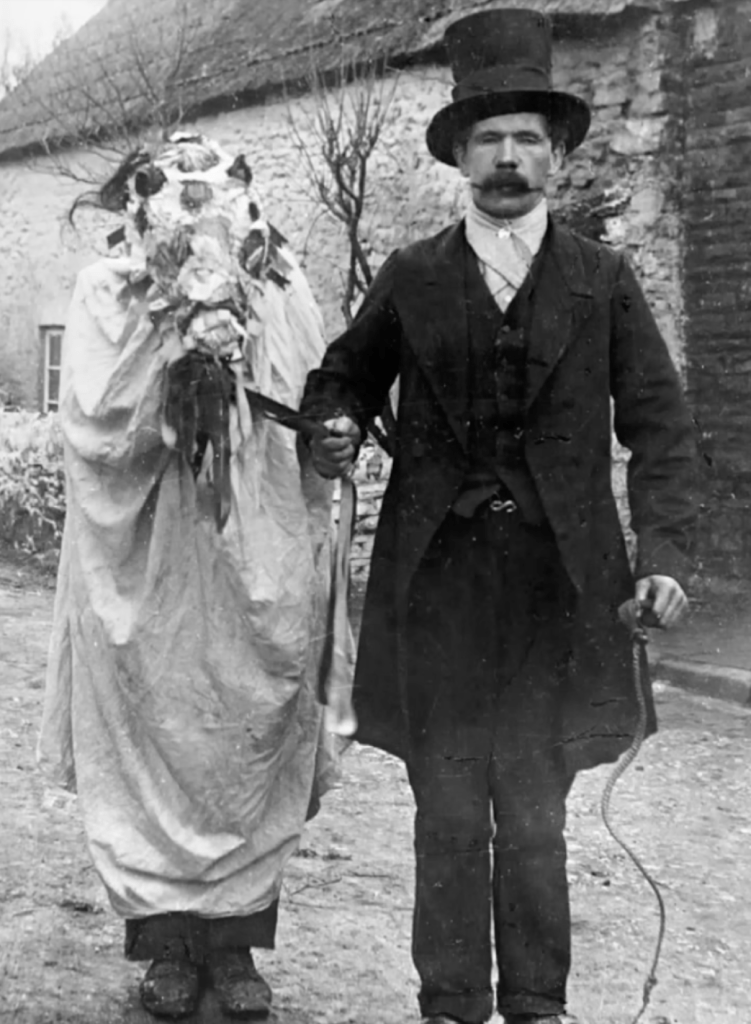
Mari Lwyd – Wales
In Oaxaca Mexico, the Night of the Radishes is held on 23rd December. Locals carve around 20 tons of large radishes into cultural motives, icons and complex nativity scenes. Prizes are given for the most creative of the displays which attract large crowds, adding much to the aura of cheer and celebration. The radishes are not for eating but the care given to the carvings leads to some fascinating artwork. Cancel that Chrissy trip to the beach and head to Oaxaca, I say.
Goats get a Guernsey in a few Christmas carry-ons it seems. In Romania the ancient tradition of Capra involves men wearing sheepskin, bells on their shoes and a colourful, horned, exaggerated goats-head with impressive snapping jaws. Accompanied by musicians and singers, they wander about doing their thing, including jaw snapping in tune to the drum beat. In Sweden the Gävle Goat gets plenty of attention, and thanks to the tendency of loutish Swedes to burn and batter them down, plenty of rather ineffective protection.
The Gävle Goat, constructed in the castle square in Gävle is a giant version of the Yule Goat, and since its original appearance in 1966, 42 of 59 goats have been variously burnt, bashed, shot with fireworks and kidnapped by helicopter after the bribing of a goat-guard, before being abducted to Stockholm. One year the goat was burnt down, rebuilt and burnt down again. This led to the ineffective “Goat Committee” being formed. In 1988 gambling on the goat’s fate was legally sanctioned. Of course, that year it survived. During another year, a DOS attack shut down security cameras allowing the goat to be, yes, burnt to the ground. It’s also been run down by a student in his Volvo Amazon, kicked to pieces by vandals, burnt down after being shot with flaming arrows by Santa Claus and The Gingerbread Man and also hidden in the backyard of an unimaginative thief. One year the Goat committee concluded that the brown fire-proofing was ugly and decided to omit it. It was set alight, extinguished and shortly after, set on fire yet again.

Hot Stuff – The Gävle Goat
Some goats stood 13 metres and weighed 3 tons. Forward thinking students from the Natural Science Club weighed the evidence and constructed smaller less conspicuous goats. These little guys were promptly “smashed to pieces”. Undeterred, the young scientists persisted, only to later find their creations “floating in the river”. I understand they are far from defeated. Go science!
In Finland a lovely tradition sees family members head out into the icy weather on Christmas Eve to place lit candles at the resting place of loved ones and friends. This gives a delightful warm glow to what are usually cold, spooky places of isolation. Nice one Finland. More fascinating is the Ukrainian tale of the poor widow who, with help from her wee ones, grew a pine tree from a fallen pine cone. When Christmas came they had no coin to buy decorations for the tree so went to bed on the Eve with heavy hearts. Mother rose at dawn to find the tree covered in spider webs. She opened the window to get a gander, and when sunlight hit the webs they turned to silver and gold, right on that there tree. And yay, they were never poor again. Mother must have invested the silver and gold in Christmas tree decoration companies, which she later floated on the stock market leaving changes in volatility to impact us poor consumers as we decorate our own trees all these generations later. Okay, I actually made up the stock market thing.
In Slovakia if you want good luck to befall you and yours, the idea is to get the most senior member of the family to throw pudding on the ceiling. The more pudding that sticks, the more luck you can expect. So, the trick is to make that pudding recipe as sticky as possible. Just don’t get a shock if grandad’s teeth are also smiling down at you from the ceiling. Speaking of eating, don’t forget that thanks to a successful ad campaign by KFC in the 1970s, for a Party Barrel to be had at Christmas Time, Japanese sales are greater than any other time of the year. It’s been so successful, finger-lickin’ Japanese have to pre-order weeks in advance and on the day itself there can be queues stretching way out of KFC shops.
There are of course many, many more unique traditions to check out and enjoy around the world at this time of year. If you’re bored sitting at home come night time, a quick search should reveal the location of Christmas lights and/or the suburbs and streets which are known for putting on impressive displays in suburban Australia.
And from this author have a very happy and joyful festive season followed by a safe 2026. El Caganer!

 Making a list,
  and checking it twice
  , gonna find out
  Losing In The Lucky Country