Bent Spoon nominees proudly preposterous piffle presents possible positively ponderous prevarication for pondering judges

Who will win this years Bent Spoon award dear reader? Why, the perpetrator of the most preposterous piece of paranormal or pseudo-scientific piffle, I hear you say. Yes indeed. But what a sterling collection of viable candidates there are. Judges face a challenging pile to sort through.

To find out who takes the gong we must wait until the winner is announced at Skepticon XL, which is being held courtesy of Australian Skeptics in Sydney over 23-24 November. To find out more about the Bent Spoon Award you can catch up here. To read up on this years nominations you can visit this page of proud piffle pushers. The predatory pseudoscientific pandemonium includes last year’s winner Ross Coulthart for his straight faced claim that Donald Trump fears for his life, should he reveal what he knows about UFOs/UAP. Coulthart also squeezed in an interview with Uri Geller during which he said:

I strongly believe there is a phenomenon of unidentified anomalous phenomena that is probably non-human, that is engaging with this planet.

Oh my, Ross. A phenomenon of phenomena? Really? There’s also one Cael O’Donnell clutching to the title of Australia’s Number One Medium and using the thoroughly debunked Spirit Box to tune in to so-called messages from the dead. Social media has been seemingly kind to Cael. I suspect Bent Spoon judges might not. For inflicting AstroTash on nightly news viewers, Channel 7 and news director Anthony De Ceglie are also nominated. Pharmacare Laboratories which popped up here recently thanks to claims relating to “clinically proven” Sambucol, are nominated for Adult Vita Gummies vitamin supplements. Marketed as “backed by science, memory and mind, seriously good, and triple immune support”, Vita Gummies for kids have already won a Choice Shonky, whilst the TGA are keeping a close eye on them via compliance reviews.

When you suddenly hear of a “medical wonder” you’re right to suspect it’s anything but. This is exactly the case with photobiomodulation. Sciencey yes, genuine no. Chiropractor Genevieve Dharamaraj claims a red torch light, when pressed against the heads of autistic children is “basically building new pathways in the brain and we can do that with cutting edge technology like photobiomodulation”. Outrageous stuff, and not missed by Media Watch. Another supporting chiropractor Kyle Daigle, sells the lights for US$8,000. Genuine experts label it pseudoscience. All the red flags were missed by channels 7, 9 and radio station 4BC, earning them all a nomination.

Our next nominee is erstwhile “controversial” Catalyst reporter Maryanne Demasi. Thanks to COVID, she has found her calling as an anti vaxxer and conspiracy theorist. Demasi narrates The Truth About COVID-19 Shots, which recounts the baseless claim that COVID-19 vaccines are contaminated with DNA, in addition to the usual grab bag of conspiracies. The film recounts the mythical beliefs of ex-barrister Julian Gillespie who sculpted the COVID vaccine court cases in Australia. Demasi focuses in depth on the Fidge v Pfizer case and the anti-vax fallout I’ve blogged about here. Because of that and other pertinent developments I shall revisit the Demasi caper in short order.

In a similar vein we find, unsurprisingly, that Port Hedland Council have also been nominated. The council voted 5-2 in favour of a motion to call for the immediate suspension of mRNA COVID-19 vaccines. The bogus claim that these vaccines are contaminated with DNA was again a feature here. It was brought forward by Adrian McRae who has a history of anti-COVID vaccine activity. Proving he’s no cooker, WA premier Roger Cook, memorably told the council to “stick to knitting”, suggesting they had “gone off the rails”.

Also from Western Australia, comes the focus on that state’s Cancer Council and the manner in which they offer the complementary therapies reiki and reflexology. This has earned Cancer Council WA a nomination. Due to the seriousness of this issue, it deserves some examination here. Whilst Cancer Council Australia, Tasmania, Victoria, South Australia, Northern Territory, ACT, QLD and NSW discuss and provide information on cancer and complementary medicines, they do not have the promotional tone or confusing claims found on the WA site. Let’s break that down a bit.

Landing on the national Cancer Council page or a state’s Cancer Council page and typing “complementary” into the search field yields a variety of results. Some states such as Tasmania, QLD and the NT direct you firstly to the national site’s Understanding Complementary Therapies PDF. It’s a comprehensive resource and goes into appreciating the perils associated with “alternative” therapies and offers hints on how patients should navigate all promised therapies. It is prefaced by:

During your cancer journey you may hear about, or become interested in, complementary therapies. There are many therapies on offer and information about these can be confusing. The information below will help you to make informed and safe choices.

Other states such as Victoria, NSW and SA provide an extensive information page and always direct the reader to the same PDF located on their own server, such as this example in Victoria. Victoria state:

Complementary therapies are said to focus on the whole person, not just the cancer. They include practices like massage and yoga, as well as medicines that you swallow or apply to the skin. Complementary therapies are used with conventional medicines and may help people cope better with the physical and emotional impact of cancer, as well as side effects caused by conventional cancer treatments. There is no evidence complementary therapies can treat or cure cancer itself. 

For example, the impact of healthy diet and exercise during conventional cancer treatment is appreciated today. We see that SA include in their information on complementary therapy; “Some have been scientifically tested and shown to work. Research into complementary therapies and medicines is growing”. Visiting the WA website we read when it comes to reiki, which is the ineffectual practice of moving hands near a patient; “People use reiki to improve physical, emotional and spiritual wellbeing.” And also:

Evidence: There is no reliable evidence that reiki has any benefits. Anecdotal reports suggest that reiki is calming and relaxing, often helping to relieve pain and anxiety, reduce stiffness and improve posture.

Which tells us for some, reiki has a placebo effect or may induce calmness due simply to belief in energy therapies. Anecdotes can never be regarded to “suggest” anything, which can be better understood with research. In discussing reiki, Understanding Complementary Therapies states on page 9, “There is no scientific evidence of an energy field or that energy therapies have any benefits“. There is also no evidence reflexology has a genuine impact on improving health. Even Cancer Council WA state it is based on a belief. The placebo effect it likely produces is evident in this summary on the same page.

Evidence: Clinical trials have shown that reflexology reduces pain and anxiety and helps improve quality of life, particularly for those receiving palliative care.

Australian Skeptics’ executive officer, Tim Mendham has looked further into the claims by Cancer Council WA regarding use of these therapies and reports also, that reflexology and reiki are no longer covered by the NDIS. There are many potential problems when non-evidence based practices are introduced alongside genuine treatments. The distinction should always be abundantly clear and this is not the case for Cancer Council WA.

One such potential problem brings us to the next nomination. Elle MacPherson has made absurd claims her breast cancer “manifested” due to her emotional and spiritual state. She has further alluded to a holistic cure, despite having had seemingly successful surgery for the cancer. With the current impact of social media this is potentially quite dangerous. Her promotion of dishonest wellness guru Simone Laubscher, who also contends her own cancer was cured with an attitude change, is covered here on ABC’s 7.30 programme.

Finally, channel 7 manage yet another nomination alongside David Miles and his latest impossible rain-making, drought-defying technology, “Atmospherica”. Seven offered no criticism or expert opinion to Miles’ claims that he has a device that generates DNA-like code based instructions to atmospheric pressure systems, permitting him control of “the shape, velocity and trajectory of an approaching event.” Media Watch plonks this porky in its place revealing some great quotes: “PT Barnum style bunkum… technical description…is gibberish”.

So, if you wish to pooh pooh the perpetrator of the most preposterous piece of paranormal or pseudo-scientific piffle, you know what to do.
Respect your elderberries?

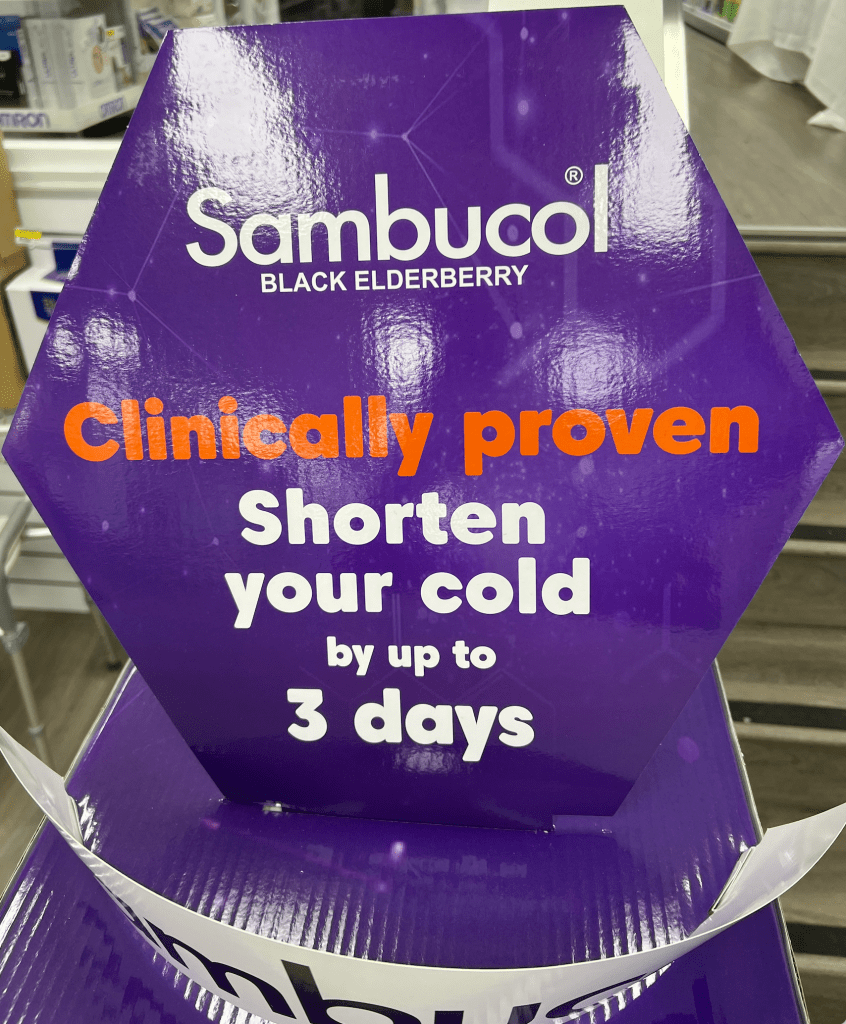
A couple of weeks before the start of winter, I wandered past a garish product display in my local pharmacy. A glossy purple hexagon boasted orange font across its middle; Clinically proven. Underneath that in white font: Shorten your cold by up to 3 days.

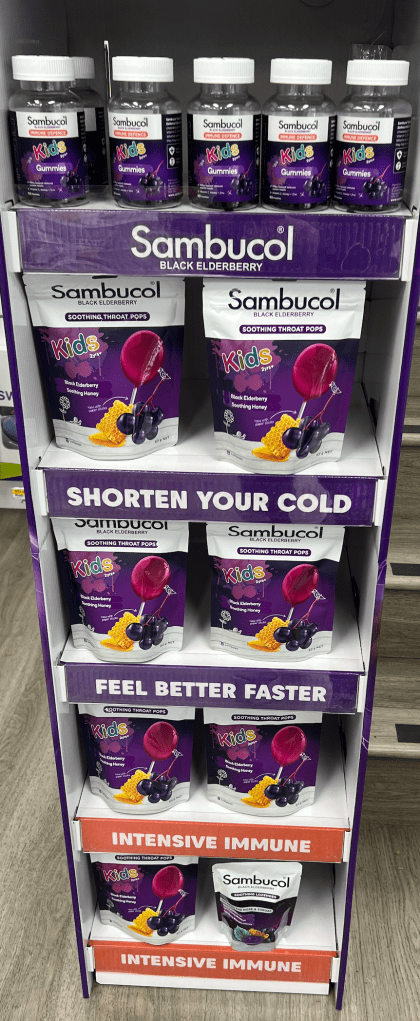
Taking in the entire sign, I spotted a familiar brand name. Sambucol® – Black Elderberry, a product of PharmaCare. The hexagon sat atop five cardboard shelves each labelled with more claims: Feel Better Faster, Intensive Immune, Shorten Your Cold, all packed with something for “kids”. Immune Defence Gummies, Soothing Throat Pops and Soothing Lozenges to “refresh the nose and throat”. It all sounded wonderful. I mean, who doesn’t want to feel better faster? Or puff up immunity with gummies? And knock 3 days off a cold? Surely it wasn’t just for kids. Then I wondered, could such claims really be “clinically proven”?

The elderberry grows on the elder plant (Sambucus nigra). Nataly Martini of the School of Pharmacy at the University of Auckland has written about elderberry in the Journal of Primary Healthcare, 31 March 2021 (2021;13(1):91–92. doi:10.1071/HC15960). It is reproduced by the Royal NZ College of General Practitioners, as a Potion or Poison article accessible here. The author notes “Dried or fresh berries have been used to treat constipation, neuropathic pain, headache, tooth-ache, sinus congestion, sore throat, influenza and the common cold, among others”. A meta-analysis of four randomised placebo-controlled studies, often cited by Pharmacare in promoting Sambucol, is also referenced. Martini reports that supplementation with elderberry, “reduced the duration of upper respiratory symptoms in verified cases of influenza, or symptoms consistent with either influenza or the common cold, when administered at the onset of symptoms”.

Martini continues:

Other studies have reported that elderberry supplementation significantly reduced symptoms and the duration of influenza A by 3–4 days, or the common cold by ~2 days in long-haul travellers. However, in the latter study half of the participants also used co-medication to relieve symptoms, limiting the application of these findings.

Writing in The Conversation Monash immunology researcher Kim Murphy referred to the latter study noting the collective duration of colds, rather than the average length, was compared in unequal group sizes, and concluded, “this isn’t a reliable finding”. What stands out in Martini’s article is the Summary Message. It highlights a recurring theme with the efficacy of elderberry preparations and symptom duration. Namely, that more research is needed to substantiate claims and high quality trials are currently lacking:

Although findings suggest that elderberry may be effective in reducing symptoms and duration of viral infections, more high-quality human trials are needed to substantiate these claims. Currently no studies support the use of elderberry in coronaviruses. Generally regarded as safe, toxicity may result from ingestion of raw or uncooked fruit, and allergies may occur in susceptible people. Use is not recommended in pregnancy and lactation due to insufficient evidence. Elderberry products may exacerbate symptoms in patients with autoimmune diseases. Caution is advised with immunosuppressants as elderberry may reduce effectiveness of these drugs. No major drug interactions are known.


Pharmacare is an alternative medicine manufacturer, and as such its primary concern is brand promotion and brand protection. In essence, Pharmacare is about sales. There’s nothing wrong with this, but as a skeptic I’m more concerned with the transparency of the claim that Sambucol® is “clinically proven” to reduce cold symptoms by up to three days. Can such a claim be trusted? Let’s review a 2018 article by Liam Mannix, science reporter for The Age and Sydney Morning Herald; University of Sydney pulls claims elderberries can fight flu, to get our bearings. The article opens:

One of the country’s leading universities has been forced to retract a claim its study showed eating elderberries could help beat the flu after admitting it was overhyping its own science.

The University of Sydney also concealed the research was part-funded by company Pharmacare – which sells elderberry-based flu remedies – at the company’s request. Although it was declared in the study itself, the university also failed to publicise that a Pharmacare employee was involved in the research.

The flu-busting claim, made in a press release and published on the university’s website, attracted national and international media attention, most of which did not mention the Pharmacare funding.

The article reveals that the study simply focused on in-vitro dosing of human cells in a laboratory environment. No mice or human subjects were involved. As stressed in the article such research is fine, but how it is represented is vital. Professor Ken Harvey, then-president of Friends of Science in Medicine observed:

“This is an appalling misrepresentation of this Pharmacare-funded in-vitro study. It was inappropriate and misleading to imply from this study that an extract was ‘proven to fight flu’.”

The article reveals that Pharmacare were aware of the press release but requested not to be named, for reasons study authors did not understand. Ray Moynihan, an assistant professor at Bond University’s Centre for Research in Evidence-Based Practice, who studies science reporting in the media stressed it raised “serious concerns” about transparency. “It is vital information for us to know who sponsored the study“, he said at the time.

The Sydney Uni episode said much about Pharmacare transparency and even more about claims relying on Pharmacare-funded studies. The company presently has a collection of articles gathered to back its many assertions. Some cite Pharmacare studies, whilst others present generalised health-related information, citing other studies, articles and reports. Following Sambucol® “shortening colds by up to 3 days” brings us to a page that opens with:

Sambucol® Black Elderberry Cold & Flu is the only Black Elderberry Cold & Flu product clinically proven to shorten your cold by up to 3 days.

The page refers to a study by Rao A, et al, and informs the reader it is an, “Unpublished study by RDC Global on behalf of Pharmacare Laboratories. Available on request.” More about this study, can be gleaned from a Pharmacare internal catalogue on their Clinically Proven Formula, which is marked on each page, “For Professional and Internals Staff use only. Not to be distributed”. The catalogue includes a number of Pharmacare-funded studies, and lists the Rao et al, study title in full: Rao A, Sethi M, Dick C, A double-blind, randomized, placebo-controlled study to evaluate the safety and efficacy Sambucol® liquid formulation to reduce the duration and severity of the common cold symptoms in adults. PHA-Sam15. 2016.

The catalogue summary of the study, offers graphs and a report on p.6. It professes a 31.8% reduction in symptom severity and a reduction in sick days from 8.9 to 5.9 (33.7%) days between placebo and Sambucol® recipients. The public summary includes:

The efficacy of Sambucol Black Elderberry Cold & Flu to reduce the duration and severity of common cold symptoms was researched in a double-blind, randomised and placebo-controlled study sponsored by Pharmacare Laboratories.

The study included 461 healthy, adult participants and found that participants who took Sambucol® Black Elderberry Cold & Flu daily from the onset of cold symptoms were sick for a significantly shorter period of time.

The median duration of illness for the placebo group was eight days, whereas the median duration of illness for the group taking Sambucol® Black Elderberry Cold & Flu was five days – a median three-day reduction in duration of illness.

According to the study, “The results show that supplementation with Sambucol® Black Elderberry Cold & Flu at the onset of cold symptoms significantly reduced the duration of a cold episode as well as significantly reduced the severity and impact of cold and flu symptoms.

Being unpublished, the Rao et al, study lacks the authority attributed to peer reviewed research. Nor has it been reproduced independently. Yet Pharmacare-funded studies are of paramount importance to their business model. It allows the company to produce and distribute positive material related to Pharmacare brands. As the FAQ page informs us under, What is the difference between Sambucol Black Elderberry products and other black elderberry products?

Not all black elderberry extracts are the same. Only Sambucol Black Elderberry, the original black elderberry extract introduced more than 20 years ago, contains the same proprietary, naturally balanced elderberry extract used in the published scientific studies. Other products use a concentrated, standardized elderberry extract. They are fundamentally different ingredients.

Pharmacare Brands

Nonetheless, the internal Pharmacare catalogue cites a number of studies where generic elderberry extract is used, to assert its effect on the duration and impact of cold and flu symptoms. There have been no comparative studies of extract efficacy, and as such there is no evidence that Sambucol® Black Elderberry is more or less effective than any other black elderberry extract. Generic extracts have been used in “the published scientific studies”, such as the Hawkins et al meta-analysis, which found an association with reduced influenza A symptoms and duration.

Speaking of influenza, Pharmacare cite two studies in their internal catalogue that conclude Sambucol® has an effect against influenza. On page 6 they refer to in-vitro and in-vivo efficacy against influenza A and B. On page 7 they refer to in-vitro efficacy in reducing H5N1 by 99%. The catch for Pharmacare here, is that Australia’s Therapeutic Goods Administration (TGA) limit the seriousness of diseases and symptoms that they can claim Sambucol® relieves. Influenza is not accepted (see below). On another note, one must be aware that Pharmacare’s Sambucol® benefits from generic use of the term Sambucol. Consider this entry for Sambucol at drugs.com.

Sambucol is a berry from a European or Black elder tree. The berries are used to make medicine. Sambucol is also known as Arbre de Judas, Baccae, Baises de Sureau, Black-Berried Alder, Black Elder, Boor Tree, Bountry, Elderberries, Ellanwood, Ellhorn, European Alder, Fruit de Sureau, Grand Sureau, Hautbois, Holunderbeeren, Sabugeuiro-negro, Sambequier, Sambu, Sambuc, Sambuci Sambucus, Sambugo, Sauco, Saúco Europeo, Schwarzer Holunder, Seuillet, Seuillon, Sureau, Sureau Noir, Sus, Suseau, or Sussier.

The emerging claim that Sambucol® improves immunity also deserves comment. The internal catalogue summarises a 2002 study by Barak et al, on page 8, with the conclusion:

Sambucol® activate the healthy immune system by increasing inflammatory cytokine production more effectively compared to other herbal remedies.

The study, The effect of herbal remedies on the production of human inflammatory and anti-inflammatory cytokines compared Sambucol® to propolis and Echinacea. These are used as herbal treatments and preventatives of upper respiratory tract infections in adults and children. The cytokine-modulating effect of echinacea has been demonstrated in-vitro and in animal studies. However, a 2021 systemic review concludes firm evidence linking elderberry to inflammatory cytokine production is lacking. However, accounts of elderberry syrup linked to Drug Induced Liver Injury and Autoimmune Hepatitis have become evident. In the latter case the overproduction of inflammatory cytokines has been considered. Depending on future incidence, proper management at the point of sale may thus require an understanding of patient history. Whilst this is possible in the pharmacy setting it is not so elsewhere.

The claimed reliability of elderberry lends itself to the appeal to antiquity as it has reportedly been used for centuries, for a host of purported reasons, as mentioned above, in addition to heart disease, gum disease, high cholesterol and obesity. The drugs.com entry for Elderberry and Sambucol are identical and include (bold mine):

It is not certain whether [Sambucol/Elderberry] is effective in treating any medical condition. Medicinal use of this product has not been approved by the FDA. This medicine should not be used in place of medication prescribed for you by your doctor.

The US Food and Drug Administration (FDA) have warned promoters of elderberry syrup, as evidenced by (for example) a September 2000 warning letter and another in August 2022, written to highlight breaches of the Federal Food, Drug and Cosmetic Act because the products advertised were “intended for use in the cure, mitigation, treatment, or prevention of disease”. The FDA does not regulate herbal supplements. In Australia the TGA accepts Sambucol Black Elderberry Cold & Flu and Sambucol Black Elderberry Cold & Flu + Pain as Listed medicines as opposed to Registered medicines.

Read more about TGA classifications here, and please remember a September 2022 TGA review of Sambucol® states, “The efficacy of the medicine was not assessed as part of this review”. Thus the term “TGA Assessed” cannot be used in relation to this product or on its label. Read more about TGA regulation of Listed medicines here. The TGA does not approve Listed medicine labels before marketing. The TGA state:

This is because we take a risk-based approach to regulation, which means higher risk medicines have more rigorous controls than lower risk medicines. However, we do require sponsors to certify that the medicine complies with all relevant regulation, and that they hold evidence that their medicine does what it says it will. Source: TGA – How we regulate medicines.

The public summary on the TGA Australian Register of Therapeutic Goods for Sambucol Black Elderberry Cold & Flu permits the following indications.

  • Relieve weariness/tiredness/fatigue/feeling of weakness.
  • Maintain/support general health and wellbeing.
  • Decrease/reduce/relieve common cold duration.
  • Helps decrease/reduce/relieve the severity of symptoms of common colds and flu.
  • Decrease/reduce/relieve symptoms of common colds and flu.
  • Decrease/reduce/relieve mild upper respiratory tract congestion.
  • Decrease/reduce/relieve cough.
  • Relieve symptoms of sore throat/pharyngitis.

Indication requirements are as follows:

  • Label statement: If symptoms persist, talk to your health professional.
  • Product presentation must not imply or refer to serious forms of respiratory disorders/diseases, such as: asthma, pneumonia, COAD, COPD, influenza.
  • Label statement: Adults only, OR Not to be used in children under 2 years of age without medical advice (or words to that effect).
  • Respiratory tract infections must be qualified by ‘mild’.
  • Product presentation must not imply or refer to chronic fatigue syndrome.

Looking at the above it is clear the TGA have been more than generous with the allowed claims in the ARTG indications for this product. Particularly given the lack of published evidence and the absence of TGA assessment for efficacy. I don’t accept that Sambucol is clinically proven to shorten colds or boost immunity or any other claims made in sales promotion. The evidence simply isn’t there and relying on unpublished work organised and funded by Pharmacare is misleading. Whilst an impact of elderberry syrup on cold and flu symptoms is acknowledged in literature, the most common conclusion is that more research is needed. Quality human trials are still lacking.

So what might Pharmacare have planned to improve evidence in their favour? The Australian New Zealand Clinical Trials Registry, presently has the registered trial ACTRN12623000299606, last updated 7 April 2024. The title is, Determining the effectiveness of Sambucol in reducing the duration and symptoms of the common cold in children and teens. The age group is 2-17 and the aim is to use Sambucol and report on symptoms via, “a purpose-built study app ‘Sambucol Research’.” The methodology is likely to favour Pharmacare, particularly given that there is no control group. Rather, “a comparison will be made to two existing data sets”.

The first data set is reported as:

Data describing the incidence, severity and duration of different cold symptoms in children over a six-week period. (Troullos E, Baird L, Jayawardena S. Common Cold Symptoms in Children: Results of an Internet-Based Surveillance Program. J Med Internet Res. 2014 Jun 19;16(6):e144.) This study was not a randomised controlled trial or an intervention. The study observed duration and severity of colds and as such was not registered.

The second data set is “a confidential report to Pharmacare”, and is none other than the initial unpublished study that found Sambucol® “shortened colds by up to 3 days”; Rao A, Sethi M, Dick C. A double-blind, randomised, placebo-controlled study to evaluate the safety and efficacy of Sambucol liquid formulation to reduce the duration and severity of the common cold and flu symptoms in adults.

The more things change…