
The creator of Sybil more than likely suppressed a remembrance of how it began once they got into the thick of it. Once it became a financial success there was no turning back. In the final analysis Sybil is a phony multiple personality case at best.
Further more, this tendency to go over the top and not know where to stop with multiple personalities will continue to persist until we cease to be proud of those things we should be ashamed of.
Robert W. Rieber History of Psychiatry, X (1999), 003-011
False memories and suggestibility. Extreme examples aside, I wonder at times if they aren’t related to confirmation bias and the rationalisation of cognitive dissonance.
Without intent we’re all suggestible at a certain level and almost certainly carry a few false or rather, completely erroneous memories – no matter how small. Certain illusionists and entertainers have strong links to skeptic groups and are at pains to forewarn of our brains’ suggestibility to stimuli. Psychology. Science. With knowledge and copious practice the better performers can perform “magic” 18 inches in front of us. Or more to the point inside our heads, using our own “software”.
Then there’s polarised views of the self and how it relates to the world. Why is it that some of us immediately know rubbish (and really bad rubbish at that) whilst other Conscious Living or Mind Body Spirit types wear their gullibility like a para-glider’s sail? Those of us that speak of the Conscious Lying or Mind Body Wallet expo’s don’t have anatomically different brains to those that believe. In fact what ever you make of psychics Myrtle Harvey and Ros Booth over at Dave The Happy Singer‘s blog is likely down to experience and environment.
To stop myself launching into studies on brain activity, neuropsychology and neuroscience I’d better mention Sybil. “Sybil” was the title of the 1973 book by magazine editor Flora Rheta Schreiber written about Shirley Mason. Shirley supposedly had 16 different distinct personalities. The dramatic story of how she got this way and how the narcosynthesis (drug induced hypnosis) loving, Sodium Pentathol (“truth serum”) injecting and self obsessed Dr. Cornelia Wilbur “helped” her is the theme of the book. The sensational aspect in treatment was that Mason was tortured hideously by her mother, was encouraged to believe so and hate accordingly.
However as you’re probably now realising, by the time Wilbur hooked up with Schreiber to write the book, what was actually documented in the treatment notes and on tape and what made it into print are two entirely different stories. The former fact, the latter fiction and omission of fact. Regarding the diagnosis itself a fascinating deconstruction [below] written by Robert W. Rieber, Ph.D in 1998 makes it clear that Wilbur was “planting the truth as she wanted it to be”. He writes:
I have been able to tell the story of how it is possible to manufacture a multiple personality. [….] As to the question of whether or not the Sybil case was an out and out fraud, that of course depends upon your personal definition of that term. No matter what you wish to call it, it was a conscious misrepresentation of the facts. The fine line between self-deception and deception of others is an important issue here. Unquestionably, Schreiber and Wilbur wanted to make Sybil a multiple personality case no matter what.
The New York Times write about a “confession” from Mason 15 years before the book was published:
… 1958, Mason walked into Wilbur’s office carrying a typed letter that ran to four pages. It began with Mason admitting that she was “none of the things I have pretended to be. “I am not going to tell you there isn’t anything wrong,” the letter continued. “But it is not what I have led you to believe. . . . I do not have any multiple personalities. . . . I do not even have a ‘double.’ . . . I am all of them. I have been essentially lying.”
We now know that sodium pentathol induces false memories and fantasies whilst under the influence. Wilbur would patently suggest scenarios to Mason whilst drugged then prompt her to “recall” the memory later. Wilbur also prescribed large doses of drugs that proved less than ideal. Secobarbital (Seconal) which is now only used for 10 days to two weeks due to dependence and Daprisal which proved so addictive as to be removed from the market and was associated with amphetamine induced psychosis. According to the NYT this transcript is stored amongst Schreiber’s papers at John Jay College of Criminal Justice, in New York City:
“What about Mama?” the psychiatrist asks her patient. “What’s Mama been doing to you, dear? . . . I know she gave you the enemas. And I know she filled your bladder up with cold water, and I know she used the flashlight on you, and I know she stuck the washcloth in your mouth, cotton in your nose so you couldn’t breathe. . . . What else did she do to you? It’s all right to talk about it now. . . . ”
“My mommy,” the patient says.
“Yes.”
“My mommy said that I was a bad little girl, and . . . she slapped me . . . with her knuckles. . . .”
“Mommy isn’t going to ever hurt you again,” the psychiatrist says at the close of the session. “Do you want to know something, Sweetie? I’m stronger than Mother.”
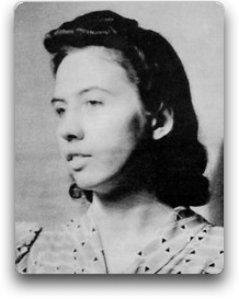 According to her baby book at the age of 7 Mason had a tonsillectomy in the home office of a doctor. She was brought there without being told why and told to put on a white treatment shirt and forced onto a table. Whilst struggling she was held down and the town pharmacist held a cloth soaked in ether over her nose. Mason felt like she was suffocating before she passed out. A flashlight was used to examine her throat and sliver bottles were nearby. Mason did tell Wilbur about the actual event years later. But under pentathol and during a time of Freudian psychology, Wilbur concluded this forceful treatment was not just rape but sexual torture.
Shirley Mason was indeed very unwell suffering from anorexia, anxiety, feelings of hopelessness and worthlessness. She also reported unusual memory blackouts, at times coming to in places, suburbs or towns she had no memory of travelling to. Dr. Wilbur assumed these were fugue states during which a patient may lose touch with the self for hours or days and continue to act reasonably normally but as if someone else. Or rather the state would be forgotten and preceding events with it, giving the tempting illusion that one had “been” someone else.
The problem here was that Wilbur went looking for a fractured personality disorder. It was all downhill from there and introducing narcosynthesis in consonance with Wilbur’s urging was clinically disastrous. Mason had fantasies about being a doctor – perhaps a psychiatrist. More so, she had fantasies about Wilbur and developed a strong crush. The only child of Seventh Day Adventists Mason felt like Wilbur understood her like no other. Obsessed, in need, doped up and subject to drug induced hypnosis she latched onto the tether of Wilbur’s highly suggestible treatment.
There were signs earlier that Cornelia Wilbur, unashamedly fascinated with multiple personalities, was practicing very poor medicine. Shirley Mason visited Herbert Spiegel when Wilbur was absent. Speigel was an eminent hypnotherapist and psychiatrist. In the 1990’s he informed reporters of his concerns at the time that Mason would ask if she should “shift to the other personalities” as Dr. Wilbur liked her to do. Spiegel had clearly diagnosed Mason with hysteria. Which in truth was almost certainly the correct diagnosis for that era.
Wilbur spent her career with hysterical patients, often jabbing them full of sodium pentathol and using suggestion to manage symptoms. It is unlikely she did not know of Mason’s proper diagnosis. Rieber (below) points out the prospects of a book on MPD outweighed Spiegel’s attempts to reason with Wilbur and Schreiber. Robert Rieber breaks the tape recordings into ten distinct sections from Wilbur’s “diagnosis” to inventing the “crimes” of her mother to sustaining Mason’s hatred toward her mother to projection of guilt on Wilbur’s part. It’s a great read.
Alarm bells also rang in skeptical quarters. Prior to the book’s publication less than 80 cases world wide of “something resembling MPD” were documented. Following this, several thousand diagnoses followed in areas where the book was being read and in the demographics reading the book.
The hard work has been done by investigative journalist Debbie Nathan, author of Sybil Exposed, who who is interviewed in the video below. She has trawled through the documents kept in Schreiber’s papers to put together the truth. It wasn’t until it was discovered in 1998 that Mason was deceased, that her identity was revealed.
One must wonder. What ever became in the meantime of this very ill woman treated by an ambitious and unethical doctor, who failed completely to care for her patient?
 Losing In The Lucky Country