
It should be hard to believe. The fact that conspiracy theorists have wheeled out a range of absurd claims purporting to reveal, or guess at, the cause of Dolly Parton’s death. But it’s not hard to believe. In fact it’s exactly what anybody who keeps an eye on cooked conspiracy theorists across the globe expected. It happens regularly when vaccine status can be confirmed, and rapidly and loudly when the individual is a celebrity.
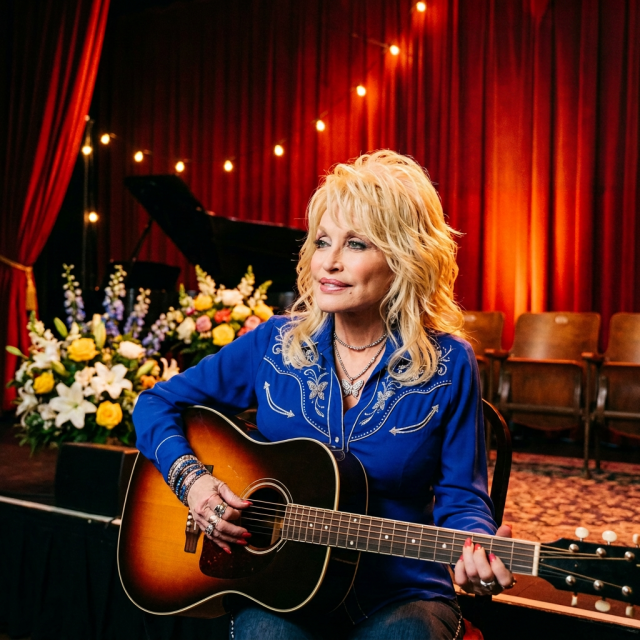
In Dolly’s case she had donated $1 million to Vanderbilt University Medical Center to assist with early research into Moderna’s mRNA COVID-19 vaccine. She also publicly had her shot in March 2021, and to the tune of “Jolene” sang “Vaccine, vaccine, vaccine, vaccine, I’m begging of you please don’t hesitate“. Clearly Dolly knew the stakes and the impact anti-vaxxers were having. At 75 she herself was in the age cohort for which being vaccinated against COVID can save lives and reduce hospitalisations. No doubt her focus that day, led to jabs and saved lives.
Yet far-right radio host Wayne Allyn Root argued on X:
She took the vax on TV. She changed the name of her hit song “Jolene, Jolene” to “Vaccine, Vaccine”. She encouraged fans to get it. Now she’s dead of cancer. This sounds like another case of turbo cancer. RIP Dolly.
There is no such thing as “turbo cancer”. On that, oncologists are unanimous. It’s a bogus term made up to evoke emotional responses, and fool individuals to make choices not related to science-based medicine. It was covered here in March last year. The Brownstone Institute was founded last year by close friend and ally of RFK Jr., Jeffrey Tucker. Toby Rogers who works with the Trump allied Institute, observed that Dolly thought she was doing the right thing backing the vaccine, “But it very well may have killed her”.
Let’s not forget Dolly the Sheep and the convoluted thinking that leads us to ponder if Dolly Parton may have actually been a clone. Originally shared with our poor planet in 2013 by UFO aficionado and conspiracy obsessive Max Spiers (now deceased). One learns that the sheep was named “Dolly” as a symbolic nod to Parton who was part of the “early mass-consumption cloning experiments”. Conspiracy theorist “Danielle knows a lot” has resurrected this particular nonsense.
Anti-science diva, Valerie Anne Smith is a raging anti-vaxxer with particular focus on COVID and HPV vaccines. In the absence of a public record, Smith could in no way know what vaccines Dolly Parton has recently had. Yet she manages seemingly straight-faced to post on X:
Fortunately some accounts aim for the truth.
Apart from X there is plenty of the same on Facebook which happens to include the bizarre claim of Satanic ritual involving a section of video, and based on what Dolly is doing with her hands. In the video Dolly thanks Taylor Swift and her hubby Travis Kelce for their $2 million donation to her literacy charity, Imagination Library. Parton expresses her thanks and adds, “Now, it’s evident you two have made giving back a key part of your lives, so hey when you have your firstborn can I have it, because that is gonna be one special baby”. She is of course, joking.
Conspiracy fans contend that Parton made the “devil horns” symbol with satanic intent. In reality as she moves her hands her index and small finger do extend for around a second. It’s a non-event, and worth checking the short video to assess for yourself. In reality, the gesture is linked to warding off evil, heavy metal, insults and various cultural and regional meanings, depending on the part of the world. Not unexpectedly, this tale was retold by Red Pill USA whilst being linked to Dolly’s involvement with Moderna.
Nothing to see here, folks, just Dolly Parton – the same woman who dropped $1 million to help fund the Moderna COVID vaccine – flashing devil horns while casually demanding Taylor Swift’s and Trevor Kelce’s firstborn child. It’s a big Satanic club… and you ain’t in it.
Speak for yourself Red. Nonetheless, the sheer scale of claims on X that “turbo cancer” is the cause of Dolly Parton’s death as a direct result of a COVID vaccine she had 5 1/2 years ago, speaks volumes as to just how distorted Musk’s platform has become. In addition the fact that such claims have spread across social media remind us that conspiracy theories remain alarmingly persistent. No evidence is ever presented, no reputable sources are cited, yet these ridiculous fantasies continue to be furiously defended.
Dolly Parton died from cancer. She did not die from “turbo cancer”. There is no such thing.


 Losing In The Lucky Country