Fidge v Pfizer: High Court writ targets Chief Justice Debra Mortimer

Last we visited developments related to the Fidge v Pfizer case, we had a long look at ambitious arguments arranged to convince Federal Court Chief Justice Debra Mortimer to uphold a constitutional complaint against Justice Helen Rofe. Rofe had summarily dismissed Dr. Julian Fidge’s application for injunctive relief under the Gene Technology Act on 1 March 2024. The judgement is here and my post summarising the case is here.

Fidge was found to lack standing and the case did not proceed. As I mentioned at the time, this was the latest failure of case design by solicitors Katie Ashby-Koppens and Peter Fam, and retired barrister Julian Gillespie. By 22 March Ashby-Koppens and PJ O’Brien and Associates had filed the constitutional complaint with the Chief Justice, alleging Justice Rofe had concealed “her connections to Pfizer and the pharmaceutical industry, before dismissing a case to Pfizer’s advantage”. Reading the complaint, one is struck by both the tenuous nature and the sheer range of the arguments put forward to establish motive, as alleged by the complainants.

Justice Rofe omitted to disclose her role as a barrister acting for Pfizer in patent law cases around 20 years before; hence the “connections to Pfizer”. Yet her connections to “the pharmaceutical industry” rely on one following a convoluted web of associations, that are presented by the complainants as potentially nefarious only through the lens of conspiracy theory thinking. In fact the reader must also accept there are inherent flaws and a predisposition to deception associated with scientific and medical research per se, and indeed any acceptance of COVID-19 vaccines and/or COVID public health initiatives.

On 27 June a writ of mandamus was lodged on behalf of Dr. Julian Fidge at the Brisbane registry of the High Court of Australia. The defendant named was Chief Justice Debra Mortimer. As we’ve observed before, such a writ commands or dictates that an individual or government department carry out a duty that falls within their remit. We saw this in the AVN case targeting the Secretary of the Department of Health to use his powers under the Therapeutic Goods Act to cancel or suspend the provisional registration of three Covid-19 vaccines, including the Pfizer and Moderna vaccines (Australian Vaccination-Risks Network Incorporated v Secretary, Department of Health [2022] FCA 320). They too were found to lack standing.

Clearly Julian Gillespie and Katie Ashby-Koppens feel that three months is long enough to wait. Justice Mortimer has not commented and Gillespie writes that they have argued in “countless correspondence with her office ever since the Complaint was lodged with her”, pointing out their argument. It basically runs as follows:

Helen Rofe did not disclose her prior relationship with Pfizer and thus cancelled out her own judicial authority. This invalidated her 1 March ruling. Justice Mortimer should have informed her of this, Gillespie reasons. He has also peddled ad nauseam his “not a judge” theory. So, let’s look at this. Gillespie cites the High Court ruling QYFM v Minister for Immigration, Citizenship, Migrant Services and Multicultural Affairs (May 2023), paragraph 26. He quotes:

The question arising in the circumstances of the present case falls to be resolved at the level of principle within the framework established in Ebner v Official Trustee in Bankruptcy. Foundational to that framework are two propositions. One is that impartiality is an indispensable aspect of the exercise of judicial power. The other is that “[b]ias, whether actual or apprehended, connotes the absence of impartiality” … an actuality or apprehension of bias is accordingly inherently jurisdictional in that it negates judicial power.

With the negation of judicial power Justice Rofe is apparently “not a judge”. But let’s read that paragraph again, with all the text and a minor change in emphasis:

The question arising in the circumstances of the present case falls to be resolved at the level of principle within the framework established in Ebner v Official Trustee in Bankruptcy. Foundational to that framework are two propositions. One is that impartiality is an indispensable aspect of the exercise of judicial power. The other is that “[b]ias, whether actual or apprehended, connotes the absence of impartiality”. Leaving to one side exceptional circumstances of waiver or necessity, an actuality or apprehension of bias is accordingly inherently jurisdictional in that it negates judicial power.

Exceptional circumstances of waiver or necessity. Could there be circumstances of necessity? I’ve no idea at this point, but it seems relevant. Gillespie assumes he and others so inclined deserve the attention of one of Australia’s most senior judges. Despite being wrong five times in two years, they now seek to force the hand of the Chief Justice of the Federal Court of Australia. He accuses Chief Justice Mortimer of not “properly investigating Helen Rofe, her workmate”.

Another key reason to take this position is the belief that the ruling by Justice Rofe on 1 March is “unappealable”, yet Chief Justice Mortimer “wants to see us appeal the 1 March decision despite Dr Fidge’s legal team telling her that decision is unappealable”. The logic for this also stems from the “not a judge” mantra. The Federal Court of Appeal has jurisdiction to hear a judicial decision from a single judge. As Gillespie alleges Justice Rofe negated her judicial authority, the case did not have a single judge and they “have no decision vested with judicial authority”. Thus, the Gillespie contention is that it follows that the case is “unappealable”.

Finally, this entire manufactured affair provides an opportunity for chasing donations and to promote Australia’s anti-science senators in attacking COVID-19 vaccines. An initiative of Children’s Health Defense Australia Chapter is Section 72. The website seeks to direct devotees to lobby MPs to act in response to the constitutional complaint against Justice Rofe, and to date claims almost 9,000 have “taken action”. It also claims without any evidence that, “there is also the possibility other members of the same court are implicated in this misconduct of Justice Rofe”. Also:

Senators Malcolm Roberts, Gerard Rennick, Ralph Babet, Alex Antic and Russell Broadbent all intend to support the Complaint being dealt with properly by Parliament under Section 72(ii) of the Constitution…

Section 72(ii) of The Australian Constitution states:

The Justices of the High Court and of the other courts created by the Parliament–

  (ii.)   Shall not be removed except by the Governor-General in Council, on an address from both Houses of the Parliament in the same session, praying for such removal on the ground of proved misbehaviour or incapacity: 

The proposed aim of this constitutional complaint has been to push for Justice Rofe’s removal from the Federal Court. Allegations of corruption and COVID conspiracy theories shape the thinking of those involved. It will be interesting to see what response if any the complaint elicits and how the recent High Court filing targeting Chief Justice Mortimer for “not doing her job” plays out.

This particular anti-vax legal saga is likely far from over.

Kambo: The promised cure linked to injury and death

An inquest into a Kambo related fatality in Northern NSW has been suspended by NSW State Coroner Teresa O’Sullivan, who referred the matter to the Director of Public Prosecutions (DPP). This is the second inquest into a death linked to the frog poison touted as an alternative medicine, to be heard at Lismore Court House since May 2023.

Jarrad Antonovich

Evidence in this case described how Jarrad Antonovich attended the Dreaming Arts Festival in Arcoora Northern NSW, on 16 October 2021. He died of a perforated oesophagus that night. His day included a Kambo ritual at around 10am. Kambo ceremonies at the festival were being run by Cameron Kite. After the Kambo, Antonovich displayed symptoms of being very unwell, including a markedly swollen neck – an adverse reaction known to be caused by Kambo. Despite being unable to stand without support by 5pm, Mr. Antonovich was later given the psychoactive brew, ayahuasca. He died during the ayahuasca ceremony after being helped into a hall where it was to take place. Both Kambo and ayahuasca are illegal in Australia. The inquest heard from different witnesses that they believed Mr. Antonovich was in need of professional help, but they had been instructed not to interfere with anyone’s “journey”, and to trust the medicine, the shamans and the organisers. The offer to call an ambulance was made by other festival attendees, but Antonovich refused and elders “reassured” concerned onlookers.

An ambulance was not called until 11:30pm and took an hour to reach the remote location. As Jarrad Antonovich’s life ended, organiser Soulore (“Lore”) Solaris was strumming his guitar at the front of the gathering, as others in another location were being guided in CPR over radio, as they attempted to save Mr. Antonovich. When paramedics arrived Mr. Antonovich was blue in the face and dead. Ten or twenty people in the immediate area were engrossed in the ceremony and one asked paramedics to “move away from Jarred because they were interfering with his aura”. Both Kambo and ayahuasca are associated with vomiting or “purging”, as adherents refer to it. Ayahuasca induces violent and sometimes prolonged vomiting. The coroner was investigating the likelihood that vomiting caused Mr. Antonovich’s perforated oesophagus. The exact reasons behind the coroner’s decision to refer the case to the DPP cannot currently be revealed.

Lore Solaris and Cameron Kite

Dreaming Arts Festival organiser Lore Solaris, a counsellor who facilitates ayahuasca ceremonies, is presently subject to a NSW Health Care Complaints Commission interim prohibition order under the Health Care Complaints Act 1993, Section 41AA. The order reads in part:

Mr Soulore Solaris must not under any circumstances provide, or cause to be provided, any health services, either in paid employment or voluntary, to any member of the public.

Interim orders may apply “during any investigation of a complaint against a non-registered health practitioner”. The HCCC may make an interim order if:

a) it has a reasonable belief that the health practitioner has breached a code of conduct for non-registered health practitioners, and 

(b) it is of the opinion that– 

(i) the health practitioner poses a serious risk to the health or safety of members of the public, and 

(ii) the making of an interim prohibition order is necessary to protect the health or safety of members of the public. 

Jarrad Antonovich’s former partner, Patrick Santucci, gave evidence in May 2023 that Lore Solaris had called to reassure him Jarrad’s death was a “beautiful occasion”. Solaris told him that kinesiologists couldn’t find anything wrong with him. Kinesiologists utilise acupressure on points of the imaginary “meridian system” and wrongly believe the body can heal itself. They focus on “imbalances” which may be caused by a forgotten memory or even an attitude. They may use flower essence or homeopathy. There is no evidence kinesiology works. Mr. Santucci testified that Solaris told him an Aboriginal elder chanted sacred songs, “calling the spirit out of his body” and that:

[T]he koalas were making a special sound that is known to the elders when the land accepts a spirit.

Protecting Ayahuasca

Both Kite and Solaris were due to give evidence on 24 May; the day the inquest was suspended. Had they given evidence, it was expected the men would have responded to alarming statements given by other witnesses, describing attempts to cover up events and mislead police. For example Mr. Antonovich had difficulty breathing, was moaning in pain and his neck was swollen to the jaw line. Kambo practitioner Laara Cooper suggested giving him ayahuasca as this could “help shift” the Kambo induced discomfort. Consequently Antonovich was given what was described as a “not small” cup of the brew by Cameron Kite at the instruction of Solaris.

Cooper and Solaris had told ceremonial “guardians” to drive to Antonovich’s home and tell his flatmate not to mention to police the use of ayahuasca, in an attempt to “protect the medicines”. The inquest heard Cameron Kite was deeply distressed by events at the festival and told his partner at the time that Solaris and Cooper “just took over” the account given to police. Festival attendees were also told not to speak to police or paramedics about what actually happened as it may “damage the good work” being done with Kambo and ayahuasca. Antonovich was found to have ingested toxic levels of N,N-Dimethyltryptamine (DMT); ayahuasca’s most powerful psychedelic.

Both ayahuasca and Kambo are favoured as alternative medicines by neo-shamanic devotees, convinced purging “detox” experiences lead to personal growth and discovery. Logical fallacies such as appeal to antiquity, appeal to nature and an unguarded tendency toward xenocentrism, leave them vulnerable to experimentation and/or regular use of both substances. Traditional use of both can be traced back to indigenous tribes of the Amazon. Ayahuasca has a well established profile of around 70 years, as a promised cure for Western ailments, particularly those with a psychological component. It has also attracted research attention in offering an overhyped role in opiate addiction recovery. Despite some evidence suggesting it may have been used as early as 2000BC, widespread use across the Amazon was reliably established in the mid-19th century. Ayahuasca religions emerged very late in the 19th century. The Antonovich inquest heard that a Brazilian blend of Christianity and Amazonian shamanism (including drinking ayahuasca) had gained influence over The Australian Church of Ayahuasca, which had been active in the Northern Rivers region.

Kambo

Kambo has a much shorter history as a choice of alternative therapy in Western society. It gradually attracted interest after the International Association of Kambo Practitioners (IAKP) was established in 2014. Despite the flowery, earthy tones on their site, Kambo is emerging as a substance with a much higher risk profile than ayahuasca. IAKP claim:

IAKP teachers guide students to cultivate a profound comprehension and reverence for this potent natural modality. By enriching and forging connections with the intelligence and spirit of Kambo, our training courses enable practitioners to embrace personal growth, embark on a voyage of self-discovery, and engage in selfless service to others through the safe application of Kambo.

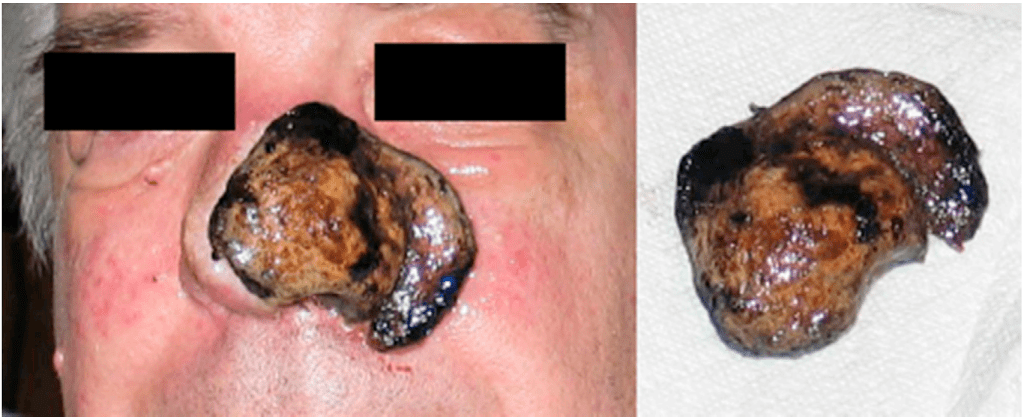
Kambo is collected from secretions of the Amazonian giant leaf frog, after “agitating” the innocent amphibian. Images suggest more than a little agitation is needed as they depict a frog tied by each leg and stretched asunder. The secretions are dried and packaged. Kambo is illegal in certain South American countries unless used in traditional indigenous practice, including Brazil. For Western ceremonies, the poison is reconstituted with water or saliva and applied to burn sites made with a smouldering stick on the arms, legs, chest or shoulder. Lucky recipients may get a dash of “dragons blood” tree sap as an antiseptic. The poison quickly makes its way into the lymphatic system then the bloodstream, and the effects begin.

Kambo lacks the psychedelic and hallucinogenic experience that ayahuasca brings. Writing for The Conversation Martin Williams notes:

Typically, the first symptoms reported are an initial rush of heat and redness of the face. Nausea and vomiting are often experienced within several minutes, accompanied by general malaise, racing heart, dizziness and swelling of the face, and sometimes an urge to defecate. Further effects include the feeling of a lump in the throat or difficulty swallowing, abdominal pain, nausea, vomiting, diarrhoea, runny nose and tears, swollen lips, eyelids or face, and occasionally a swollen tongue or throat.

Adherents claim this process rids the body of toxins, although there is no evidence supporting the claim. In 2021 the Therapeutic Goods Administration (TGA) classified Kambo as a Schedule 10 poison (page 9). They are defined as, “substances of such danger to health as to warrant prohibition of sale, supply and use”. Kambo does not have any medicinal benefit and can damage the liver, stomach and cause cardiac arrest. Visiting the IAKP website page on contraindications yields nothing but arguably useless advice; “For the latest updates and safety information relating to contraindications and cautions, please seek guidance from an IAKP trained Kambo practitioner.”

In the Natasha Lechner inquest findings, Coroner Teresa O’Sullivan referenced medical contraindications “according to the IAKP” (page 9) and observed it was unclear if these are supported by peer reviewed research. She also criticised the paucity of the IAKP information relating to “risks” and particularly IAKP training material on the risk of death. One thus wonders if the present absence of contraindications is a policy recently adopted by the IAKP. More so the IAKP Code of Ethics and Professional Practice omits any reference to the dangers of Kambo itself.

Natasha Lechner

Natasha Lechner died on 8th March 2019, following a Kambo ceremony at her home in Mullumbimby. The inquest into her death was held at Lismore in May 2023. NSW State Coroner Teresa O’Sullivan handed down her findings in February 2024. The coronial findings (PDF) provide valuable insight into the insouciance with which self proclaimed shamanic healers prepare for what is known to be a high risk “ceremony”, and the potential for tragedy that awaits vulnerable individuals drawn into this culture. This was an unnecessary death stemming from a failure to call for help.

Natasha lived with a number of chronic health issues and was unable to work. Two months before her death she had undergone a two week basic Kambo course run by the IAKP. The coroner found that the IAKP was founded by Karen Darke who has no medical qualifications. IAKP has no input from toxicologists or medical practitioners in development of their training materials. Natasha took her role as a Kambo practitioner seriously.

In 2014 Natasha met Victoria Sinclair who, as a senior Kambo practitioner used the name Maestra Victoria. Her website mentioned in the coronial finding is still available. She advertises herself extensively, including:

Victoria is a transpersonal (eco)psychologist, trauma and postcolonial theorist and plant medicine practitioner, working on a High Priestess Level of initiation, ordained through several lineages and acknowledgments and in terms of shamanic initiation and training she worked prolifically in the Free Party Scene in Europe since 1990s and has been journeying and working extensively in Central and South America and Australia since 2006.

Indeed. Ranging a little further than the inquest findings, one discovers this woman has more qualifications I’m not familiar with. Such as these “therapeutic qualifications”:

Victoria has been a Reiki practitioner since 1999 and is a Master of both Tibetan Usui Reiki and Sekhem – Seichim – Reiki.  She has been teaching people globally since 2012 and has dedicated herself deeply to upgrading Sekhem teachings to help to create a Higher Pathway to Metaphysical Ethical Practitionership as part of her Dharma.

Her training background includes;  Transpersonal Psychology, Non-Dual Astrology, Epigenetics, Trauma work, Pranayama, Kundalini Yoga, Plant medicines, De-colonisation and Quantum, sound and ancestral practices… She is also a plant communicator.

If you’re not convinced you’d want to be alone with Victoria when you take a frog’s defensive secretion that the TGA later classified as a schedule 10 poison, be aware that Victoria also works with indigenous groups, “around spiritual sovereignty and healing of self and eliminating planetary dis-ease to nurture higher vibrational being for the new age and evolution of homo luminus.”

Ranging a little further allows us to meet her latest incarnation, Victoria Padma Khandro, who is offering over this year and next:

  • High Level Multidimensional Mentoring
  • Non-Dual Astrology readings and Time-line work
  • Soul-plan work involving fusion clearing, psychotherapy, Quantum Transfiguration, Ancestral Work, Gene Keys and Astrology zero-pointing
  • Therapeutic packages including ancestral work, IFS, Quantum Transfiguration, Quantum Art Therapy and sometimes in-house referrals to deepen the scope of the work.

Returning to the inquest findings, we find that before 2019 Victoria had performed Kambo ceremonies on Natasha who either paid her or provided accomodation. In March 2019 Victoria Sinclair was visiting from Ireland and was staying with Natasha at Mullumbimby. Before Sinclair arrived Natasha had reported feeling “really off”. It should be stressed that the “ceremony” was Natasha’s idea. They began the ritual by using Sananga eye drops. Sananga is another psychoactive plant extract associated with a host of unproven health benefits. Natasha administered Kambo to Sinclair who vomited, as expected, without incident.

Sinclair administered the burn wounds onto Natasha with an incense stick, then applied the Kambo. Immediately Natasha became faint and lay down. Two minutes later she sat up, grabbed Sinclair’s hand and said “this isn’t good” or “something’s not right” before passing out. Sinclair thought she might be “processing something” and held her upright for about 10 minutes as Natasha made moaning noises. Only then did she lay Natasha down in the recovery position and remove the poison from the wounds. She attempted to revive her by pouring water over her head. Then noticing goose bumps, assumed she was cold and began to massage her limbs.

Sinclair began CPR after noticing Natasha’s lips were blue. She attempted to use a mobile phone to call an ambulance. This failed as “she did not normally use mobile phones” and didn’t know the Australian emergency number. I find this deeply troubling as mobile phones allow access to dial emergency services without needing to be unlocked, or input of the specific number. As the more experienced Kambo practitioner, with a promoted reputation of travelling the global party scene, Sinclair should have known this. Natasha’s house-mate arrived home around 90 minutes after the ceremony had begun. She immediately began CPR and called an ambulance which arrived within 5 minutes. Natasha was already dead. Despite testifying she had ceased Kambo administration after Natasha’s death, Victoria Sinclair still advertises the service. The coroner specifically addressed the legalities of Sinclair’s involvement on pp. 12, 13 & 15.

As I touched on above, the coroner was critical of the IAKP training material on the risk of death. Evidence given by Sarah Morrison (aka Aisha Priya) cited the various risks discussed (page 10). On death, information for Kambo practitioners was:

Death is discussed as a risk if the water guidelines or first aid are not adhered to or if a client is contraindicated and does not disclose this or does not know they have a medical condition.

The coroner observed the incompleteness of this information and noted it does not advise even healthy people of the true risk of Kambo. Available literature and the two cases brought to the coroner’s attention led her to observe “that death can occur even where there is no pre-existing condition, or at least not one that could be possibly identified beforehand.” It is likely Natasha experienced an acute cardiac event caused by Kambo, such as cardiac arrhythmia leading to cardiac arrest or hypotension leading to cerebral hypoxia followed by respiratory arrest, as causes of her death.

Conclusion

Kambo is emerging as a significantly dangerous substance favoured by individuals interested in extreme so-called alternative medicines. It has been rapidly adopted by communities already familiar with ayahuasca, yet has a demonstrably higher risk profile. There is no scientific evidence to support the efficacy of Kambo in alleviating health problems as claimed by proponents. Nonetheless, the presence in Kambo of peptides and polypeptides with analgesic properties and affinity for opiate receptors may explain “feelings of well being and improvement of motor skills”, that users describe, and offer insight into repeated use.

Still, it is the very complex nature of active substances in the secretion that cause arterial hypotension, palpitations, cardiac arrhythmia, facial swelling (see Maestra Victoria above) and uncontrolled smooth muscle changes in the gut. To hope that shamans and self-styled practitioners of Kambo, who offer it as a means to spiritual awakening, are all capable of managing a genuine adverse reaction to the poison is futile. Use of Kambo in Western rituals is entwined with new age scam “therapies” so clearly divorced from reality as to almost beggar belief. This is not the case in the indigenous Amazon populations using Kambo.

Vulnerable individuals interested in exploring non evidence-based treatments for chronic health problems are at high risk of harm if not death from Kambo and its eager promotion. Use is likely to further increase and the self-appointed arbiters of Kambo sourcing and education, the IAKP, are manifestly ill prepared to manage present risks or to protect users.

Community education and adaptation of Harm Reduction strategies may likely prove beneficial in negating risk.

Fidge v Pfizer: The constitutional complaint

In the last post I ran through the finding by Justice Helen Rofe in the case of Fidge v Pfizer. This was the third case brought by individuals and legal representatives with strong anti-vaccination links; both ideological and active. The applicant, Dr. Julian Fidge was found to lack standing. The case was dismissed.

As I previously began to discuss, within a day of the ruling, a follower of Julian Gillespie prompted him to do some digging into Justice Helen Rofe’s career as a barrister. You see, dear reader, as a barrister Helen Rofe had represented Pfizer in cases of intellectual property and patent law between 2003 and 2006. To the antivax mindset, this was proof of corruption because she did not reveal this prior to hearing the case. As a perceived “conflict of interest” existed, Rofe should have recused herself or allowed parties to request her recusal, they argued.

Now again, I am not a lawyer and I cannot qualify the importance of the duty of disclosure in this instance. But my thoughts on this development are straightforward. Is there any evidence Justice Rofe could not have acted impartially, or did not act impartially? Or rather, did her experience make her an ideal choice to hear the case. In 1988 Helen Rofe completed a Bachelor of Science with a major in genetics. Justice Rofe states on LinkedIn:

Prior to being appointed to the Federal Court I was a commercial barrister and Queen’s Counsel specialising in science and technology related matters.

Constitutional Complaint

On 22 March 2024, PJ O’Brien and Associates filed a constitutional complaint against Justice Rofe citing not only her prior work as a barrister but also “affiliations and extended family”. According to the media release (below) Justice Rofe “concealed her connections to Pfizer and the pharmaceutical industry”.

Constitutional Complaint Media Release

I should point out that contact for the complaint, Katie Ashby-Koppens, is on the steering committee for the World Council for Health (WCH). The WCH is renowned for promoting misinformation linking COVID-19 vaccines with death. Wikipedia describes the group:

The World Council for Health is a pseudo-medical organisation dedicated to spreading misinformation to discourage COVID-19 vaccination, and promoting fake COVID-19 treatments.

The organization’s online appearance is that of a mainstream health organization. It appears to have been formed in September 2021 and its published leadership contains people which an Australian Associated Press fact check described as “figures who have promoted unfounded conspiracy theories”.

Now, better equiped to understand motivation, let us examine the complaint.

The accusations in the complaint are impressive to say the least. They require substantial “reasonable assumptions”, both numerous and convoluted. This reasoning begins by pointing out that Justice Rofe has majored in genetics, and the Fidge case involved genetics, genetically modified organisms and allegations that mRNA vaccines are GMOs. Also, we’re reminded that Justice Rofe held prior membership of the Bolton Clarke Human Research and Ethics Committee. Her cousin Sir Andrew Grimwade supported research there with grant monies from the Felton Trust. He was a member of the Felton Bequest for 50 years, and served 19 years as chairman of the bequests committee. He was a guest at the ceremony to welcome Justice Rofe to the federal court. Rofe “enjoyed a good relationship with Sir Andrew” sharing his “interest in science and scientific research”.

Sir Andrew was the great-grandson of Frederick Shepherd Grimwade who, “founded the Grimwade family pharmaceutical industry fortune in Australia”. The complaint goes on to state, Sir Andrew also “served as the honorary President of the Walter and Eliza Hall Institute (WEHI) for 14 years before retiring in 1992″ and had been on the Board since 1963. He “appears” to “have maintained a close relationship with WEHI right up until his death”, purportedly evidenced by a public guestbook obituary from WEHI.

As Australia’s leading biomedical research institute, the WEHI “may have” received billions of dollars from Australian governments. The WEHI have received $30 million from The Bill & Melinda Gates Foundation. Pfizer, BioNTech and Moderna have received six times that from the same Foundation, which has also promoted COVID-19 products. It’s “also reasonable to assume the WEHI supports all of the efforts of Mr Gates and the Bill & Melinda Gates Foundation in respect of their support of the COVID-19 products of Pfizer and Moderna.” WEHI received $13.5 million in Australian government funding for “COVID related projects”.

In mere paragraphs we’ve leapt from the failure of Justice Rofe to reveal that she had represented Pfizer some 18 to 21 years ago, to the apparent significance of her cousin’s commitment to scientific research and the involvement of the premier anti-vax enemy, Bill Gates. The complaint continues, targeting the Australian and Victorian governments’ partnership with Moderna. “It is reasonable to assume that the WEHI stands to possibly receive significant monies” from this partnership. The Victorian government has given $600,000 to WEHI as part of mRNA Victoria. “It is entirely reasonable, in light of enduring family ties and her Honour’s own scientific background and interests”, that Justice Rofe has “long been aware of the sources of funding… and the public statements in support of mRNA technologies” made by state and Commonwealth ministers and the Prime Minister.

The complaint rolls on in alleging that affiliations “reaching back four decades for her Honour personally, and over a century when extended family interests of great significance are factored in”, in fact mean a reasonable observer would accept J Rofe holds “Big Pharmaceutical interests, both domestic and international”. More so, Justice Rofe has “meaningfully and significantly assisted to protect, grow, and further establish in Australia [the interests of Pfizer]”. It is further alleged extended family ties nefariously influenced Justice Rofe’s decision-making to favour funding for WEHI, mRNA technology and “further significant sums of research monies” for both, as they’re supported by The Australian PM. Finally we reach paragraphs 42 and 43:

A reasonable observer can conclude from the above that it was more likely than not her Honour would seek to see the science and technology promoted by Pfizer and Moderna, and Australian governments, that stand to significantly benefit medical research institutes like the WEHI, survive and flourish in Australia.

Judicial proceedings of the type brought by Dr Fidge would, if successful, strike a damning blow against all the above interests, and much more.

The complaint continues with Case Implications, outlining what they believe would happen if Fidge had won the case. It not only reads like an anti-vaxxer day dream, yet reveals in black and white, the unabashed sabotage of vaccine public health initiatives and related vendettas, that this group deems justified. Australia would see injunctions and “serious criminal charges” for Pfizer and Moderna. Initiation of investigations into the “operations, processes and personnel of the OGTR, Department of Health and Aged Care” and (of course), “In particular the former Secretary of Health, Brendan Murphy due to his being responsible for provisional approval [of COVID-19 vaccines]”. In addition would be initiation of an examination to determine if the absence of GMO licences led to failure to provide proper informed consent, and medical negligence implications.

There would also be potential civil liability in the Commonwealth government for failing to enforce GMO licensing, and civil liability for Pfizer and Moderna for failing to undertake GMO licensing. The complaint also refers to “possible confirmation” of injuries and deaths caused by genetically modified properties of mRNA vaccines. Yet there is no body of work identifying such adverse outcomes. It is a misinformed notion linked to the same suite of decades old research, mRNA-critical pre-print papers, animal studies, SARS-CoV-2 infection studies and related articles that buoy this anti-vaccine belief. I’m not criticising the research, but strenuously reject the invented link to “injuries and deaths” fabricated by the anti-vaccine lobby.

Another implication of a Fidge victory, is vaccine hesitancy due to a loss of trust in Australian health authorities. Yes, they’re serious. However, vaccine hesitancy is in fact due to constant misinformation spread about vaccines, by groups such as this. Then on p. 13 we read the implication under 44 J:

The necessity to initiate many forms of clinical studies to assess the real world damage, disease, or fatal outcomes associated with the GMO products of Pfizer and Moderna, and any observed medium-to-long term disease and adverse reproductive health outcomes associated with the GMO products of Pfizer and Moderna, for those Australian citizens who were not informed they were receiving GMOs.

Astonishing. The complainants apparently believe an entire body of clinical research would evolve following a Fidge victory. One may ask, quite rightly, as to why such research into this vaccine induced disaster is not already underway. The answer being of course, that the “damage, disease and fatal outcomes” do not exist.

We then read that the complaints provided list is not exhaustive and that the implications suggested, pose severe and long lasting reputational damage and financial consequences “for all Australian political parties and their lead members in power throughout the COVID period”. Particularly for those introducing Pfizer and Moderna vaccines.

They finalise the implications by contending that these, or other implications not even listed, may have served to motivate Justice Helen Rofe to dismiss the case brought by Julian Fidge. The complaint then moves onto Judicial Conduct, and examines the Guide To Judicial Conduct with respect to J Rofe’s “failure to discharge her duty of disclosure concerning her prior dealings with Pfizer.” The complaint submits in paragraph 48:

As detailed under the section above…, her Honour Justice Rofe had significant prior dealings with Pfizer when a barrister, and through her science learnings and the interests of her extended family, significant professional and personal interest in seeing the continued success of those institutions her extended family and science colleagues had been involved with, and perhaps continue to be involved with.

The remainder of the complaint utilises the Guide to Judicial Conduct and the various summations of active bias that the complainants allege motivated J Rofe’s decision-making, in an attempt to argue she is in breach of sections of the Guide. Focusing on the principle of Impartiality and sections such as Personal Relationships, the complaint references seven “slightly different positions [reinforcing] the same common-sense view”:

Where there is a prior relationship with a party, the judicial duty is to disqualify oneself or disclose the relationship before all the parties. If in doubt about disqualification, disclose the relationship before all the parties and invite submissions.

Again, impartiality should be determined by “a fair-minded lay observer who might reasonably apprehend that the judge might not [be impartial]”. Whilst perception of bias and conflict of interest sufficient for disqualification from a case “is to be judged by the perception of a reasonable well-informed observer”. Parties should be informed by the judge of facts which might give rise to perceptions of bias, but the judge must decide on the appropriateness to sit on a case.

Conclusion

For this author, looking through the complaint is like reading any text peppered with the red flags of anti-vaccine beliefs combined with an entrenched distrust of medical, legal and government authority. I can see nothing wrong with the legal team of Julian Fidge raising concerns over Justice Rofe’s failure to disclose her past history representing Pfizer. I don’t believe there’s much substance to it but respect their right to raise concerns. However, the constitutional complaint itself relies on typical anti-vax tropes such as distrusting J Rofe’s respect for science and research, and her affiliations with individuals or organisations linked to vaccine technology and/or its funding. Indeed the complaint made a number of connections that whilst exhaustive, are difficult to respect, much less accept. To argue that J Rofe acted with corrupt intent, primarily to avoid the dawn of the post Fidge-victory era as the complaint described it, is simply fantastic.

I can only conclude by wishing Justice Helen Rofe all the very best.

Professional Conduct Rules for Lawyers

As a footnote, it’s worth pausing to consider that lawyers and solicitors are also subject to professional conduct rules. Katie Ashby-Koppens and Peter O’Brien & Associates must keep in mind their duty to the court and the administration of justice.

Lacking professional distance from your client (or their cause) risks distracting you from this duty, which is paramount and prevails to the extent of inconsistency with any other duty. Your objectivity, your independence and your forensic judgement – on which the court relies – may be reduced.

The duty to avoid any compromise to integrity and professional independence:

Your integrity and trustworthiness are fundamental to your reputation as a lawyer and to your relationships with clients and other parties in the justice system. When a lawyer fails to act with integrity because their professional boundaries are compromised, the integrity of the justice system as a whole is undermined.

Wise words.

Fidge v Pfizer: Federal court ruling

The title of “Fidge v Pfizer” given to the Federal court case file number VID 510 of 2023, tells us little about those behind the case and what motivates them. Dr. Julian Fidge stepped up to be the applicant in a case “designed”, we’re told on the Maat’s Method website (archive), by retired barrister Julian Gillespie and solicitor Katie Ashby-Koppens of P. J. O’Brien and Associates.

Those names should sound familiar to anyone with an interest in cases brought to the Federal and High courts of Australia by anti-vaccination activists represented by Peter Fam of Maat’s Method. The case was the third brought by this group, in an extended campaign to discredit COVID-19 vaccines. It alleged mRNA COVID-19 vaccines are unregistered GMOs, and their manufacturers guilty of breaching legislation. The initial two cases have been covered on this blog here and here.

Background

Seeking to invalidate the approval of COVID-19 vaccines, the so-called evidence in the first two cases relied heavily on unverified adverse reactions reported to the TGA. Having made these claims, the affidavits advanced various “gotcha” scenarios using the Therapeutic Goods Act (TG Act) in which the Secretary of the Department of Health, was supposedly duty bound to remove approval of COVID-19 vaccines. Neither case was successful in establishing legal standing to prosecute proceedings.

The second case, known as The Australian Babies Case included Dr. Julian Fidge as one of the six applicants. It also advanced a “gotcha” argument against the Secretary for failing to comply with section 30C(2) of the TG Act. This was unique in that section 30C provides for Consultation with the Gene Technology Regulator (OGTR). They argued that the mRNA vaccines were GMOs and the Secretary had failed to give written notice to the Gene Technology Regulator, as specified in section 30C. The affidavit contended:

It appears that there has been non-compliance with a statutory condition in the TG Act. […] The plaintiffs contend that non-compliance with the statutory obligation mandated by s 30C(2) leads to the invalidity of the registration decision that followed.

That case aimed to “fix the law on standing” by arguing the applicants warranted a unique “special interest”. It was filed with the High court in December of 2022 and remitted back to the Federal court in March 2023. Announcing its discontinuation in April 2023, Peter Fam observed that they had been working simultaneously on other more promising cases that would be announced within weeks. And thus, in July 2023 came the announcement We are suing Pfizer and Moderna directly – because their shots are GMOs. They had sent letters of demand to Pfizer, Moderna, the Therapeutic Goods Administration (TGA) and the Office of the Gene Technology Regulator (OGTR).

Julian Fidge was no doubt a willing applicant, ready to take one for the team. His eagerness to reject government mandates and AMA requirements related to COVID-19 is well documented. He has a strong association with the Australian Medical Practitioners Society; a group that has been instrumental in opposing COVID-19 vaccines and related mandates. They also strongly support the claim mRNA vaccines are GMOs. Fidge also had previously challenged the Medical Board of Australia over conditions placed on him following an anti-vaccine post on Facebook and has been reported as the doctor who “reversed Australia’s ban on ivermectin”. Fidge has had regular contact with Julian Gillespie, Katie Ashby-Koppens and Peter Fam. We know this anti-vaccine legal team had been working on this case for months, and no doubt modified the application to suit Dr. Fidge. With that, let us turn to the application and ruling.

Fidge v Pfizer

The case was heard before the Hon Justice Helen Rofe. Justice Rofe delivered her ruling on 1 March 2024. Her reasons for judgement are comprehensive with respect to legislation and case law, and could be reasonably summarised as follows.

On 6 July 2023 Fidge filed an injunction against Pfizer and Moderna pursuant to section 147(1) of the Gene Technology Act 2000 (GTA), on the basis that:

  1. The mRNA vaccines are or contain GMOs as per section 10 of the GTA.
  2. To “deal with” GMOs Pfizer and Moderna (respondents) were required as per section 40 of the GTA to secure licences from the OGTR, but failed or refused to do so;
  3. The respondents knew after vaccine approval that; (i) the vaccines are or contain GMOs, and (ii) the vaccines were not licensed as per s. 40 of the GTA;
  4. The respondents dealt with and continue to deal with the vaccines in Australia by importing, transporting and distributing them. This constituted “vaccine dealings”;
  5. The vaccine dealings without a licence are unlawful as per s. 32 and s. 33 of the GTA. This constituted “breaches” of the GTA;
  6. Fidge is an “aggrieved person” as per s. 147(1) of the GTA because “he wasn’t fully informed that this new class of drugs is capable of transferring genetic material”, which Fidge considers poses significant adverse health risks.

Dr. Fidge asserted he had standing under section 147(1) of the GTA on “a number of grounds” citing his:

  1. “Professional capacity” as a GP who oversaw administration of 10,000 COVID-19 vaccinations, and may be exposed to legal claims from his patients, as he was unable to advise them of the vaccine-GMO status. He has also failed to “do no harm” as he contends the vaccines are or contain GMOs, rendering them unsafe;
  2. “Personal capacity” as the recipient of three Pfizer vaccines;
  3. “Private capacity” due to “severe moral injury, mental harm and suffering”, due to the large number of “deaths, illnesses and injuries reported to the TGA to date”;
  4. “Public capacity” as a doctor subject to a duty to preserve human life and protect the health and safety of the public. He is compelled to speak for all Australians and believes his professional codes of conduct mean he is obliged to inform patients about the vaccine-GMO status to properly provide informed consent.

Before going on it’s worth pausing to note that the first COVID-19 vaccine to arrive in Australia is Astra Zeneca; an adenovirus organism. It was registered with the OGTR in February 2021 as a genetically modified vaccine, with risk assessment approval describing it as a GMO. The AZ vaccine has not attracted attention from this group as a dangerous GMO. That allegation is reserved for mRNA vaccines, following intense focus on reports of plasmid DNA in mRNA vaccines, a number of animal studies into mRNA vaccines and pre-COVID studies of nanoparticles, all frequently cited by opponents of mRNA vaccines.

The respondents, Pfizer and Moderna, sought a summary judgement under s 31 A(2) of the Federal Court Australia Act and rule 26.01(1) of the Federal Court Rules on the basis that the applicant lacks standing to seek relief under s 147(1) of GT Act. Section 31 A(2) of the Federal Court Australia Act, states that, the court may give judgement for one party against another in relation to the proceeding if:

  (a) the first party is defending the proceeding; and

  (b) the court is satisfied that the other party has no reasonable prospect of successfully prosecuting the proceeding.

Rule 26.01(1) of the Federal Court Rules states that a party may apply to a court for an order that judgement be given against another party because:

(a) the applicant has no reasonable prospect of prosecuting the proceeding; or

(b) the proceeding is frivolous or vexatious; or

(c) no reasonable cause of action is disclosed; or

(d) the proceeding is an abuse of the process of the court.

On 10 August 2023 Justice Rofe ordered that the respondents application for summary judgement be heard in October, separately from Julian Fidge’s application for injunctive relief. Rofe did not accept that Fidge had established he had standing to bring his application, and thus, allowed the respondents’ applications for summary judgement. Rofe observed that the respondents denied the vaccines were GMOs or that they had breached the GTA. In addition she observed that the position of the OGTR, “is that the vaccines are not GMOs”.

In paragraph 15 Justice Rofe writes:

The parties agreed that the question of whether Dr Fidge has standing is premised on the assumption (for the purposes of the respondents’ applications) that the vaccines are GMOs and the respondents therefore breached the Act by dealing with the vaccines. Thus, for the purposes of this summary judgment application, I do not need to determine whether the vaccines are GMOs or the resulting question of whether Pfizer and Moderna breached the Act by failing to obtain licences for the Vaccine Dealings. I have therefore disregarded any evidence filed by the parties that address whether the vaccines are GMOs.

Alas, once again the result for the Gillespie group is to be ruled as lacking standing. Dr. Julian Fidge is not a “person aggrieved”, and thus no different from any ordinary member of the public. Also, rather helpfully Justice Rofe applies case law to expand on why summary judgement under the Federal court Rules and Act, is appropriate where standing is absent. If an applicant lacks standing there are no prospects of success. Indeed, citing precedent, Rofe observes that an abuse of process arises if the applicants case is “foredoomed to fail”, as would always be the case without standing. Rofe opens paragraph 22 with:

It is clear that without standing an applicant has no prospect of success, no reasonable cause of action and the proceeding is an abuse of process.

Standing

Justice Rofe also elaborates on the importance of standing in this case by referring to precedent. Standing dictates that a person must be an appropriate party to instigate proceedings. Various terms such as “sufficient interest”, “special interest”, “real interest” or “sufficient material interest” are one consistent test. In fact, if standing was accorded to any citizen, the law may be, “abused by busybodies and cranks and persons actuated by malice“. In addition persons or groups who feel very strongly about an issue will be prepared to put another party, whose actions have not affected them, to great cost and inconvenience in mounting a defence.

Most interestingly, Justice Rofe referred to Australian Vaccination-Risks Network Inc v Secretary, Department of Health (2022) 292 FCR (AVN’s appeal) in reinforcing the lack of standing for Fidge. Justices hearing the appeal agreed that the AVN lacked standing. We can see that Justice Rofe has not missed the similarity between Fidge seeking to enforce performance of a public duty via the GTA, and the AVN seeking to force the Secretary of the Department of Health to execute duties under the TG Act. Rofe cites:

It is quite clear that an ordinary member of the public, who has no interest other than that which any member of the public has in upholding the law, has no standing to sue to prevent the violation of the public right, or to enforce the performance of a public duty.

Over paragraphs 28 to 32 Justice Rofe references the initial AVN case and their failure to demonstrate standing to further demonstrate why Julian Fidge also lacked standing. One does not find it difficult to imagine that this would not have sat well with the brains behind these three cases; Julian Gillespie, Katie Ashby-Koppens and Peter Fam.

Justice Rofe addresses the GTA extensively, and in a manner that is beyond the purpose of this post. In doing so she notes that Fidge has only alleged Pfizer and Moderna contravened the offences in s 32 and s 33 of the Act. Rofe also rejects evidence presented by Fidge claiming Pfizer’s understanding of the Act is so “narrow, myopic and restrictive” it prevents anyone from having standing to challenge breaches of the GTA. Further, the GTA deals with GMOs that present a biosafety risk to people or the environment and not “the quality, efficacy and safety of GMO vaccines for administration to humans”. More so, the applicant failed to establish he is “any other aggrieved person” within the meaning of s 147(1) of the Act. Without standing Fidge, ” ‘has no reasonable prospect of successfully prosecuting the proceeding’ within the meaning of s 31A(2)(b) of the FCA Act and r 26.01(1)(a) of the Rules”.

In her conclusion Rofe writes that instead of making an application under the “relevant statute that regulates vaccines”; the TG Act (as the AVN had done), Fidge “seeks an injunction under an act that only tangentially deals with GMO vaccines”. In what one imagines may well infuriate the legal brains who strategised this case in the wake of AVN, Rofe sensibly observes:

That strategic decision may be understandable in light of the decisions in AVN and AVN FC but was ultimately misguided.

Dr. Julian Fidge’s application for injunctive relief under the GTA was summarily dismissed. On 22 March 2024, Fidge filed with the Federal court for leave to appeal.

Is Justice Rofe corrupt?

Within a day of the ruling came the allegation, courtesy of Julian Gillespie, that Justice Rofe had failed to disclose prior activity as a barrister, representing Pfizer in patent disputes. There are five such instances that occurred between 2003 and 2006. There is no evidence Justice Rofe was unable to act impartially or did not act impartially. Nonetheless, PJ O’Brien & Associates and Ashby-Koppens have not only examined her career, but most of her life, her extended family and affiliates, to allege nefarious intention on her part motivated by “Big Pharmaceutical interests, both domestic and international”. They have filed a constitutional complaint with the Chief Justice of the Federal court and also called on the Australian Parliament to investigate allegations of misbehaviour, which if proven may result in her removal from the bench.

In the next post we will look into the complaint, the scope of its contention and ask not only if the allegation is justified, but even feasible.

RFK. Jr. hushes his anti-vaccine advocacy, keeping eyes on Washington

Recently there has been some press coverage that potential running mates for Robert F. Kennedy Jr., are themselves well versed in conspiracy theories.

Kennedy, the driving force behind anti-vaccine pressure group Children’s Health Defense, which includes Children’s Health Defense Australia (recently abandoned website), is running as an independent for President of the USA. One possible running mate is Jesse Ventura who was mentioned here when the antics of Rima Laibow were reviewed. The other is Aaron Rodgers who has entertained a number of conspiracy theories including denial of the Sandy Hook shootings. Both are anti-vaxxers.

Kennedy has lobbied for years promoting the debunked link between MMR vaccines and autism. In the early days of the COVID pandemic he emerged as a vocal critic of COVID-19 vaccines. Which for a presidential contender, is understandably proving to be a problem. As measles cases rise across the US it isn’t surprising that Kennedy is not attacking vaccines on the campaign trail. In April last year Kennedy announced he would take leave of his roles as Chairman and Chief Legal Counsel of CHD, although the US site still lists him as both.

Exactly why the CHD Australian chapter URL is parked, just seven months after launching is unclear, although the Instagram page remains. What can’t be denied is Kennedy’s long history of spreading vaccine disinformation. In the early days of his campaign Kennedy talked about plans to tell NIH scientists it is time “to give infectious disease a break for about eight years”. However as his presidential campaign continues he is, according to NBC in the below clip, keeping his usual anti-vaccine message “relatively quiet”.

RFK Jr. relatively quiet on antivax message despite past ties