
In early 2009 Australia’s consumer advocacy group CHOICE, produced a damning report on what were commonly referred to as Pharmacy Diets. With the increasing use of GLP-1 Receptor Agonists (semaglutide) it’s worth remembering that low energy diet formulas continue to provide income for pharmacies.
Pharmacists are trusted and valued by customers, and offer sound advice that impacts on the health of Australians. It’s likely that individual pharmacists can offer valuable dietary advice, as opposed to the big-brand diets found in certain pharmacy chains. In 2009 CHOICE made certain observations regarding the lack of suitability such diets exhibited, and further suggested detailed recommendations to improve consumer safety and the effectiveness of Pharmacy Diets. These were never adopted, nor enacted via legislative change. Their observations could be summarised as:
Pharmacy diet plans may help to shed extra kilos quickly, but most fail to deal effectively with the complex broader issues around weight loss.
CHOICE cannot recommend these programs until consultants improve their training and move beyond the “one-size-fits-all” approach.
The Sydney Morning Herald reported at the time that CHOICE had sent “shadow shoppers” to over 20 pharmacies. There were a range of pharmacy diets available at the time, but one drew not only justified criticism from CHOICE but also demonstrably unverified defence from the diet’s namesake. That diet was the Tony Ferguson Weight Loss Program, which persists today. Ferguson criticised the CHOICE findings, boasting that “600,000 people can’t be wrong”. Ferguson offered no evidence to confirm the success of his programme.
Along with UltraLite, CHOICE labelled Ferguson’s scheme “disgraceful and irresponsible”, for accepting children as young as 10 years old. In 2009 I used to publish a podcast called Firesnake: Critical Thought and Morality. It so happened that the CHOICE report featured in episode 53 on May 30th 2009. I’ve included that episode below with some clarifying notes about Firesnake, for readers who may be interested.
CHOICE had actually raised points that should have led to stricter control of both the diets and the training of staff. What actually did follow was industry self-regulation, with some inclusion over time of basic medical guidelines. CHOICE had highlighted three primary issues with the diets.
- Nutritional deficiencies: The pharmacy diet shakes failed to provide the minimum recommended daily intake (RDI) for vitamins and minerals, which posed the risk of nutrient deficiency. Research at the time highlighted the need of clinicians in ensuring adequate dietary standards would be met.
- Inadequate training of staff: The CHOICE shadow shoppers found staff lacked proper nutrition and weight management training which manifested as poor or inconsistent health advice.
- Commercial Push over health: There was an emphasis on selling kits and signing clientele to programmes, when a focus on evidence-based lifestyle and behavioural counselling should have taken precedence.
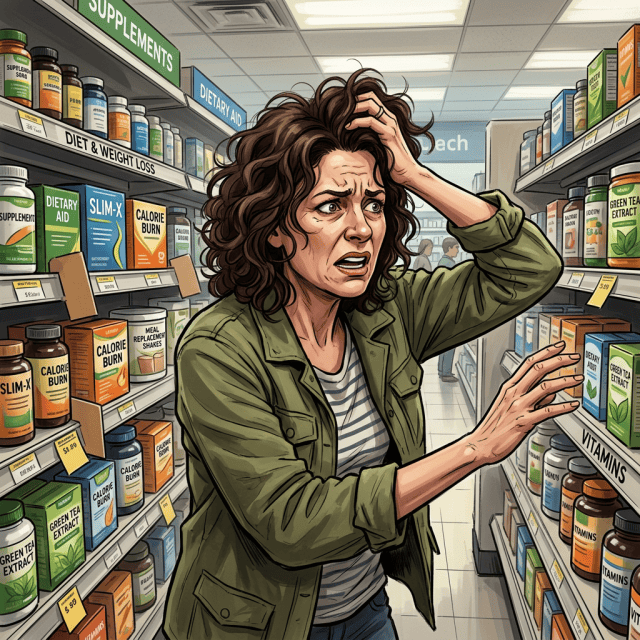
The timing of the CHOICE report was also significant. In 2009 the House of Representatives Standing Committee on Health and Ageing, held its inquiry, Weighing it up – obesity in Australia. In February 2013 the Australian Government published its response. Whilst the Committee recommended tightening rules on a number of weight loss products, the role and regulation of pharmacies was omitted.
In late 2011 the Pharmacy Guild of Australia was criticised for launching a weight loss scheme with a Melbourne-based genetic testing company. The approach sought to sell the idea that an individuals genetic profile would provide customised information to assist with weight loss. Labelled a gimmick this was followed by calls for the Government to review how it handles business with the Guild. This ABC PM programme (4.5 min) provides an excellent summary.
The Pharmacy Guild and the Pharmaceutical Society of Australia, continue to issue their own guidelines on weight loss management. Compliance is mostly voluntary. Larger chains such as Amcal and Priceline today provide consultations, BMI measurements, lifestyle and portion advice.
Failure to adopt the recommendations of CHOICE or legislate for permanent change has ensured the sale of Very Low Energy Diets (VLEDs) in the form of shakes, bars and soups has continued from Australian pharmacies. They are highly commercialised and product-based. Long term use is an issue that should be strictly monitored as VLEDs cause mild to moderate ketosis.
A 2012 review of pharmacy based diets in NSW found that customers had concerns about expertise and time available for their needs. Nonetheless, the authors concluded that addressing problems associated with pharmacy diets would assist in improving their profile as an option for weight management programmes. One waits patiently for said problems to be addressed.
Today VLED brands such as Optislim, Optimist and Tony Ferguson, alongside retail meal replacement brands such as The Man Shake and nonsense like FatBlaster can be found in pharmacies. There is little doubt that when considering an investment in weight loss, the advice of a qualified dietician particularly in conjunction with visits to ones GP and appropriate blood tests, will yield the best tailored dietary advice.
Firesnake: Critical Thought and Morality – Episode 53 – Pharmacy Diets
Notes on Firesnake
- Firesnake was a podcast published from 2007 – 2009, focusing on critical thought, skepticism and morality. Approximately 60 episodes were published. The host was myself, using an old nickname “Gags”.
- A popular segment was the “CPDCT AWARD” often held toward the end of each episode. This highlighted a Clear And Present Danger To Critical Thought, and being cunningly rigged, saw the title awarded to the main subject of the episode.
- References for each episode were published on Delicious (originally del.icio.us) which was a now defunct bookmarking platform. This may be mentioned.
- Firesnake no longer exists as a podcast, but the original Libsyn account remains, and has been used to publish audio and documents that feature in posts on this blog. Thus, searching for the podcast by name will likely bring up a list of audio snippets mostly used to highlight anti-vaccine lobbyists.

