Debunking Viera Scheibner on Sunrise

In 1985 a micropalaeontologist who had emigrated from Slovakia to Australia in 1968 was testing the breathing patterns of babies recently vaccinated with DTP.

Using an infant breathing monitor invented by her late husband the geological surveyor with NSW Department of Mineral Resources claimed to have witnessed “stressed breathing”. With this one unconfirmed assertation the woman, Viera Scheibner, went on to claim she had discovered the cause of Sudden Infant Death Syndrome. She attempted to alert the scientific community to this Nobel Prize worthy “discovery”.

The claim – having none of the specifics of established scientific inquiry – was dismissed. Thus began the long career of arguable revenge that has driven Viera Scheibner to not only blame vaccines for almost all physical ills but to claim her conclusions come from the very literature source whose authors spurned her “discovery”. Claiming vaccines cause AIDS, asthma, immune suppression, Legionnaires, SIDS, Shaken Baby Syndrome, indeed all infectious disease, Scheibner insists “orthodox medical research” shows this. Disease conversely is “good”.

Scheibner is a role model to Meryl Dorey of The Australian Vaccination Network. However Viera clearly tries to fool Australians. In her book she writes that when Japan moved vaccination age from under 12 months to 2 years the incidence of SIDS “virtually disappeared”. In fact she had sourced her figures from vaccination compensation. In Japan SIDS is only diagnosed in infants under 12 months. Thus SIDS had not disappeared, only the opportunity to link it to vaccination compensation.

Despite claiming that Sweden abandoned pertussis vaccination due to a loss of trust, Scheibner forgets to recount the immediate rise in pertussis cases and their research effort into new pertussis vaccines. Nor does she recount how Sweden resumed pertussis vaccination to great success. She continues to insist vaccines have done nothing more than “sensitise” human beings to viral infection despite dissenting data and massive drops in disease. Scheibner also denies smallpox was eradicated.

This video refutes the claims she recently made on Channel 7’s Sunrise program in Australia.

Viera Scheibner on Sunrise

Autism Phenome Project confirms two subsets of autism

The UC Davis Mind Institute has confirmed two types of autism, with different biological aspects at Perth’s Asia-Pacific Autism Conference.

Whilst different subsets of autism appear likely the behavioural outcomes are the same. This suggests there may be genetic, environmental and immune aspects that whilst different all lead to a common aspect manifesting as autism. For example it’s known that mothers with one autistic child are 18% more likely to have another child with a developmental delay diagnosis.

Boys can develop a subset that presents brain hypertrophy earlier than predicted. Not seen in all boys this form is also not seen in girls, according to Dr. David Amaral from the Autism Phenome Project.

The ABC report;

“We don’t see it in girls, and even in boys we see it only in a subset of children with autism,” he said.

He says in biological terms there are different types of autism, but they all have similar symptoms.

“That’s one of the mysteries at this point. We know that there are different biologies but that the behavioural symptoms of children with autism all look basically the same,” he said.

“Many, many people now are trying to figure out whether all of these various biological causes are focusing on one final common pathway.”

He says as research progresses, one form of autism might be more easily treated than others.

“As one example, about 12 per cent of women who have children with autism have antibodies that are directed at the foetal brain,” Dr Amaral said.

“We’re doing research now to determine whether that really is a cause. And if that’s the case, that leads directly to a diagnostic marker for a subset of families that are going to go on to have children with autism.

“We expect that as we learn more and more about the various subtypes we can develop strategies to more effectively either prevent or treat each one of those different categories.”

The Autism Phenome Project focuses on:

  • Medical evaluation
  • Environmental exposure and epidemiology
  • Behaviour
  • Genomics
  • Immune function
  • Proteomics and metabolomics
  • Bioinformatics

Sunrise hype mandatory vaccination

Firstly, there is no “push” for mandatory vaccination. Anti-vaxxers like the Australian Vaccination Network market this to garner support against Big Government.

Scheibner uses the same tune again

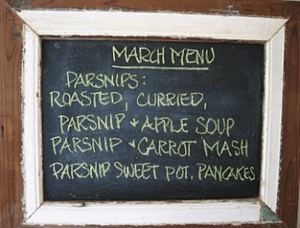
Yet if ever there’s an argument for mandatory vaccination it’s people like Viera Schiebner – or rather, the potential harm they cause. On this Sunrise segment, Scheibner (who keeps documents in a parsnip box) is given far too much time to sound convincing using the old “driving licence tests cause road fatalities” non-logic of correlation.

She also fails to distinguish between disease trend moving from correlating issues with polio to outbreak epidemiology with pertussis. All the while Scheibner suggests this is of course, an argument against vaccines.
Professor Robert Booy gets only a brief chance to slay her with facts. Facts that prove her to be lying.

It is not the vaccinated who die from vaccine preventable disease and he delivers the goods. The facts are clear. Risk/benefit is in favour of vaccination. Schiebner’s correlation myth and claims that disease is best for immunity are ignorant of facts and grossly irresponsible.

Channel 7 gave air time to an eccentric micro-palaeontologist intent on sabotaging vaccination regimes in pursuit of ratings. For shame, 7, for shame!

Sunrise Thu. September 8th, 2011

The Australian Vaccination Network in court

Today Meryl Dorey returned to the Supreme court NSW to resume her fight to overturn the NSW HCCC decision that the AVN should place warning notices that it provided anti-vaccination information on it’s website.

She was cross examined for 20 minutes and the court convened. She returns in another 2-3 months;

Dorey has claimed that the HCCC investigation was “illegal” as the AVN was outside HCCC jurisdiction being not a health care provider or health educator under the HCCC Act. Dorey also claims the investigation was flawed because it was not independent, but by a government organisation that “set out to support government policy which is pro-vaccination”.

Whilst still publically maintaining lack of jurisdiction to members today, referring her members to this denialist conspiracy rant, I understand that Dorey and the AVN are certainly within HCCC jurisdiction. The AVN conceded so in court on July 28th. Unseen developments aside this is likely to remain.

On July 26th, 2010 the HCCC published a public health warning following the AVN’s failure to post warnings that it was anti-vaccination. Prior to this the HCCC had investigated two complaints that the AVN provided false and misleading information. The HCCC concluded it’s investigation on July 12th and gave the AVN 14 days to publish the following on it’s website:

  • The Australian Vaccination Network’s purpose is to provide information against vaccination in order to balance what it believes is the substantial amount of pro-vaccination information available elsewhere;
  • The information provided should not be read as medical advice; and
  • The decision about whether or not to vaccinate should be made in consultation with a health care provider.

As you can see this is markedly more tame than the public health warning. There’s no mention of;

  • provides information that is solely anti-vaccination
  • contains information that is incorrect and misleading
  • quotes selectively from research to suggest that vaccination may be dangerous

Or;

… the AVN provides information that is inaccurate and misleading. The AVN’s failure to include a notice on its website of the nature recommended by the Commission may result in members of the public making improperly informed decisions about whether or not to vaccinate, and therefore poses a risk to public health and safety.

Meryl Dorey

So to spell out the obvious, most of what Meryl Dorey is railing against is by her own hand. All this effort to pretend she’s not anti-vaccination need never have been wasted. The hysteria over her being a risk to public health, quoting selectively from research, giving incorrect and misleading information leading to improperly informed decisions was all her own doing. I cannot stress that enough. The difference between what the HCCC requested and what Dorey created is huge.

Also her claim of not being under HCCC jurisdiction and not giving medical advice somewhat deconstructs itself by her refusal. By refusing to inform readers information shouldn’t be read as medical advice, we may infer that she believes it should. By refusing to support consultation with a health care provider she is in effect denying sound medical advice. Later ramblings about suppression of her right to free speech are as good as incomprehensible.

This initial decision was backed by Victoria’s Chief Health Officer Dr. John Carnie, speaking on ABC’s The World Today, July 13th, 2010:

Download audio. Transcript here.

On July 12th – HCCC announcement day – the AVN having metamorphosed into a watchdog popped out a cracker of media release from “media spokesperson”, Meryl Dorey: Vaccine Safety Watchdog to Fight Government Censorship;

Consumer advocacy and vaccine safety watchdog group, the Australian Vaccination Network (AVN), has announced that it will be investigating all options in order to respond to the outrageous attack on free speech inherent in the recent allegations made against it by a NSW state authority, the Healthcare Complaints Commission (HCCC). The HCCC, in a report just released, has deemed the AVN to be a ‘healthcare provider’ and, in this capacity, stated that it has published ‘misleading and dangerous’ information on the risks of vaccination [….]

You can’t make this stuff up. Even members were baffled by her position. “But Meryl, we are anti-vaccination… just comply”, was a position expressed. Nonetheless, this gave birth to the “attack on free speech” lie that gradually drew in our friend with intellectual wanderlust, Dr. Brian Martin. Consider this taste of (if I may be so bold) a deluded and paranoid attempt at rationale, to mislead members. Pay particular attention to claims that the OLGR found no evidence of fraud. You know, like this missing $12,000 or even this other missing $12,000;

As you all would be aware, the Health Care Complaints Commission (HCCC) illegally ‘investigated’ the AVN, and asked us to put a statement on our website to say, amongst other things, that we were anti-vaccine. We refused to do so and, as a result, they released a statement that we were providing deceptive and misleading information and were a danger to the public. The implications of this action are much further-reaching than the AVN as I will explain a bit further on.

This HCCC decision has been used by many other organisations and the media to defame and slander us – and why is that? Because we provide help and support to a sector of the Australian population that the government wishes didn’t exist – those who question authority, think for themselves and make health and wellness choices that go against the government’s and the medical community’s wishes. People like us should not exist as far as these bodies are concerned and they see the AVN as one of the ‘ringleaders’ if you will, of this sort of thinking. [….]

Right now, we are blocked at every turn because of this HCCC finding – and that was the whole idea behind this. Even the [OLGR] which openly admits that they found no evidence of fraud in the breaches they discovered in our operations – breaches of a purely administrational nature – have said that the HCCC findings will influence their final decision which is due out shortly.

And the HCCC had no jurisdiction to investigate us. Three lawyers, two barristers and a QC have all said this is the case. The HCCC acted outside their jurisdiction and outside the law.

It is certainly not the first time the HCCC has acted in an incorrect manner and this body, set up to protect the people of NSW from incompetent and dangerous doctors, seems to have a long history of being partial to the medical profession whilst coming down hammers and tongs against those in the natural health arena.

Speaking of the OLGR after this is over comes the appeal against the OLGR investigation and ministerial decision.

Dorey also dismisses the OLGR investigation and October 20th, 2010 revocation of their charitable fundraising status (authority to fundraise) by the Minister for Liquor, Gaming and Racing as “based on the HCCC decision”. [Letter here] More than anything, her conduct after this changed the view of Dorey as just an anti-vacccination crank and exposed the money making angle. Whilst not in the Sensaslim league, tactics are similar. Lie, feign outrage, produce confident media releases “clarifying” the egregious and erroneous mistakes of authorities, boast of confidence in being found not guilty and above all control the flow of information. Also simply inventing falsehoods and failing to deliver on legally obtained income such as magazine subscriptions.

Dorey also reported the OLGR audit findings as typical of any small, volunteer run organisation – size of donation tins, receipt giving and keeping of copies, etc – and had reported confidence that no fraud would be found. They also reported not having an auditor during the time they were found to be fundraising without a licence. During a rather delightful discovery it turned out the AVN had admitted having auditors over the time they told the OLGR that they did not. This was inadvertently admitted as part of a scam to raise money over a non existent advertisement.

In fact the OLGR found 17 breaches of the fundraising act including offences that carry fines and deliberate misleading of the public. Sadly penalties for charity fraud are quite lenient, which renders the creatures responsible as cowardly as they are reprehensible.

So, what of this line Dorey feeds over and again to her members and the media? The OLGR are flawed because they relied on the HCCC. Because of the deceptive nature of AVN website presentation – which led to the HCCC request – the OLGR also concluded individuals may donate in good faith and “noted the HCCC decision”. That’s where it ends. The OLGR in no way “based” it’s decision on the HCCC, but arguably had the AVN complied initially the OLGR may have ruled somewhat differently. Perhaps a suspension of authority, I really don’t know.

Either way, Dorey can only blame herself and her arrogance for the HCCC public notice. As for the OLGR decision, in light of the evidence, this thief, liar and scam artist who has also lived on the takings from her loyal if clearly misguided members has really already won so much. The fact she believes she can legitimately trade as a charity again and has been wronged tells us far more about the psychology of Meryl Dorey than about the dynamics of her crimes.

From an OLGR letter to Ken McLeod, October 18, 2010:

During the course of the inquiry evidence of possible breaches of the Charitable Trusts Act 1993 was detected in relation to the following specific purpose appeals conducted by AVN:

1. Fighting Fund – to support a homeless family, allegedly seeking to avoid a court order to immunise a child with legal and living expenses. The appeal ran for a short time in 2008 and raised $11,810. None of the funds were spent on this purpose.

2. Advertising Appeal – initially this was an appeal for the specific purpose of raising funds for an advertisement in the Australian commencing in March 2009 and concluding July 2009. The specific purpose was changed during the course of the appeal to fund advertisements in Child magazine. This appeal raised $11,910. None of the funds were applied to the specific purposes. It is noted that AVN did spend some $15,000 during the period December 2009 to July 2010 on various forms of advertising.

3. Bounty Bag Program and Vaccination Testing – for a number of years AVN has solicited for donations generally in a manner where, despite it not being AVN’s intention, one specific purpose was created in that donations could only be spent on one or more of four purposes, including funding the provision of AVN material in the Bounty Bag program and testing of vaccines. No funds raised have been spent on these two purposes.

The amount raised for the Bounty Bag scam and promises of independent vaccine testing is reportedly around $308,000 over 3 years and 8 months [page 13].

On top of that are numerous other scams based on the same technique one of which called for members to consider donating their Maternity Immunisation Allowance. This kicked off almost two months to the day after her first media release on the topic mentioned in item 1 above. Dorey claimed others were doing so, because without AVN lobbying to “ensure legislation” for the MIA and Childcare Allowance, they wouldn’t have it anyway. This is entirely bogus. Presently Dorey is calling for help to read the policy documents on the Healthy Kids Check. Yet somehow just can’t quite report the facts to her members.

Sound familiar?

Hand me down clothes for the “mercury causes autism” mannequin

Back in early August Swinburne University of Technology published an astonishing media release.

Australian research finds autism risk

Date posted: 9 Aug 2011

A family history of pink disease is a significant risk factor for developing autism spectrum disorder (ASD), new research from Swinburne University of Technology has found.

The results of the study, conducted by Associate Professor David Austin and Ms Kerrie Shandley from the Swinburne Autism Bio-Research Initiative (SABRI), have been published in the Journal of Toxicology and Environmental Health. Pink disease was a form of mercury poisoning prevalent in the first half of the 20th century. [….] When mercury was identified as the culprit and removed as an ingredient in teething powders in the 1950s, the disease was essentially wiped out. […]

“Staggeringly, we found that one in 25 grandchildren of pink disease survivors aged 6-12 had been diagnosed with an autism spectrum disorder. This compares to the current Australian prevalence rate for that age group of one in 160. […] In the meantime, Austin suggests those with a suspected family history of pink disease to minimise their exposure to mercury. This is particularly important for young children and women who are pregnant or breastfeeding.

“This can be done by observing the recommendations of Food Standards Australia regarding seafood consumption, opting for non-amalgam dental fillings and requesting preservative-free vaccines from your doctor,” he said.

“Staggeringly”! I hope you got that. By what mechanism I wondered? That was absolutely crucial. Huge toxic loads of mercury caused Pink disease (acrodynia). Thimerosal is ethylmercury rapidly removed from the body, monitored to the nth degree to ensure safe exposure. Teething powders contained 65,000 micrograms per dose of mercurous chloride which decomposed into elemental mercury and poisonous mercuric chloride on exposure to sunlight.

Thousands of children died – between 10 and 33% of cases. Yet not all exposed children suffered acrodynia – it was a minority of 0.2%. Are they thus suggesting a pre-existing inherited genetic susceptibility or susceptibility brought on by acrodynia, which was known to cause infertility? How did parents of children in the Swinburne study fare, in view of other studies linking high maternal exposure to mercury to autism in offspring? How robust was the data collation?

Kerrie Shandley and David W. Austin return to The Journal of Toxicology and Environmental Health to publish Ancestry of Pink Disease (Infantile Acrodynia) Identified as a Risk Factor for Autism Spectrum Disorders. Yes, that Journal of Toxicology…. The one that provides succour to Dr. Mark Geier of chemical castration and misdiagnosis fame in his “ASD Centers” across eight USA states. In 2007 the journal published A Case Series of Children with Apparent Mercury Toxic Encephalopathies Manifesting with Clinical Symptoms of Regressive Autistic Disorders by the infamous father and son team of, to say the least, dubious reputation. Geier senior is presently watching as his medical licence is suspended in consecutive US states.

We can learn quite a bit of these author’s intentions, hence the quality of research, simply by checking their track record. In 2008 Shandley and Austin published An Investigation of Porphyrinuria in Australian Children. They leap straight into citing from known offenders perpetuating the mercury-autism link – Geier and Geier, Nataf et al., Bernard et al., Mutter et al., – in the abstract claiming;

These (atypical urinary porphyrin profiles in children with an autism spectrum disorder) serve as an indirect measure of environmental toxicity generally, and mercury (Hg) toxicity specifically, with the latter being a variable proposed as a causal mechanism of ASD…. To examine whether this phenomenon occurred in a sample of Australian children with ASD, an analysis of urinary porphyrin profiles was conducted. [….] Three independent studies from three continents have now demonstrated that porphyrinuria is concomitant with ASD, and that Hg may be a likely xenobiotic to produce porphyrin profiles of this nature.

The discussion is far more circumspect about this correlation [italics mine], despite the authoritative recommendation [in my bold];

 Furthermore, this study provides further evidence suggestive of an environmental toxicant variable, consistent with Hg, contributing to the maintenance, and possibly development, of ASD.

Given the consistency of the emerging research, health authorities worldwide need to move without delay to further elucidate the specific nature of the toxic insult.

The bibliography is rather short but as well as the above includes Edward Yazbak, Mark Blaxill – editor from Age of Autism – and Sally Bernard et al.’s Autism: a novel form of poisoning from Medical Hypotheses 2001. It’s a Who’s Who of vaccines cause autism mythology whose work is featured by Generation Rescue, The Australian Vaccination Network, Age of Autism and their ilk. Shandley and Austin write erroneously, citing Yazbak, that autism [the disease – not the diagnosis frequency] is “increasing at epidemic rates” then cite Blaxill et al, arguing it;

…. cannot be accounted for by changing diagnostic criteria or improved diagnostic systems

In fact changing criteria has been proposed for years by many paediatricians including Gillian Baird and quantified recently by Brugha et al, who used current diagnostic criteria to uncover a population of autistic adults only 2% smaller than the child population. However, whilst porphyrinuria may indicate environmental exposure to heavy metals including lead and mercury other studies have shown correlation to autism and not Aspergers. Yet this heavy metal/autism mechanism, and what it exactly means is even less certain.

Porphyrins are oxidised byproducts that have “escaped” the heme biosynthetic pathway. We expect to see elevated levels in the urine of elderly, nutritionally deficient, regularly medicated and physiologically distressed individuals. The body can generally physiologically manage toxic build up. Hepatic and renal pathways of elimination serve as detoxification routes for the body. Porphyrinuria heralds a drop in efficacy of biosynthesis or environmental toxic exposure.

If the autistic sample is not recently exposed to environmental toxicity – or as the authors may argue, mercury – then we have to accept compromised biosynthesis. Whether this is due to autism, which does accompany a range of physiological challenges, or whether compromised biosynthesis indicated by porphyrinuria is contributing to autism, is unknown. It’s worth noting that enzymatic and physiological abnormality at the molecular level has been hypothesised as contributing to hypo’ and hypersensitivity in autism. The pathophysiology of autism sufferers is extensive and well documented. The angle Shandley and Austin take is the dramatic call to discover the nature of the “toxic insult” potentially causing ASD. Reading between the lines, and all academic company considered, that “toxic insult” is mercury in vaccines.

This is brought home strongly by Austin’s lone foray the same year in The International Journal of Risk and Safety in Medicine. An epidemiological analysis of the ‘autism as mercury poisoning’ hypothesis, is a scruffy 11 point synopsis concluding that mercury does indeed cause autism. In point 9, he addresses “Mercury levels are higher in autistic than non-autistic children”. He argues that the “causal” hypothesis would suggest that mercury levels would be higher in autistic children. Of course, that’s just what we find chopping into this straw man. Nataf et al., Geier and Geier, Bradstreet and Geier et al., make up three references. The fourth is DeSoto and Hitlan who court ample controversy not least for citing Geier and Geier excessively.

He notes that either mercury causes autism or autism causes mercury. The second notion being “patently nonsensical” and unsupported by literature. Which is unusual because with the cause of autism unknown and the many times exposure to mercury has been ruled out the same could be said of the first notion. We do know that biologically, neurologically and physiologically autistic individuals face many hurdles, and as I suggest above biosynthetic dynamics can’t be ruled out or in.

I was treated once again to a fallacy I’ve had shoved at me in other areas in public health in which robust data indicate no causation between variables. A type of “better to be safe than sorry”, usually proffered by those bent on ideology. Austin here hijacks the “Precautionary Principle (‘First, do no harm’)” as point 10;

The science behind the autism as mercury poisoning hypothesis meets all epidemiological criteria across too many independent studies to be dismissed as coincidence. So, the hypothesis that mercury likely causes autism is confirmed epidemiologically.

He also rewrites history on Pink Disease in point 9, by suggesting that “despite limited evidence” mercury containing compounds were recalled. This is nonsense. Fierce resistance to accepting mercury poisoning was the norm with medical focus being on a physiological cause. It’s argued the mercury hypothesis gained stronger ground only when opponents “became old and disappeared from the scene”. Gaining credibility via attrition of opposition is not application of the precautionary principle. Austin here is exposed as deceptive, misleading readers for his own purposes.

He concludes his plunge from the windowsill of academic integrity with;

The existing literature provides grounds for suspicion that mercury plays a causal role in the development of autism. [….] …it would be negligent to continue to expose pregnant and nursing mothers and infant children to any amount of avoidable mercury. Health authorities worldwide should move without hesitation to ban and remove all mercury in all medical products at the earliest possible date.

Again with the dramatic calls. Where is this mercury really coming from? Ethylmercury or methylmercury in the diet, pre-term maternal diet, breast feeding or toxic exposure? We can infer with a good deal of accuracy he alludes to thimerosal in vaccines. It’s a shocking paper without even an acknowledgement of the impact of changing diagnostic criteria. The bibliography continues to fail with Boyd Haley, who pops up twice, Mark Blaxill again along with another showing from Sally Bernard. Indeed the “epidemiological analysis” of “existing literature” is a predetermined collation of biased and discredited publications.

Still, we can now return to the most recent paper with a clear understanding of these authors’ predetermined agenda.

To begin with they wheel out all the veteran offending authors, including their previous work to make the case there’s a relationship between mercury and autism. Well, third time lucky just doesn’t apply here. In the tradition of discerning character from the company one keeps, I think we can indeed confirm intention from citations. From the abstract they propose susceptibility and genetic predisposition to explain the small subset of Pink disease sufferers and of autism diagnoses today;

Pink disease (infantile acrodynia) was especially prevalent in the first half of the 20th century. Primarily attributed to exposure to mercury (Hg) commonly found in teething powders, the condition was developed by approximately 1 in 500 exposed children. The differential risk factor was identified as an idiosyncratic sensitivity to Hg. Autism spectrum disorders (ASD) have also been postulated to be produced by Hg. Analogous to the pink disease experience, Hg exposure is widespread yet only a fraction of exposed children develop an ASD, suggesting sensitivity to Hg may also be present in children with an ASD. The objective of this study was to test the hypothesis that individuals with a known hypersensitivity to Hg (pink disease survivors) may be more likely to have descendants with an ASD.

Fair enough. Yet as we’ll see both the genetic component and the exposure to mercury in subsequent generations is unconvincing. Besides, where might this mercury today be coming from?

Mercury contained in vaccines (as a preservative under the tradename Merthiolate, but more commonly known as thiomersal/thimerosal), dental amalgams (silver fillings), seafood, and the atmosphere is argued to be the primary set of sources of Hg exposure for infants both in utero and in their early years.

Well that’s pretty clear. Small children awaiting first or second teeth won’t be worrying about dental filings. Big Atmosphere is here to stay and dietary sources are by choice. In short the only tantrum one need throw is over vaccines. They continue firming the dual hypothesis of susceptibility and exposure to mercury;

… the Hg-autism hypothesis is, in reality, a two-part hypothesis that states that Hg exposure combined with a genetic/physiological sensitivity to Hg or a predisposition to impaired Hg excretion capacity leads to a chronic elevation of Hg in the brain and body.

The purpose of the present study was to test the Hg-autism hypothesis. If the hypothesis is indeed correct, and a sensitivity to Hg is heritable (genetic), the prevalence of ASD among the descendants of a cohort confirmed as having a hypersensitivity to Hg (pink disease survivors) should be higher than a comparable general population prevalence.

Results were reported in the media release and in Fairfax: Mercury poison linked to autism. We can also check back to the abstract for a more telling summary;

Five hundred and twenty-two participants who had previously been diagnosed with pink disease completed a survey on the health outcomes of their descendants. The prevalence rates of ASD and a variety of other clinical conditions diagnosed in childhood (attention deficit hyperactivity disorder, epilepsy, Fragile X syndrome, and Down syndrome) were compared to well-established general population prevalence rates. The results showed the prevalence rate of ASD among the grandchildren of pink disease survivors (1 in 25) to be significantly higher than the comparable general population prevalence rate (1 in 160). The results support the hypothesis that Hg sensitivity may be a heritable/genetic risk factor for ASD.

The most telling flaw is the efforts gone to in constructing the apparent genetic susceptibility to mercury leading to autism in grandchildren of acrodynia sufferers.

As identified earlier, numerous studies demonstrated a relationship between ASD and Hg. Our results suggest that this variable may have a heritable component and therefore, of course, a genetic basis. What our results do not do, however, is enable an understanding of the degree to which the susceptibility is inheritable and the mechanism by which this may occur.

Firstly if there’s a genetic component, why did the grandparents – and indeed the entire cohort of acrodynia children – not show prominent autism diagnoses. Secondly, how did the parents of the children escape autism? They lived in an era of mercury in house paint, mercury compounds in worming treatments, mercurochrome was a standard in First Aid kits – then suddenly vanished, industrial waste spilled into local rivers where kids regularly swam as standards of control were far more lax and mercury was used in the manufacturing of more products.

In short the parents with the same, “…heritable component and therefore, of course, a genetic basis”, were exposed to much more environmental mercury. Yet they emerge unscathed. Surely we should be seeing a reduction in ASD. Each subsequent generation is exposed to less mercury and the genetic component is halved. Unless there’s some incredible generational leap. Yet the authors themselves answer my initial question on mechanism – it’s unknown – and can offer no insight into the degree of genetic susceptibility.

So we must examine data collation. A survey completed by 522 infantile acrondyia sufferers. Self reporting data is perhaps the least reliable source of data in the absence of correction or follow up. In this case to correct for response bias it was crucial to chase up each and every one of the 522 respondents grandchildren to confirm that yes, they meet Australia’s criteria for autistic diagnosis. After all the authors are using the 1 in 160 frequency figure gained this way to claim “a six times higher” prevalence. The problem of perceived but undiagnosed autistic disorders may be impacting on results.

But they didn’t do this. The Age reports;

The authors said although they did not validate the autism diagnoses provided by the survivors in the surveys their study added to mounting evidence of a link between genetics, mercury sensitivity and autism spectrum disorders.

“The authors said”, eh? Right. It’s not as if they’re biased or anything – just look at their body of work. This emerging train wreck gets worse in that they likely promoted response bias. The study was advertised on the Pink Disease Support Group site. Yet the author’s write;

In order to minimize response bias, the true purpose of the study was not included on recruitment materials sent out to potential participants; instead, recruitment materials indicated that the purpose of the study was to investigate the general health outcomes of the descendants of pink disease survivors.

All up 23% of surveys were returned. What of the other 77%? Perhaps they had no descendants with health problems and thus were not motivated. Members of this support group with ill descendants are far more likely to respond, if not initially being prompted to join for the very reason the authors favour. Surely this “mounting evidence” would reach the ears of many Pink disease survivors. It’s even more likely those with autistic descendants would know of the hysteria over mercury in vaccines and thus reply, skewing results.

It is in fact arguable that some members of PDSG with autistic descendants – or who perceive they have autistic descendants, or have been told – gravitated toward membership because of the wide coverage of mercury being linked to autism. This point is just as likely as the supposed “six times higher” frequency rate. In truth we just don’t know. This is bad science that merely postulates a hand-me-down trick to breathe more life into the “mercury causes autism” corpse.

So in conclusion, we have two highly biased authors with a well documented track record of being unable to source reputable and bipartisan material on the issue of mercury and autism. They have a demonstrated propensity to argue against thimerosal in vaccines and immerse themselves in research and writing that we can only describe as being fringe or by known crackpots. David Austin in particular has previously written deceptive rubbish and aligned himself with known culprits in perpetuating known myths.

Shandley and Austin have a demonstrable predetermined agenda. Together they’ve come up with an appalling hypothesis because of this yet continue to cite these same biased sources. Their methodology is fatally flawed. Their conclusions are bordering on the absurd as they fail to justify the degree or mechanism of their observation which is based on unreliable data. To battle through this mess they cite over and again the same disreputable sources, which does not strengthen their argument. No dissenting citations are presented and challenged. They have published in a journal of dubious integrity and made public claims that remain scientifically unsubstantiated.

What.A.Mess. There’s nothing to see here – move along, move along.