Just over a year ago I posted that 12 charges had been brought by the Director of Public Prosecutions against Belinda Gae Harris over the supply and advertising of black salve products. This followed an investigation by the Therapeutic Goods Administration (TGA), which confirmed alleged criminal offences under the Therapeutic Goods Act 1989 (the Act), against Harris.
Harris insisted on her blog she was “helping people” and had written on Facebook about using the dangerous corrosive to “suck out” snake bite poison and COVID-19 vaccines from the injection site. The TGA reported at the time she faced up to “a maximum penalty of 12 months’ imprisonment and/or a fine of up to $222,000 for each charge”. Harris, who traded under ‘Tickety Boo Herbal’, was manifestly spared the maximum sentence. Found guilty of 10 charges on 30 October 2025 in Deniliquin Local Court, the TGA reported on 16 January 2026, that Harris had been:
[S]entenced today to 7 months imprisonment, a community corrections order, and fines of $20,000 for unlawfully advertising and supplying black salve and bloodroot capsules, and for advertising other unapproved therapeutic goods to treat serious conditions such as anxiety.
And that:
Ms Harris was released on recognizance of $2,000 and on condition of good behaviour for a period of 3 years with 6 months supervision. Ms Harris is prohibited from making restricted and prohibited representations about therapeutic goods by any means, including on social media. The term of imprisonment can be imposed if the conditions of the good behaviour bond are breached.
Ms Harris is also subject to a community corrections order with a supervision period of 3 years.
The prohibitions regarding publication about therapeutic goods, particularly on social media, and the threat of prison linked to the good behaviour bond, are certainly welcome. Let’s revisit some of Harris’ response to the charges last January:
I’m just going to keep doing it, because I’m helping people and I’m saving lives. My angels managed to keep this at bay until 2025… This matrix is bullshit. Bullshit lies. They’re allowed to administer carcinogenic chemotherapy to people and fry the fuck out of them with their radiation.
But I’m not allowed to do a simple herbal remedy that I have tested over and over again… I’ll see you in court government… You can’t shut me up. If you put me in jail I’ll just be educating everybody around me. Okay. Namaste. Loving you. Ben Abou.
Okay. Namaste it is.
Her Honour, Magistrate Humphreys, said “the offending was deliberate and planned”. She added:
The Court has an obligation to deter similar offending as it is of a kind that could cause great harm…
…The existence of a community of persons interested in the use of potentially dangerous alternative treatments for serious illnesses such as cancer adds weight to the need for general deterrence. Others involved in such communities must be dissuaded from engaging in similar conduct
In a welcome addition the magistrate also noted the indirect harm Harris’ actions had caused, in that there was, “a real potential for users of the product to delay seeking or obtaining conventional treatment”. This is an important point and often overlooked. Regardless of potential harm, any treatment that interferes with evidence-based medicine or leads to patients withholding information from specialists, can prove disastrous.
Deputy Secretary of the Department of Health, Disability and Ageing and head of the TGA, Professor Anthony Lawler said he was pleased with the outcome. He continued:
This significant penalty sends a clear message to anyone seeking to profit from the unlawful supply and advertising of therapeutic goods. The TGA’s highest priority is protecting the health and safety of the Australian public, and products like black salve have the potential to cause serious harm to people.
We will continue to take strong and decisive action against those who disregard their legal obligations under the Therapeutic Goods Act 1989 by advertising and supplying unapproved therapeutic goods.
Sanguinarine, a primary corrosive agent in black salve, is listed as a Schedule 10 substance in the Poisons Standard. These are described as substances “so dangerous to health that they are prohibited from sale, supply and use in Australia”.
Black Salve is a substance that helps nobody. Don’t be fooled by high-risk, untested so-called “alternatives”.
January has ushered in some interesting developments for skeptics in Australia as dodgy practices seemingly jostle for attention. Australia’s Therapeutic Goods Administration (TGA) has published welcome updates and warnings, a QLD influencer sank to a new low, our most insistent anti-vaccine fantasist copped yet another fact-check from the Australian Associated Press (AAP) and 14 members of a faith healing cult have been found guilty of manslaughter.
Black Salve
Black Salve has been a long term problem for the TGA as it remains a dangerously reckless alternative cancer treatment, linked to the unwarranted belief it offers a cure. A company and its director were convicted in 2022 for advertising alternatives to medicine not on the Australian Register of Therapeutic Goods. A significant seizure of black salve also took place in late 2023. On 6 January this year, the therapeutic watchdog published information that following an investigation in conjunction with the Commonwealth Director of Public Prosecutions, an individual faced 12 charges for alleged criminal offences under the Therapeutic Goods Act 1989.
The alleged offences relate to the advertising and supply of black salve, bloodroot capsules and other unapproved therapeutic goods. It is alleged that the individual made claims about the products’ ability to treat serious health conditions, including anxiety and cancer.
The defendant faces a maximum penalty of 12 months’ imprisonment and/or a fine of up to $222,000 for each charge.
Sanguinarine, a primary corrosive agent in black salve, is listed as a Schedule 10 substance in the Poisons Standard. These are described as substances “so dangerous to health that they are prohibited from sale, supply and use in Australia”. Whilst the TGA has not named the individual, a certain Belinda Gae Harris (pictured) who operates Tickety Boo Herbal, had prior to Christmas, revealed via video on Rumble that she had been charged in the exact manner later outlined by the TGA.
Harris remains adamant she is being charged for “helping people” and wrote, “I have been persecuted for being a healer for many lifetimes”. In her video Harris announced she has spent her life finding solutions for the damage [the TGA] have done with mRNA vaccines and “allopathic treatments”. On the topic of mRNA vaccination, Harris wrote last month on social media she used black salve and, “sucked the jab out of people straight after that poison injection”. She continued on her Rumble channel:
I’m just going to keep doing it, because I’m helping people and I’m saving lives. My angels managed to keep this at bay until 2025… I need to have a stack of evidence saying these are all the people whose lives I have saved… Oh my God, Oh my God. It just never ends with this world. This matrix is bullshit. Bullshit lies. They’re allowed to administer carcinogenic chemotherapy to people and fry the fuck out of them with their radiation. But I’m not allowed to do a simple herbal remedy that I have tested over and over again… I’ll see you in court government – who always seem to be loving watching me. I bet you’ve got the hots for me. You probably do, just like the trolls… You can’t shut me up. If you put me in jail I’ll just be educating everybody around me. Okay. Namaste. Loving you. Ben Abou.
Harris was scheduled to appear before Deniliquin local court on 4 January for Commonwealth and Police criminal mentions. One awaits updates on the matter, which aren’t presently coming from the Tickety Boo Facebook page.
Melanotan tanning products
On 24 January the TGA published a warning about the risks of using tanning products containing melanotan. Illegally sold and advertised online they consist of nasal sprays and injectable and indigestible tanning products. Unapproved for sale in Australia, they may contain toxic or counterfeit ingredients. Melanotans are synthetic peptides that increase melanin production in the skin. The risk of serious side effects mean melanotans should only be used under medical supervision. However they are being illegally promoted as safe, including by social media influencers. Vulnerable young Australians struggling with body image issues are at significant risk. The TGA write:
While the most common side effects include headache, nausea, vomiting, loss of appetite, and facial redness, the most concerning one is the risk of serious skin cancers. With melanotan-II, there have been reports of increased moles and freckles, kidney dysfunction and swelling of the brain.
Melanotan is not approved for sale or use as a tanning agent in Australia. These tanning agents haven’t been assessed for their quality or safety. Since these tanning products are not approved for sale or use in Australia, you also have no way of knowing what’s in them, no matter what’s written on the label. They could be made with toxic, poor quality or counterfeit ingredients.
The TGA also warn about advertising such products and leave little to the imagination by reminding readers that “all media types visible to the public” are included and liable as breaches under the TGA Advertising Code. More so, they have “a dedicated workforce to investigate the inappropriate and unlawful manufacturing, distribution, sale, import and advertising of therapeutic goods”. Let’s hope the warning is heeded.
Meryl Dorey
Regularly warned, reminded, debunked, corrected and revealed to have a striking aversion to the truth is one Meryl Dorey, founder of The Australian Vaccination-risks Network and owner of a Very Big Tag (VBT) on this website. Meryl has been fact checked by AAP in the past for cultivating notions about child suicides, and claiming later the same year that vaccinated people are more likely to die from COVID. The latest very, very old chestnut wheeled out by Meryl during an interview on YouTube [relevant section here] with Australian Liberal MP and vaccine cynic, Russell Broadbent, is the baseless claim that medical students spend a mere few hours discussing vaccines during their entire time at medical school. This is a decades old lie and serves to support the preposterous assertion that anti-vaccine activists know more than medical professionals. Dorey told a gullible Broadbent:
When doctors study vaccination, and we had the curriculum for the New South Wales school of medicine at UNSW – University of New South Wales – and it was out of four years of medical school there was one morning where vaccinations were discussed. […]
I think that any parent who’s done a modicum of research will be able to know more about this issue than the average doctor.
Ah yes, doing your own research. Busted by AAP, Dorey replied to their queries saying the curriculum was from “many years ago” and she had spoken to “probably thousands” of doctors about vaccines. Doctors apparently supporting her version of vaccine risks. Both replies should be regarded as monumentally dubious. I recommend reading the AAP piece to appreciate medical training around immunisation, population health and the use of vaccines. However, one paragraph stood out for me. A spokesperson for the Royal Australian College of General Practitioners observed:
When it comes to vaccines, as with other health issues, GPs are trained to consider the patient’s history and relevant risk factors, discuss the options available to the patient and any risks associated, and enable the patient to determine the most appropriate decisions about their own health care.
This isn’t the post to dig into this point, but bear in mind that anti-vaccine activist Judy Wilyman was awarded a PhD for a meandering literature review that made much of so-called “undone science” and unverified claims that vaccination programmes pose serious risks because they do not accomodate the genetic diversity and unique health needs of individuals. The above quote should serve as yet another reminder that the decision by the University of Wollongong to award that PhD, was and is demonstrably flawed.
Influencer charged with poisoning
The ABC joined the world’s media reporting on a 34 year old QLD mother and social media influencer, who has been charged with torture and giving her baby unauthorised medications, with the aim of attracting donations. It was a simple, if repulsive tactic; inform followers of your child’s illness, then create and exacerbate symptoms filmed to elicit sympathy. Police allege up to $60,000 was raised this way. The crowdfunding platform, GoFundMe, is presently refunding donors. It was also reported that after hospital staff improved the child’s health, the woman filled additional prescriptions and recommenced the abuse. The drug, carbamazepine, had been stopped by treating doctors due to fears it was causing seizures. Last week the woman was charged with 11 offences.
5 counts of administering poison with intent to harm
3 counts of preparation to commit crimes with dangerous things
Torture
Making Child Exploitation Material
Fraud
On 28 January a Brisbane Magistrates Court heard the woman allegedly hid her then 12 month old daughter under a blanket prior to administering unprescribed substances via a nasal tube. The child, now 18 months, was born with tuberous sclerosis, a genetic disorder which caused benign tumours in organs and can lead to epileptic seizures. Doctors believe the illegal medication administration caused further seizures in this child. The woman was caught on CCTV fiddling with her daughter’s nasogastric tube and handling a syringe, which was unrelated to her daughter’s medication. In the timeframe observed, the child went from being alert and awake to unconscious – a symptom not related to her condition.
The ABC reported on 29 January that the seizures, unexplained loss of consciousness and a cardiac arrest between August to October 2024, led the baby’s medical team to carry out high risk surgeries on intra-cranial tumours caused by the child’s genetic condition, believing them to be the causal factor. However, after the surgery the woman’s conduct was discovered. Drug screening revealed “the presence of carbamazepine and other non-prescribed medications in the baby’s system”. Bail was granted on condition the woman have no contact with her daughter other than via supervised audiovisual visits.
This will prove an interesting case with respect to the woman’s defence or indeed the reasons behind her behaviour. No doubt Factitious disorder imposed on another (FDIA), originally Münchausen syndrome by proxy, is an explanation that provides answers. But in the age of social media speckled with complex reasons driving individuals to behave antisocially, illegally or in pursuit of their own malignancies, might this be too simple an answer? Critical thinking and rationality are frequently jettisoned by influencers. Perhaps we should be seeking to understand how social media influences certain users, as much as we seek to grasp how they use it to influence others.
Religious cult guilty of manslaughter
Fourteen members of a religious cult that believed God would heal an 8 year old insulin dependent type 1 diabetic and later raise her from the dead, have been found guilty of manslaughter in a judge only trial in the Brisbane Supreme Court, report the ABC. Elizabeth Struhs was denied her insulin, became critically unwell over several days and died in Toowoomba 3 years ago this month. As she suffered, the cult “prayed and sang” rather than contact emergency services. After Elizabeth died, they waited for more than 24 hours before contacting police. The Court heard the group rejected modern medicine “and put their full trust in the healing power of God”.
Being questioned by police the child’s mother, Kerrie Struhs, told police she hadn’t lost faith in God, who could raise her daughter up regardless of where she was. In a classic example of biblical fundamentalist literacy, she rejected a funeral for her daughter because, “the bible says let the dead bury the dead”. Elizabeth’s father Jason Struhs was originally charged with murder, and also told police that he expected his daughter to rise from death. The deceased’s brother Zachary, told police:
We saw the healing and we know that she was healed from the diabetes. The sickness of her natural death could have been anything that comes up on anyone — that’s not for me to know, I’m not God.
Another member, Therese Stevens, sounded quite chuffed as she explained that Elizabeth will rise again and because of their beliefs they are not “as stressed out and freaked out and emotionally damaged as you would be if you knew you’d never see that person again”. In a ruling that should prove controversial, Justice Martin could not find the child’s father guilty of murder unless he had a full realisation his daughter would die from withdrawal of her insulin. The ABC reported:
Justice Burns said he was not satisfied of this beyond a reasonable doubt, stating there was a possibility in the “cloistered atmosphere of the church which enveloped [him] and which only intensified once he made the decision to cease the administration of insulin, he was so consumed by the particular belief in the healing power of God … that he never came to the full realisation Elizabeth would probably die”.
For a similar reason he did not find cult leader Brendan Stevens guilty of murder, but found his claim that he did not influence Jason Struhs to be “arrant nonsense”. Justice Martin also found all other members influenced Jason to withhold insulin and medical care and thus, “counselled and aided in the unlawful killing of Elizabeth”. Of the 14 members, 8 were from the Stevens family, 3 from the Struhs family, there was one couple and one individual. Elizabeth’s sister Jayde who had not been on trial spoke outside the court. Whilst happy with the outcome of the trial she said the “system failed to protect Elizabeth in the first place”. In a revealing comment Jayde added:
We are only here today because more wasn’t done sooner to protect her or remove her from an incredibly unsafe situation in her own home.
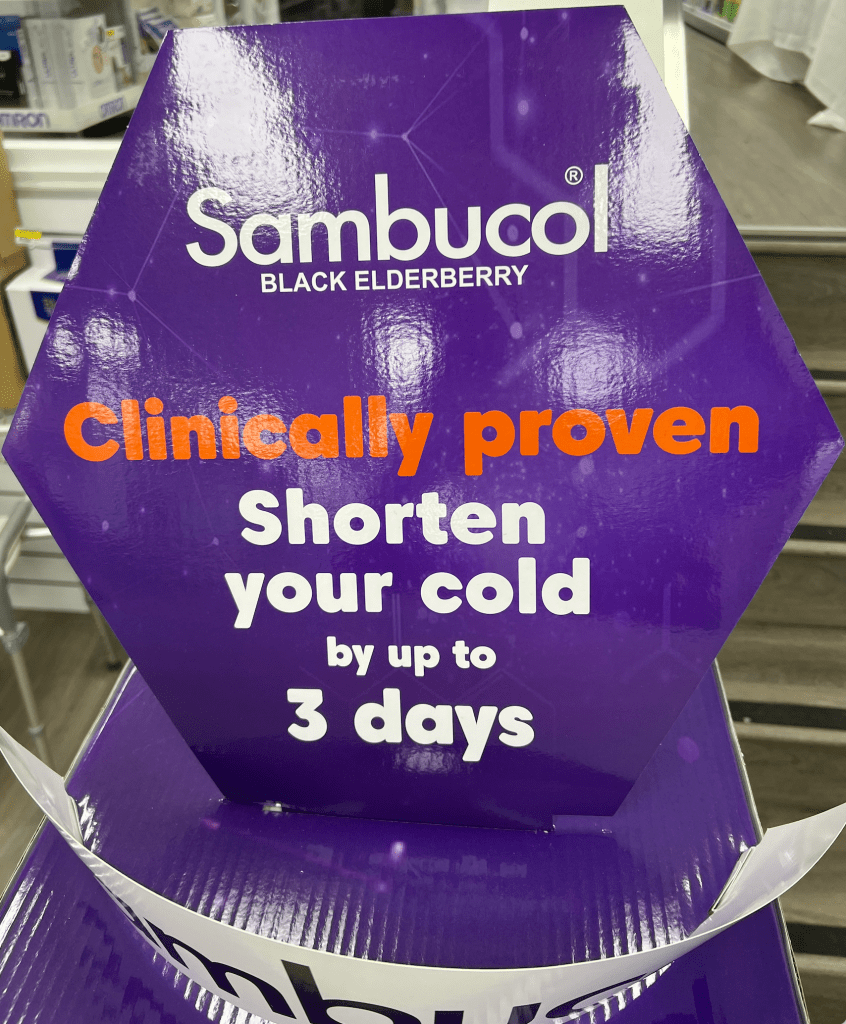
A couple of weeks before the start of winter, I wandered past a garish product display in my local pharmacy. A glossy purple hexagon boasted orange font across its middle; Clinically proven. Underneath that in white font: Shorten your cold by up to 3 days.
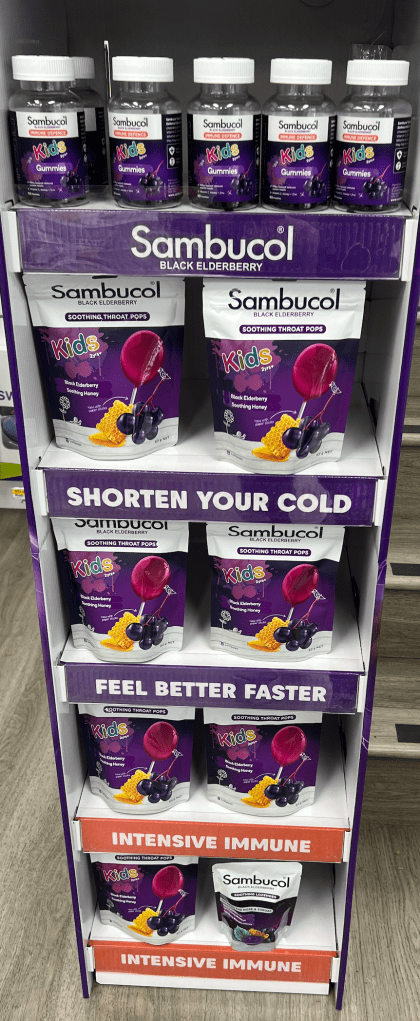
Taking in the entire sign, I spotted a familiar brand name. Sambucol® – Black Elderberry, a product of PharmaCare. The hexagon sat atop five cardboard shelves each labelled with more claims: Feel Better Faster, Intensive Immune, Shorten Your Cold, all packed with something for “kids”. Immune Defence Gummies,Soothing Throat Pops and Soothing Lozenges to “refresh the nose and throat”. It all sounded wonderful. I mean, who doesn’t want to feel better faster? Or puff up immunity with gummies? And knock 3 days off a cold? Surely it wasn’t just for kids. Then I wondered, could such claims really be “clinically proven”?
The elderberry grows on the elder plant (Sambucus nigra). Nataly Martini of the School of Pharmacy at the University of Auckland has written about elderberry in the Journal of Primary Healthcare, 31 March 2021 (2021;13(1):91–92. doi:10.1071/HC15960). It is reproduced by the Royal NZ College of General Practitioners, as a Potion or Poison article accessible here. The author notes “Dried or fresh berries have been used to treat constipation, neuropathic pain, headache, tooth-ache, sinus congestion, sore throat, influenza and the common cold, among others”. A meta-analysis of four randomised placebo-controlled studies, often cited by Pharmacare in promoting Sambucol, is also referenced. Martini reports that supplementation with elderberry, “reduced the duration of upper respiratory symptoms in verified cases of influenza, or symptoms consistent with either influenza or the common cold, when administered at the onset of symptoms”.
Martini continues:
Other studies have reported that elderberry supplementation significantly reduced symptoms and the duration of influenza A by 3–4 days, or the common cold by ~2 days in long-haul travellers. However, in the latter study half of the participants also used co-medication to relieve symptoms, limiting the application of these findings.
Writing in The Conversation Monash immunology researcher Kim Murphy referred to the latter study noting the collective duration of colds, rather than the average length, was compared in unequal group sizes, and concluded, “this isn’t a reliable finding”. What stands out in Martini’s article is the Summary Message. It highlights a recurring theme with the efficacy of elderberry preparations and symptom duration. Namely, that more research is needed to substantiate claims and high quality trials are currently lacking:
Although findings suggest that elderberry may be effective in reducing symptoms and duration of viral infections, more high-quality human trials are needed to substantiate these claims. Currently no studies support the use of elderberry in coronaviruses. Generally regarded as safe, toxicity may result from ingestion of raw or uncooked fruit, and allergies may occur in susceptible people. Use is not recommended in pregnancy and lactation due to insufficient evidence. Elderberry products may exacerbate symptoms in patients with autoimmune diseases. Caution is advised with immunosuppressants as elderberry may reduce effectiveness of these drugs. No major drug interactions are known.
Pharmacare is an alternative medicine manufacturer, and as such its primary concern is brand promotion and brand protection. In essence, Pharmacare is about sales. There’s nothing wrong with this, but as a skeptic I’m more concerned with the transparency of the claim that Sambucol® is “clinically proven” to reduce cold symptoms by up to three days. Can such a claim be trusted? Let’s review a 2018 article by Liam Mannix, science reporter for The Age and Sydney Morning Herald; University of Sydney pulls claims elderberries can fight flu, to get our bearings. The article opens:
One of the country’s leading universities has been forced to retract a claim its study showed eating elderberries could help beat the flu after admitting it was overhyping its own science.
The University of Sydney also concealed the research was part-funded by company Pharmacare – which sells elderberry-based flu remedies – at the company’s request. Although it was declared in the study itself, the university also failed to publicise that a Pharmacare employee was involved in the research.
The flu-busting claim, made in a press release and published on the university’s website, attracted national and international media attention, most of which did not mention the Pharmacare funding.
The article reveals that the study simply focused on in-vitro dosing of human cells in a laboratory environment. No mice or human subjects were involved. As stressed in the article such research is fine, but how it is represented is vital. Professor Ken Harvey, then-president of Friends of Science in Medicine observed:
“This is an appalling misrepresentation of this Pharmacare-funded in-vitro study. It was inappropriate and misleading to imply from this study that an extract was ‘proven to fight flu’.”
The article reveals that Pharmacare were aware of the press release but requested not to be named, for reasons study authors did not understand. Ray Moynihan, an assistant professor at Bond University’s Centre for Research in Evidence-Based Practice, who studies science reporting in the media stressed it raised “serious concerns” about transparency. “It is vital information for us to know who sponsored the study“, he said at the time.
The Sydney Uni episode said much about Pharmacare transparency and even more about claims relying on Pharmacare-funded studies. The company presently has a collection of articles gathered to back its many assertions. Some cite Pharmacare studies, whilst others present generalised health-related information, citing other studies, articles and reports. Following Sambucol® “shortening colds by up to 3 days” brings us to a page that opens with:
Sambucol® Black Elderberry Cold & Flu is the only Black Elderberry Cold & Flu product clinically proven to shorten your cold by up to 3 days.
The page refers to a study by Rao A, et al, and informs the reader it is an, “Unpublished study by RDC Global on behalf of Pharmacare Laboratories. Available on request.” More about this study, can be gleaned from a Pharmacare internal catalogue on their Clinically Proven Formula, which is marked on each page, “For Professional and Internals Staff use only. Not to be distributed”. The catalogue includes a number of Pharmacare-funded studies, and lists the Rao et al, study title in full: Rao A, Sethi M, Dick C, A double-blind, randomized, placebo-controlled study to evaluate the safety and efficacy Sambucol® liquid formulation to reduce the duration and severity of the common cold symptoms in adults. PHA-Sam15. 2016.
The catalogue summary of the study, offers graphs and a report on p.6. It professes a 31.8% reduction in symptom severity and a reduction in sick days from 8.9 to 5.9 (33.7%) days between placebo and Sambucol® recipients. The public summary includes:
The efficacy of Sambucol Black Elderberry Cold & Flu to reduce the duration and severity of common cold symptoms was researched in a double-blind, randomised and placebo-controlled study sponsored by Pharmacare Laboratories.
The study included 461 healthy, adult participants and found that participants who took Sambucol® Black Elderberry Cold & Flu daily from the onset of cold symptoms were sick for a significantly shorter period of time.
The median duration of illness for the placebo group was eight days, whereas the median duration of illness for the group taking Sambucol® Black Elderberry Cold & Flu was five days – a median three-day reduction in duration of illness.
According to the study, “The results show that supplementation with Sambucol® Black Elderberry Cold & Flu at the onset of cold symptoms significantly reduced the duration of a cold episode as well as significantly reduced the severity and impact of cold and flu symptoms.
Being unpublished, the Rao et al, study lacks the authority attributed to peer reviewed research. Nor has it been reproduced independently. Yet Pharmacare-funded studies are of paramount importance to their business model. It allows the company to produce and distribute positive material related to Pharmacare brands. As the FAQ page informs us under, What is the difference between Sambucol Black Elderberry products and other black elderberry products?
Not all black elderberry extracts are the same. Only Sambucol Black Elderberry, the original black elderberry extract introduced more than 20 years ago, contains the same proprietary, naturally balanced elderberry extract used in the published scientific studies. Other products use a concentrated, standardized elderberry extract. They are fundamentally different ingredients.
Pharmacare Brands
Nonetheless, the internal Pharmacare catalogue cites a number of studies where generic elderberry extract is used, to assert its effect on the duration and impact of cold and flu symptoms. There have been no comparative studies of extract efficacy, and as such there is no evidence that Sambucol® Black Elderberry is more or less effective than any other black elderberry extract. Generic extracts have been used in “the published scientific studies”, such as the Hawkins et al meta-analysis, which found an association with reduced influenza A symptoms and duration.
Speaking of influenza, Pharmacare cite two studies in their internal catalogue that conclude Sambucol® has an effect against influenza. On page 6 they refer to in-vitro and in-vivo efficacy against influenza A and B. On page 7 they refer to in-vitro efficacy in reducing H5N1 by 99%. The catch for Pharmacare here, is that Australia’s Therapeutic Goods Administration (TGA) limit the seriousness of diseases and symptoms that they can claim Sambucol® relieves. Influenza is not accepted (see below). On another note, one must be aware that Pharmacare’s Sambucol® benefits from generic use of the term Sambucol. Consider this entry for Sambucol at drugs.com.
Sambucol is a berry from a European or Black elder tree. The berries are used to make medicine. Sambucol is also known as Arbre de Judas, Baccae, Baises de Sureau, Black-Berried Alder, Black Elder, Boor Tree, Bountry, Elderberries, Ellanwood, Ellhorn, European Alder, Fruit de Sureau, Grand Sureau, Hautbois, Holunderbeeren, Sabugeuiro-negro, Sambequier, Sambu, Sambuc, Sambuci Sambucus, Sambugo, Sauco, Saúco Europeo, Schwarzer Holunder, Seuillet, Seuillon, Sureau, Sureau Noir, Sus, Suseau, or Sussier.
The emerging claim that Sambucol® improves immunity also deserves comment. The internal catalogue summarises a 2002 study by Barak et al, on page 8, with the conclusion:
Sambucol® activate the healthy immune system by increasing inflammatory cytokine production more effectively compared to other herbal remedies.
The study, The effect of herbal remedies on the production of human inflammatory and anti-inflammatory cytokines compared Sambucol® to propolis and Echinacea. These are used as herbal treatments and preventatives of upper respiratory tract infections in adults and children. The cytokine-modulating effect of echinacea has been demonstrated in-vitro and in animal studies. However, a 2021 systemic review concludes firm evidence linking elderberry to inflammatory cytokine production is lacking. However, accounts of elderberry syrup linked to Drug Induced Liver Injury and Autoimmune Hepatitis have become evident. In the latter case the overproduction of inflammatory cytokines has been considered. Depending on future incidence, proper management at the point of sale may thus require an understanding of patient history. Whilst this is possible in the pharmacy setting it is not so elsewhere.
The claimed reliability of elderberry lends itself to the appeal to antiquity as it has reportedly been used for centuries, for a host of purported reasons, as mentioned above, in addition to heart disease, gum disease, high cholesterol and obesity. The drugs.com entry for Elderberry and Sambucol are identical and include (bold mine):
It is not certain whether [Sambucol/Elderberry] is effective in treating any medical condition. Medicinal use of this product has not been approved by the FDA. This medicine should not be used in place of medication prescribed for you by your doctor.
The US Food and Drug Administration (FDA) have warned promoters of elderberry syrup, as evidenced by (for example) a September 2000 warning letter and another in August 2022, written to highlight breaches of the Federal Food, Drug and Cosmetic Act because the products advertised were “intended for use in the cure, mitigation, treatment, or prevention of disease”. The FDA does not regulate herbal supplements. In Australia the TGA accepts Sambucol Black Elderberry Cold & Flu and Sambucol Black Elderberry Cold & Flu + Pain as Listed medicines as opposed to Registered medicines.
Read more about TGA classifications here, and please remember a September 2022 TGA review of Sambucol® states, “The efficacy of the medicine was not assessed as part of this review”. Thus the term “TGA Assessed” cannot be used in relation to this product or on its label. Read more about TGA regulation of Listed medicines here. The TGA does not approve Listed medicine labels before marketing. The TGA state:
This is because we take a risk-based approach to regulation, which means higher risk medicines have more rigorous controls than lower risk medicines. However, we do require sponsors to certify that the medicine complies with all relevant regulation, and that they hold evidence that their medicine does what it says it will. Source: TGA – How we regulate medicines.
The public summary on the TGA Australian Register of Therapeutic Goods for Sambucol Black Elderberry Cold & Flu permits the following indications.
Relieve weariness/tiredness/fatigue/feeling of weakness.
Maintain/support general health and wellbeing.
Decrease/reduce/relieve common cold duration.
Helps decrease/reduce/relieve the severity of symptoms of common colds and flu.
Decrease/reduce/relieve symptoms of common colds and flu.
Label statement: If symptoms persist, talk to your health professional.
Product presentation must not imply or refer to serious forms of respiratory disorders/diseases, such as: asthma, pneumonia, COAD, COPD, influenza.
Label statement: Adults only, OR Not to be used in children under 2 years of age without medical advice (or words to that effect).
Respiratory tract infections must be qualified by ‘mild’.
Product presentation must not imply or refer to chronic fatigue syndrome.
Looking at the above it is clear the TGA have been more than generous with the allowed claims in the ARTG indications for this product. Particularly given the lack of published evidence and the absence of TGA assessment for efficacy. I don’t accept that Sambucol is clinically proven to shorten colds or boost immunity or any other claims made in sales promotion. The evidence simply isn’t there and relying on unpublished work organised and funded by Pharmacare is misleading. Whilst an impact of elderberry syrup on cold and flu symptoms is acknowledged in literature, the most common conclusion is that more research is needed. Quality human trials are still lacking.
So what might Pharmacare have planned to improve evidence in their favour? The Australian New Zealand Clinical Trials Registry, presently has the registered trial ACTRN12623000299606, last updated 7 April 2024. The title is, Determining the effectiveness of Sambucol in reducing the duration and symptoms of the common cold in children and teens. The age group is 2-17 and the aim is to use Sambucol and report on symptoms via, “a purpose-built study app ‘Sambucol Research’.” The methodology is likely to favour Pharmacare, particularly given that there is no control group. Rather, “a comparison will be made to two existing data sets”.
The first data set is reported as:
Data describing the incidence, severity and duration of different cold symptoms in children over a six-week period. (Troullos E, Baird L, Jayawardena S. Common Cold Symptoms in Children: Results of an Internet-Based Surveillance Program. J Med Internet Res. 2014 Jun 19;16(6):e144.) This study was not a randomised controlled trial or an intervention. The study observed duration and severity of colds and as such was not registered.
The second data set is “a confidential report to Pharmacare”, and is none other than the initial unpublished study that found Sambucol® “shortened colds by up to 3 days”; Rao A, Sethi M, Dick C. A double-blind, randomised, placebo-controlled study to evaluate the safety and efficacy of Sambucol liquid formulation to reduce the duration and severity of the common cold and flu symptoms in adults.
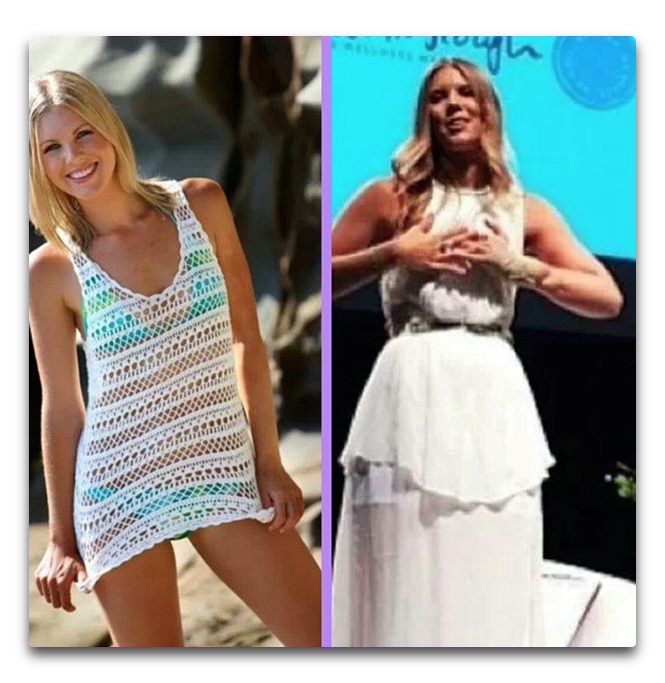
Comparing the eternally positive reflections of Jessica Ainscough [Wikipedia] with the reality of her recent passing from epithelioid sarcoma just two days ago, one cannot help feel somewhat disturbed. The ABC website has a leading description of Jessica’s struggle;
When initial mainstream cancer treatment didn’t work, one woman chose alternative methods that offer a different perspective on health and wellbeing.
Jessica initially underwent isolated limb perfusion. Her left upper limb was treated with chemotherapy. Initial signs were positive but within a year or so her tumor had returned. The surgical option she then faced involved amputation of not just her arm but the shoulder also. This disfiguring alternative may have offered some hope and Orac writes that before the choice of perfusion arose, Jessica may have been preparing herself to face the surgical option [2]. Ultimately she didn’t decide on surgery. A disturbing cornucopia of woo, “positive affirmations”, “cancer thriving”, coffee enemas, “the tribe”, etc… and surrendering to what the universe had in store, led to The Wellness Warrior. Jessica also took on promoting the widely discredited quackery known as Gerson Therapy with gusto. You can read what Cancer Council Australia write about Gerson, and also check some citations here. This summary is from an article in today’s news.com.au;
Australia’s leading cancer organisations do not endorse Gerson therapy as a means of treating cancer. The National Cancer Institute says: “Because no prospective, controlled study of the use of the Gerson therapy in cancer patients has been reported in a peer-reviewed scientific journal, no level of evidence analysis is possible for this approach. “The data that are available are not sufficient to warrant claims that the Gerson therapy is effective as an adjuvant to other cancer therapies or as a cure. At this time, the use of the Gerson therapy in the treatment of cancer patients cannot be recommended outside the context of well-designed clinical trials. Cancer Australia says there is “little evidence” that alternative therapies are effective in cancer treatment. “Most have not been assessed for efficacy in randomised clinical trials, though some have been examined and found to be ineffective.” If you’d like to know more about cancer treatment in Australia, visit cancer.org.au or call 13 11 20.
The scale of denial Aiscough was in for so many years, comes across in her piece published on ABC’sThe Drum website. Eg;
How have I managed to escape the frail, sickly appearance that is so firmly stamped on the ‘cancer patient’ stereotype? I refused to follow the doctor’s orders. […] Our bodies are designed to heal themselves. It is really that simple. Our bodies don’t want to die. […] This is the basis of natural cancer-fighting regimes. While conventional treatment is hell bent on attacking the site of the disease and destroying tumors with drugs, radiation and surgery, the natural approach aims to treat the body as a whole. […] This stuff isn’t new. Reading Plato shows that holistic modalities have been understood for centuries: “You ought not to attempt to cure the eyes without the head, or the head without the body, so neither ought you to attempt to cure the body without the soul… […] …I will spend three weeks being treated at the Gerson Clinic. The basis of the Gerson Therapy is a diet, which includes eating only organically grown fresh fruits and vegetables and drinking 13 glasses of freshly squeezed juice per day in hourly intervals. The idea is to strengthen the immune system and load you up with heaps of minerals, enzymes, beta-carotene, Vitamins A and C, and other antioxidants that attack free radicals and ultimately the cancer. According to the late Dr Max Gerson, if you can stick to the strict regime for a minimum of two years, Gerson Therapy has the ability to cure cancer like no drug can. Alternative treatments like Gawler and Gerson offer patients hope, choice and understanding. They also offer them a cure, not just remission. To me, that sounds like the much more attractive option.
The Cancer Council of Victoria has some great advice on the topic, “How will I know if claims of a cure are false?”. On page 39 of this booklet they note that the dishonest and unethical may;
Try to convince you your cancer has been caused by a poor diet or stress: they will claim they can treat you or cure your cancer with a special diet
Promise a cure – or to detoxify, purify or revitalise your body. There will be quick dramatic and wonderful results – a miracle cure
Use untrustworthy claims to back up their results rather than scientific-based evidence from clinical trials. They may even list references. But if you look deeper these references may be false, nonexistent, irrelevant, based on poorly designed research and out of date
Warn you that medical professionals are hiding “the real cure for cancer” and not to trust your doctor
Display credentials not recognised by reputable scientists and health professionals
Comparing Jessica’s beliefs and a small amount of advice from Cancer Council (Victoria) indicates Ainscough was entertaining a range of dangerous ideas about what both caused, and might treat or even “cure”, her cancer. Plainly the Cancer Council would reject Gerson Therapy based on its major traits. Tragically Jessica’s mother died from breast cancer after following her into trusting the disproved belief system. Orac writes in October 2013;
From what I can gather, it is the story of a death from quackery, a death that didn’t have to occur. Even worse than that, it appears to be a death facilitated by the daughter of the deceased, a woman named Jessica Ainscough, who bills herself as the “Wellness Warrior.” It’s a horrifying story, the story of a woman who followed her daughter’s lead and put her faith in the quackery known as the Gerson therapy.
An excellent blog is The View From The Hills by Rosalie Hilleman. It is an excellent examination – through postulation, questioning and evidence – of Jessica’s extensive deception and manipulation of her readers in order to maintain two illusions. One being that Gerson offers some efficacy. The second being that Jessica’s epithelioid sarcoma was not progressing with the morbidity expected for that condition, diagnosed at the time it was.
EDIT: Jessica insisted she was “thriving”. Readers could easily be left with the impression that Gerson Therapy is effective. All the more because most don’t associate “cancer” with the bright, positive Jessica. This is why questions raised in The View From The Hills were and are so necessary. Gerson was actually doing nothing. In reality her cancer was markedly indolent – very slow to progress.
But it was progressing. It always was. Clinically, just as cancer of this type does progress. And now like her mother, Jessica Ainscough has died from cancer.



 Losing In The Lucky Country