Pertussis: nothing worse than a bad cough?

Many of you will know of Meryl Dorey’s infamous claim that one didn’t die from whooping cough or measles thirty years ago.

Followed by, “and you’re not going to die from it today”. This was made on an episode of Sunday Night on the 7 Network in April 2009. Recently Ms. Dorey was queried about evidence for this. Rather boldly her response (in full below) included:

This statement was one of 3 or 4 sentences I was allowed in an interview that ran for over 3 1/2 hours and out of which, the TV station took what they could use against me and left out the rest.

Dorey had immediately prior contended that her mother intentionally placed her with other children so she would catch vaccine preventable diseases. “We were supposed to get them and we did and we were healthier for them”. 

First, let’s revisit the 26 seconds in question.


Actually there may be some truth to Dorey’s observation of no fatality from pertussis “thirty years ago”. The probable cause? Mass vaccination.

In January 2009 ABC’s The Pulse reported in A bad year for whooping cough:

Whooping cough used to be a disease that everyone got as kids, says Dr Frank Beard, acting senior director of Queensland Health’s Communicable Diseases Branch.

However, numbers plummeted following the introduction of mass vaccination in the 1950s. Cases fell to an all time low in the 1970s and 1980s…

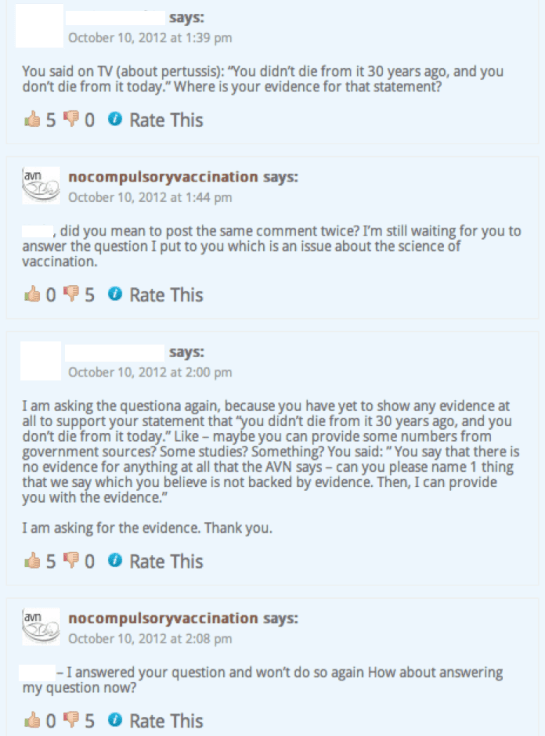
Okay let’s check out the comment thread in question.

As it turns out I’ve already examined much of Ms. Dorey’s sleight of hand pertaining to pertussis this way.

In My personal request of Meryl Dorey, back in January I break down her method of using notification data out of context. I did ask for a response but found myself banned and blocked from social media. No emails were answered.

Here’s a relevant section:

Okay, let’s use your method on another year.

We can see (using the same NNDSS data) that 2007 was the lowest year of infection on record since 1999 – http://i.imgur.com/XOrUY.png. It is also the 5th lowest year since records began.
Many discount the first recording years of 1991 and 1992 as very, very low anomalies that show a slowish start to new legislation requiring reporting of whooping cough. This would make 2007 the 3rd lowest ever. But I’m happy to take the 5th lowest year ever.

Rather different to your claim, no? But from your data source no less.

Now, looking again at your vaccination rate table (http://i.imgur.com/w9I9g.jpg) we see 2001 had only 70.6% vaccination. Infection was 9,541 Aussies. By 2007 – still using both your data tables we see 95% vaccination of babies and 4,864 cases of pertussis (http://i.imgur.com/XOrUY.png).

So, using your “technique” on merely another part of the same NNDSS table we can also claim vaccination more than halved pertussis notifications in a mere 6 years.

Your data, your method, the very same tables you quote from. Why then is this not your message? Why don’t you tell Aussies that these sources show a greater than 50% drop in whooping cough in just 6 years?

So, for the sake of this post Meryl has had that request for evidence of her claim about mass vaccination, long since shown to be the abuse of data that it is. Read the full breakdown for greater context.

Back to the comments. The poster chose to dig in and it seems seek an admission no evidence exists. The exchange is as follows.

Yes. I could ask the same Ms Dorey.

In fact along with the high diagnoses, fatalities are less than during the 1997 and 2002 outbreaks whilst hospitalisations are about the same. The alarming numbers of notifications reflect the sensitivity of PCR testing (now widely available) and the tendency of GPs to suspect pertussis.

However another question has come to mind. If the producers of Sunday Night in April 2009 edited footage they “could use against [Meryl]”, does this apply to her other comment? The one about pertussis being “nothing worse than a bad cough”. In her household it apparently lasted two weeks and was treated with homeopathy.


I wonder if this is down to those shifty producers also. Using material “against” Meryl Dorey.

Because clearly it is nonsense.

Hepatitis B vaccine: Preventing cancer, except for when it’s not actually given…

Essential reading from @kill3rTcell.

An excellent review of the preventative impact on liver cancer provided by the full sequence of the Hepatitis B vaccine schedule. Includes a thorough deconstruction of the disinformation frequently pushed by Australia’s Anti-Vaccination Network that the vaccine is ineffective in this regard or (no surprise) is the “cause” of increasing hepatitis B infection.

—————————————————

The comment cited below;

…however just last night Dorey posted the following comment on the AVN page:

HBV_post_lymphosite_post

The chart cited below;

lymphosite_post2

Right now I’m going to focus on the claim of increasing liver cancer rates thanks to Hep B vaccination.

kill3rtcell's avatarThe LymphoSite

One of the commentors over on the Australian Anti-Vaccination Network’s facebook page challenged the group’s president – Meryl Dorey – to comment on a hypothetical scenario as a way of discussing the utility of vaccination against Hepatitis B (Hep B). A conversation ensued and commentor’s question was never answered, however just last night Dorey posted the following comment on the AVN page:

…with this chart of liver cancer incidence in the United Kingdom:

Right now I’m going to focus on the claim of increasing liver cancer rates thanks to Hep B vaccination.

But first the rationale behind using the Hep B vaccine to prevent liver cancer:

  • Hepatitis B is a virus that chronically infects liver cells.
  • This chronic infection naturally leads to prolonged inflammation.
  • A continual inflammatory state is conducive to cancer formation.

(The virus also seems to be able to integrate its DNA into host cells to cause…

View original post 1,104 more words

Dealing with the Brian Martin dilemma

Recently Brian Martin a Professor of Social Sciences at the University of Wollongong, published an article in Health Promotion International.

Dealing with dilemmas in health campaigning appears to be a bipartisan analysis of social dynamics and some areas of public health. However whilst Martin relies upon science and methods employed by the scientific community to sustain his argument he demonstrates his signature ignorance of the scientific method and the import of evidence.

In short Martin has continued his campaign to elevate supporters and perpetrators of scientific fraud, pseudoscience, censorship, personal vitriol, calculated deception and dangerous scams to the status of legitimacy. Rather than admit his role in supporting and coaching Australia’s premier anti-vaccination lobby, Martin hides this affiliation behind:

I give a few examples, especially from the vaccination controversy in Australia.

I selected the dilemmas discussed here based on my studies of a large number of public controversies, including informal conversations with prominent as well as lower-profile campaigners. […]

A key aim of this paper is to make these dilemmas explicit so they can be given the scrutiny they deserve.

Health campaigners today face intractable ideological devotion manifesting as evidence denial. The resistance of certain scientifically durable realities that play important roles in the maintenance of public health, is commonly presented as “the other side”. In fact cursory examination reveals malignant intent, bogus information, illegal pursuits, frequent monetary scams and outright fraud.

Certain areas have become key targets of a persistent opposition that uses pseudoscience, conspiracy theory, evocation of public fear and the exploitation of scientific ignorance in an attempt to mask ideological persuasion as legitimate science. Whilst the intellectual paucity of these proposals are immediately apparent to scientists, and consequently dismissed out of hand, the mechanisms behind why this is so are not apparent to the lay reader.

As such, scientists face a dilemma in managing, preventing or containing what may be a disproportionately negative effect on public confidence in crucial areas of health policy. The problem with engaging vested interests that promote pseudoscience and scientific denial is that the risk of lending legitimacy to demonstrably false contention, is significantly heightened when recognised scientists (or health authorities) respond.

On the one hand the public have a right to expect reputable authorities address falsehoods in a transparent manner. On the other hand, notions such as the scientific method, scientific consensus, the impact of evidence and abuse of statistics is poorly understood by the general public. Understanding risk-benefit is a skill the largely scientific illiterate public in developed nations lack. Poor, and at times, irresponsible reporting by media outlets compounds this problem.

Recently a bogus claim by Natasha Bita of The Australian drew immediate condemnation from Australia’s Therapeutic Goods Administration. Influenza vaccination has been conclusively linked to no deaths in Australia. However Bita misused information from the Database of Adverse Event Notifications, to insinuate ten deaths were “linked to anti-flu vaccine”. Meryl Dorey, president of the anti-vaccination group Martin is a member of has been continually pushing the falsehood launched by Bita.

Interestingly in another of his articles, Suppressing Research Data: Methods, Context, Accountability, and Responses Brian Martin offers an excellent account of Dorey’s conduct:

Censorship, fraud, and publication biases are ways in which the availability of research data can be distorted. A different process is distortion of the perception of research data rather than distortion of the data itself. In other words, data is openly available, but efforts are made to shape people’s perception of it.

Although he’s referring to publishers, the above paragraph adequately describes how Dorey conducts herself. In Dealing with dilemmas in health campaigning, Martin raises the prospect that not engaging anti-science proponents such as anti-vaccination lobbyists may have a negative effect on public perception. Yet the complex reality of how adverse reactions are reported, accepted, documented and how they must be interpreted would be lost on the bulk of the public. The catchy, but false, ten deaths linked to anti-flu vaccine would have an impact.

More so, placing a callous, dishonest, unqualified opportunist such as Dorey alongside a genuine health authority creates the illusion that there actually is a debate to be had. Worse is that the individual lies and tricks of the anti-science identity by extension gain credibility. As I note below new research reinforces that opponents to public health and even the myths they create are best ignored when seeking to address they mess they’ve created.

Consequently, engaging such extreme minority views can be detrimental to public confidence and rather than removing respect for ideological falsehoods may well create an impression of legitimacy. Given his affiliations it is almost certain Brian Martin seeks to do exactly this in his article.

In fact the above quote splendidly describes Martin’s own generalised distortion of data. A suitable example follows. Rather than tackle the disparity between anti-vaccination propaganda and say, the risk of flying, driving, overseas travel or any day to day task he writes:

Supporters of vaccination emphasize the large benefits from being vaccinated, notably a reduction in disease, including associated deaths and disabilities. They also emphasize the social benefits, due to herd immunity, from high levels of vaccination (Andre et al., 2008). That is straightforward. But is it wise to mention that a small number of individuals will have adverse reactions, including death and permanent disability?

The advantage of sticking to positives and not admitting shortcomings is that the message is much more powerful. ‘Vaccines are safe’ is far more reassuring than ‘Vaccines are nearly always safe’. ‘Vaccines are safe’ is also clear and uncomplicated and hence far easier to sell. Furthermore, any admission of weakness is likely to be seized upon by opponents and trumpeted far and wide.

Unsurprisingly the second paragraph is without citation. What Martin is doing is constructing a faux dilemma that resonates with poor appreciation of risk-benefit. The fact is vaccines are safe. They are monumentally safe and to use such a vague term as “nearly always safe” conveys a risk-benefit somewhat more dangerous than riding high speed motorcycles on city streets.

To then suggest without breaking stride the proper description of vaccine safety makes them “far easier to sell”, is simply outrageous. This is exactly the sort of bogus information I mentioned above. It is the perpetuation of the malignant untruth that vaccines need a market and supporters of vaccines will pursue this. At one point we read an equally outrageous slur on scientists:

The most common way to deal with vested interests on one’s own side is not to mention them, relying on the belief held by scientists that they are objective, so it does not matter if corporations offer research funding and perks.

Recent research into debunking myths has underscored the perils of not only engaging proponents of evidence denial, but of simply repeating the myth itself. This material may help explain why, on the topic of scientific dissent, Brian Martin continues to give unjustified credence not only to soundly scientifically refuted notions (fluoride in drinking water, vaccination, conspiracy theory put forward as “vested interests” and even HIV/AIDS denialism), but also to the view that a “debate” may be legitimate.

Indeed not only are terms such as “debate” entirely inaccurate in a scientific sense, they at once distract from the true dynamics at play and arguably with tragic consequences, lend even more false legitimacy to what is essentially pseudoscience, abuse of science and denial of evidence.

Martin continues to place anti-science lobby groups on equal footing with public health authorities or refer to unqualified saboteurs of public confidence as “citizen campaigners” seemingly simply raising legitimate concerns. This fails to acknowledge scientific consensus, its import and value to community health, and its dependence upon the rigours of the scientific method.

In short Martin demonstrates an alarming ignorance of the scientific method and its ability to expunge in totality such ill conceived ideas that “debate” rightly applies to numerous areas of outright denial of evidence. Martin is a financial member and published supporter of Meryl Dorey’s anti-vaccination group and the PhD supervisor of radical anti-vaccine conspiracy theorist, Judy Wilyman. Yet again he has labelled volunteers who deconstruct the harmful messages of Meryl Dorey to suit himself.

Thus it is right and just to call into question Brian Martin’s acceptance or not of moral responsibility. Prior to this article he was furnished with ample facts that he’s chosen to ignore despite claiming to have been in discussion with participants. Clear demonstration of the bogus claims of the AVN that impact heavily on his subject material have been omitted. Impartiality is clearly irrelevant if not inconvenient to Brian Martin.

Amusingly he again raises the silliness of Dorey’s obsession with global conspiracies as an apparent fiction invented by her critics. After a frustrating exchange of emails over a year ago I demonstrated that yes, in their own words the AVN do believe in vaccine delivered microchips and global culling. I’m quite surprised he saw fit to republish such a ridiculously irrelevant aspect to this ongoing saga.

More seriously, the scientific community would quite rightly be justified to review reference to the bulk of scientific methodology and accepted consensus as “the dominant paradigm” or “the dominant epistemological position” in dismissive terms. Whilst it is true that scientific findings remain always open to further inquiry and challenge, this process cannot be jump-started by suggesting evidence denial constitutes scientific “debate” or that the very methods and practices that led to The Enlightenment constitute a “paradigm”.

It can be far more adequately argued that proponents of pseudoscientific beliefs and evidence denial have not, over the entire course of their existence, altered scientific consensus as it pertains to their chosen ideology. This is especially true of anti-vaccination, anti-fluoridation, alternatives to medicine and the denial of HIV/AIDS.

In this light we can see such groups as disempowered and effectively divorced from scientific and genuine skeptical inquiry. With no evidence to further their belief structure or force their ideology into reality we witness a constant recycling of well documented falsehood. This is backed by predictable contrariness that is more and more prone to argue their evidence is not flawed, but suppressed or censored by a covert conspiracy. Needless to say this has never been demonstrated.

Alienated, irrelevant and left to defend overwhelmingly debunked and thoroughly refuted notions, those incapable of accepting this reality predictably lash out and attack conventional science in an increasingly extremist fashion. Clearly these groups crave acceptance by the scientific community as they continue to use scientific terminology and mimic scientific research, discussion and reasoning.

However since their inception they have never once produced material that is accepted as genuine research or conclusive evidence. Their modus operandi is to shirk genuine research and produce bogus reviews they falsely label as “critiques”. These are carefully produced selections of cherry picked data presented with a false argument.

In addition they rely overwhelmingly on the alarmist and pseudoscientific work of a small number of faux professionals, whose greatest skill is the abuse of science – not its application.

This impasse has been manifestly apparent for many years. Thus far from accepting these groups have any legitimate contribution to make it should be stressed that the areas they continue to challenge are indeed settled scientifically. Yet Martin writes:

Supporters of the dominant position often say that the existing research base is more than sufficient to conclusively support their stand. Sticking with this claim has the advantage of not admitting weakness. It also can have an economic justification: unnecessary research is avoided.

The disadvantage of rejecting calls for more research is that the critics have a continual source of complaint. When critics have little capacity to undertake their own research—at least research requiring substantial funding—they can portray the defenders of orthodoxy as stonewalling in the face of legitimate doubt.

Again this is manufacturing a dilemma. With respect to vaccination health authorities have gone to extreme lengths researching, and continue to research, every possible adverse reaction or problem with vaccines. The research called for is today unethical and methodologically impossible. Other research demanded has already been conducted. Yet the goal posts are continually moved.

Consequently it is regrettable that certain authors appear to go to extreme lengths to cast denial as genuine dissent whilst insinuating that science has, and will, progress from those who consistently attack the process that does not produce the results they seek.

It should be noted Martin’s article has clearly been firmly edited away from his usual obvious slant in praise of scientific dissent. Its overall tone is seemingly reasonable. Nonetheless that’s not the real point.

Brian Martin has again shown he will be deceptive in the pursuit of his own interests.

Natasha Bita: Award winner to crisis spinner?

The TGA is concerned by assertions that a number of deaths resulted from influenza vaccinations. In fact there have been no recorded deaths from influenza vaccine in Australia.

– Australian Therapeutic Goods Administration respond to Natasha Bita’s article “linking” vaccination to fatality –

Natasha Bita published Virus in the system on May 28th, 2011.

The article presents an extended account of the heart wrenching story of Saba Button who suffered permanent brain damage due to the CSL Fluvax influenza vaccine, in April 2010. A combination of H1N1 and seasonal influenza strains Fluvax is tolerated very well by adults. However for children under five a febrile convulsion rate of 0.33% was later clearly established in the only state to involve this age group: Western Australia.

At the time the ABC reported hundreds of reactions. Of the 47 children taken to hospital, The West Australian reported 23 admissions. Saba Button was one such admission. Bita doesn’t provide these details, though to her credit does report that in 2009 fifteen kids under the age of 15 died after contracting swine flu. Each year between three and nine children die from influenza in Australia.

The situation in W. A. following the use of Fluvax on small children reflects a 2006 study in which 1 febrile convulsion was recorded in a sample of 272. What emerged as deeply concerning is that 2006 fever (not convulsion) trial data rates were 39.5%. Yet Fluvax manufacturer CSL informed the TGA of their 2005 trial data on fever. A much lower 22.5%. Public confidence in regulation, safety, Good Manufacturing Practices (GMP) and ultimately use is vital. I’ve previously looked at the importance of holding CSL to account.

A primary reason is that such stories are fodder for anti-vaccination lobbyists. Public confidence in immunisation was at stake, and proper context was much needed. One glaring absence from Bita’s article was reinforcement of the importance of vaccination in preventing influenza. With the internet awash with dangerous anti-vaccination propaganda readers need to know that all vaccination schedules are of paramount importance.

The day Bita’s story was published anti-vaccination guru Meryl Dorey falsely claimed that “the skeptics” and Stop The AVN were “organising forces” to complain.

Meryl Dorey’s Yahoo! Twitter and Facebook libellous claims

I emailed Natasha that day seeking confirmation. After no reply I tried again on June 1st and CC’d The Australian online address. 16 days later I repeated this. Natasha eventually replied that no, she had received no complaints. Not one. However she had been away, she qualified. Strange, I thought. Was Bita suggesting that her absence equated to an inability to access emails, either later or indeed at any time?

I began to feel somewhat uneasy about Bita’s impartiality. Clearly she knew who Meryl Dorey was. She was the woman who had just hijacked her published account to falsely claim, “babies were being used as guinea pigs in a trial that was paid for by the drug companies involved.” Dorey was also harassing the Buttons by phone and had appointed herself the family’s unofficial conspiracy consultant.

Shortly after I’d finally received a reply from Natasha Bita she published an article on the very rare past occurrence of transverse myelitis following oral polio immunisation. Bita did little to quell the fear and uncertainty to follow in the wake of Virus in the system. The purpose of her piece was to report on the MJA article, A no-fault compensation scheme for serious adverse events attributed to vaccination published by Kelly, Looker and Isaccs. I was familiar with the article having referred to it myself almost three weeks earlier.

It’s inexcusable that Australia lacks such a scheme when we note Germany began theirs in 1961 and across the Tasman no-fault compensation has been a reality since 1978. Seventeen other nations have a scheme that relies upon WHO criteria for Adverse Events Following Immunisation (AEFI). It is of even greater relevance in Australia because arguments for its implementation rely upon factors anti-vaccination lobbyists deny. Firstly that vaccination provides immunity and secondly the principle of herd immunity.

The authors write:

Any person who is injured while helping to protect the community — for instance, by contributing to herd immunity, such that there are sufficiently many people immunised to prevent widespread disease transmission within the community — should not bear the consequences of injury alone. In essence, the community owes a debt of gratitude to that person.

Natasha Bita, whether consciously or not, fed the anti-vaccination machine. The piece firmed her position as a journalist lacking in scientific literacy or having a grasp of risk-benefit ratios. She belittles the term “adverse reaction” and leaves the most crucial fact that Australia’s current inactivated polio virus vaccine carries no such risk, until the last few words. In a poorly written piece she completely misses the reality that Australia’s vaccine injury chic groupies will not back this scheme, have never mentioned it and deny the merit raised by Kelly, Looker and Isaacs.

When Virus in the system won Natasha Bita a Walkley for Sustained Coverage Of An Issue Or Event, she was embraced totally by the Dark Side. Her appearance on conspiracy and vaccine denialist site The Refusers perhaps underscored just how important a few lines reminding parents that vaccines save lives can be.

On August 3rd, as Queensland mum Katrina Day lay fighting for her life against influenza, Natasha Bita published a fraudulent article falsely “linking” 10 deaths to influenza vaccines. Bita ignored the TGA warning on interpretation of data. The article highlights how dangerous it is to allow sensation-seeking journalists to consult such information. Her headline outs her as unconscionable and callous as she proceeds to ignore any difference between correlation and causation.

Bita writes misleadingly:

TEN deaths have been linked to the nation’s flu immunisation program since the 2009 swine flu pandemic, including elderly patients and unborn babies.

The CSL flu vaccine, Panvax – which taxpayers spent $131 million stockpiling for the 2009 swine flu outbreak – triggered 1716 adverse-event reports, including seven deaths.

Whilst it is well understood that seasonal influenza vaccines will not include all circulating strains (meaning one may still catch influenza) she offers:

The Therapeutic Goods Administration database of adverse events, made public this week, lists the death of a grandmother who caught the flu after vaccination last year.

This is exactly the problem faced by VAERS in the USA, which is set to be superseded. Events are reported so that trends will be picked up and viable research launched in response to perceived problems. Nonethelesss all events remain on the database. Here we have an apparent award winning journalist reporting 10 deaths “linked” to ‘flu vaccines, whilst the total is actually zero. Visitors to TGA’s Database of Adverse Event Notifications are met with:

Her article drew the following response on the same day from the TGA:

TGA is concerned by a media story that may mislead consumers and could potentially discourage them from receiving influenza vaccinations.

Vaccinations play an important role in the prevention of diseases such as influenza, which can be life threatening in some patient groups. […]

The first line of text on the Database of Adverse Event Notifications states that: An Adverse Event does not mean that the medicine is the cause of the adverse event.

The TGA is concerned by assertions that a number of deaths resulted from influenza vaccinations. In fact there have been no recorded deaths from influenza vaccine in Australia. […]

To my knowledge Natasha Bita is yet to publish a retraction, explanation or apology. On August 27th it was reported that Katrina Day had passed away after falling into a coma. The 38 year old leaves behind four children and a husband.

Yesterday new directions for the CDC were reported in Flu Creates High Risk Of Death In Children With Neurological Problems:

A disproportionately high number of children with neurologic disorders died from influenza-related complications during the 2009 H1N1 pandemic, according to a study by scientists with the Centers for Disease Control and Prevention. The report in the journal Pediatrics underscores the importance of influenza vaccination to protect children with neurologic disorders. CDC is joining with the American Academy of Pediatrics, Families Fighting Flu and Family Voices to spread the message about the importance of influenza vaccination and treatment in these children.

Influenza kills and vaccination saves lives. For certain groups this is a very real decision arising every year. In very, very rare cases adverse reactions occur. To date in Australia no fatalities have been conclusively linked to influenza vaccines, including during the CSL debacle.

It’s a shame that so-called “consumer editor” Natasha Bita has to mislead her readers to suit her own agenda.

Australian Vaccination Network crashes and burns on seminar tour

As many know, Australia’s leading anti-vaccination lobby group, the deceptively named Australian Vaccination Network recently finished it’s “tour” of Western NSW.

The tour itself was an abysmal failure. Billed Vaccination and Health Rights – a seminar for parents and health professionals it attracted mainly aged hippies and conspiracy theorists. The most compelling development was rumoured to be Greg Beattie shouldering Meryl Dorey out of the spotlight.

Subtracting the obligatory four heads of the Doreys and Beatties, attendance was likely anything from 4 to 15 across various venues. This silliness may have cost over $7,500 if food, fuel and dodgy accommodation is included. To the surprise of many it cemented the disgust which with Meryl Dorey, Greg Beattie and the other misguided members of the antivax movement are regarded.

The “fury” expressed by residents of Tamworth appears typical of the reception the AVN received. The vicious online reception that the public of Tamworth laid out and the pummeling the AVN received in the comments attached to that article ensured Tamworth attracted the highest attendance.

Another piece, Controversial AVN vaccination group in Tamworth briefly covers the event. It includes the grab for money the AVN is known for;

Participants paid $12 to attend the meeting and were given information on the AVN legal fighting fund appeal where they can donate money to help the AVN fight their own pending legal cases and also to support the “fighting fund for non-vaccinating partners.”

The group says it helps parents in court proceedings fight their ex-partners or spouses who seek orders of the court to vaccinate their children.

Sounds darn tootin’ except “the group” has never done any such thing. Nor do they have any pending legal cases. This is a bald faced lie and an outright scam. I can be no kinder.

So, their largest turnout included critical journalists and the “ninja academic”, Scotty Harrison. Scotty is an Armidale local and PhD candidate in Health Economics. Scotty – the most qualified individual on the entire tour – took the stage and worked his way quickly to evidence based figures on the history of vaccines. Within 12 minutes he had demolished the thrust of a life time of deception from Greg Beattie (video below).

Greg Beattie: His antivax lies were demolished before his eyes

Scotty didn’t just lay bare the lie that decreases in mortality before vaccination, supposedly refute the efficacy of vaccination. Improved living standards led to increased recovery – but not reduced incidence of disease. He also raised the reality of vaccine preventable disease-induced disability. Then furthermore spoke of his own struggle with ADD, asthma, allergies and eczema. There is no evidence they are due to the vaccines he received as a child, he concluded.

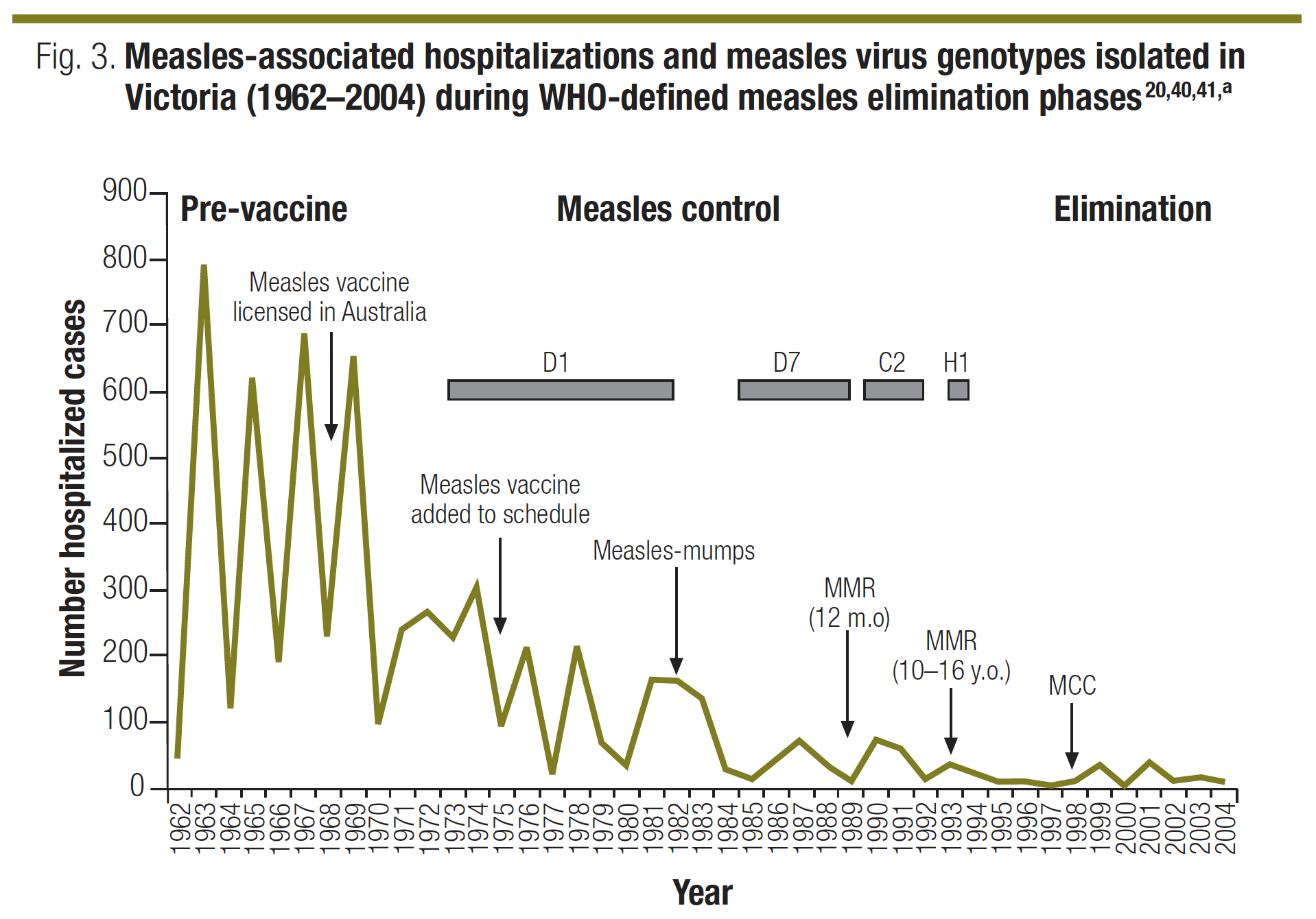
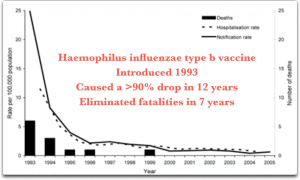
He makes it quite clear vaccines brought about the elimination of the incidence of disease. When pre-vaccine recovery meant a lifetime of scarred lungs or severe brain damage or being bed ridden with multiple organ damage, the onus is upon people like Beattie to convince us just how vaccines are supposedly useless. As seen below the video, even in the present day (wherein no changes in living standards have occurred) the impact of vaccination on disease is striking.

Delightfully, Dorey and Beattie didn’t expect any presentation that might be in dissent to their theme. They refused Scotty’s invitation to return the next night. Keep an ear out for the spontaneous applause on Scotty’s point on how poorly the vaccination “debate” is being conducted. Strange then that this enthusiasm vanishes once his content is known.

As much as one may want to support the AVN in their quest for legitimacy, “because every story has two sides”, I’m afraid that’s presently impossible.

This trip was an unmitigated disaster.

Over to Scotty…


Impact of vaccination on measles and Hib incidence in recent and very recent times


Measles control & genotypes in Victoria Australia

(Above) Hib vaccine introduced to Australia


(Above) Hib Vaccine introduced to Kenya, Kilifi district

Impact of vaccines 1,2,3 & 4 decades post introduction in Australia

(Above) Impact of diphtheria, pertussis & tetanus vaccines on mortality 1,2,3, & 4 decades after their introduction to Australia